
Politics
Public Service Cuts: Should Executives Take More Responsibility?

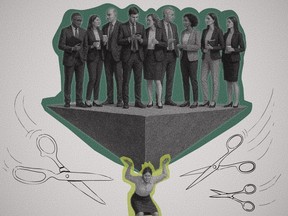
Concerns are growing about the allocation of public service cuts in Canada, with calls for higher-level managers to shoulder more of the burden. A public servant with 23 years of experience expressed frustration over the tendency for cuts to disproportionately affect junior and frontline staff, who are directly engaged with the public. This sentiment highlights a longstanding issue in government funding where essential services suffer while managerial roles remain largely intact.
The anonymous public servant noted that high-level managers often perceive their roles as indispensable, which can lead to a hierarchy of cuts that neglects the executive level. They argued that cutting positions filled by “advisors” and other managerial roles should be prioritized in any reduction plan. While some cuts at the executive level have been proposed, they argue that these measures are insufficient to address the systemic issues within the public service.
Yazmine Laroche, a prominent figure in public service and the first federal deputy minister with a visible disability, responded to these concerns through a dedicated advice column. She acknowledged the anxiety surrounding potential job losses and emphasized the importance of a balanced approach to cuts. In her view, the current proposals do not reflect the comprehensive restructuring needed to address the challenges faced by the public service.
During the tenure of the Harper government, the Deficit Reduction Action Plan (DRAP) aimed to eliminate approximately 19,200 positions, including around 600 executive roles. This represented a 7.4 percent reduction in the executive ranks, surpassing the 4.8 percent targeted reduction for the total workforce announced in the 2012 budget. Data from the Treasury Board indicated that between 2010 and 2015, executive positions decreased by nearly 27 percent, while non-executive roles saw a drop of about 24 percent.
Despite the historical precedent of executive cuts, Laroche argues that current proposals do not match the extent of past reductions, nor do they address what many see as a top-heavy management structure. She posited that the reluctance to implement more robust changes is influenced by political pressures and the urgency for immediate results, leading to the creation of separate operating agencies that sidestep traditional departmental constraints.
Laroche suggested a more radical approach to reform, advocating for a thorough examination of compensation structures within the public service. She pointed out disparities in pay between different roles, arguing that some positions are overcompensated while others remain undervalued. Furthermore, she proposed inviting retired public servants to contribute their expertise in designing sustainable reforms, akin to the “$1-a-day” advisers from the post-war era.
In her conclusion, Laroche expressed a belief in the potential for the public service to evolve into a more effective and accountable entity. She stressed the need for change that goes beyond mere cuts to headcount, urging a reimagining of the structures in place to ensure that the public service is equipped to meet the challenges of the 21st century.
As discussions around public service cuts continue, the question remains: will the Canadian government take the necessary steps to balance the scales between managerial and frontline roles, ensuring that the essential services provided to Canadians are not compromised?












Toronto Schools Share Principal Amid $48.5M Deficit – Parents Concerned

Urgent Housing Crisis: 36% of Behchokǫ̀ Homes Unlivable Now

Nova Scotia Minister Rejects Golf Course Proposal, Open to Other Projects

Brandon University and Assiniboine College Host Exciting Events

Hong Kong Student Leaves Police Station After Fire Probe Arrest

Public Service Cuts: Should Executives Take More Responsibility?

Fairmont Château Laurier Unveils 1912 Bar with Historic Flair

Montreal Exhibit Celebrates 30 Years of Sex Worker Activism

Pope Leo XIV Prays for Peace in Lebanon, Urges Unity Amid Crisis

Secwepemc First Nation Seeks Aboriginal Title Over Kamloops Area

Scientists Unearth Ancient Antarctic Ice to Unlock Climate Secrets

Trump and McCormick to Announce $70 Billion Energy Investments

TransLink Launches Food Truck Program to Boost Revenue in Vancouver

Four Astronauts Return to Earth After International Space Station Mission

Apple Notes Enhances Functionality with Markdown Support in macOS 26

Manitoba’s Burger Champion Shines Again Amid Dining Innovations

Urgent Update: Fatal Crash on Highway 99 Claims Life of Pitt Meadows Man

Ukrainian Tennis Star Elina Svitolina Faces Death Threats Online
-
 Politics4 weeks ago
Secwepemc First Nation Seeks Aboriginal Title Over Kamloops Area
-
 World5 months ago
Scientists Unearth Ancient Antarctic Ice to Unlock Climate Secrets
-
 Entertainment5 months ago
Trump and McCormick to Announce $70 Billion Energy Investments
-
 Lifestyle5 months ago
TransLink Launches Food Truck Program to Boost Revenue in Vancouver
-
 Science5 months ago
Four Astronauts Return to Earth After International Space Station Mission
-
 Technology3 months ago
Apple Notes Enhances Functionality with Markdown Support in macOS 26
-
 Lifestyle3 months ago
Manitoba’s Burger Champion Shines Again Amid Dining Innovations
-
 Top Stories2 months ago
Urgent Update: Fatal Crash on Highway 99 Claims Life of Pitt Meadows Man
-
 Politics4 months ago
Ukrainian Tennis Star Elina Svitolina Faces Death Threats Online
-

 Sports5 months ago
Search Underway for Missing Hunter Amid Hokkaido Bear Emergency
-
 Politics5 months ago
Carney Engages First Nations Leaders at Development Law Summit
-

 Technology5 months ago
Frosthaven Launches Early Access on July 31, 2025