
Politics
Supreme Court to Review Ethics Ruling on Trudeau’s WE Charity Involvement

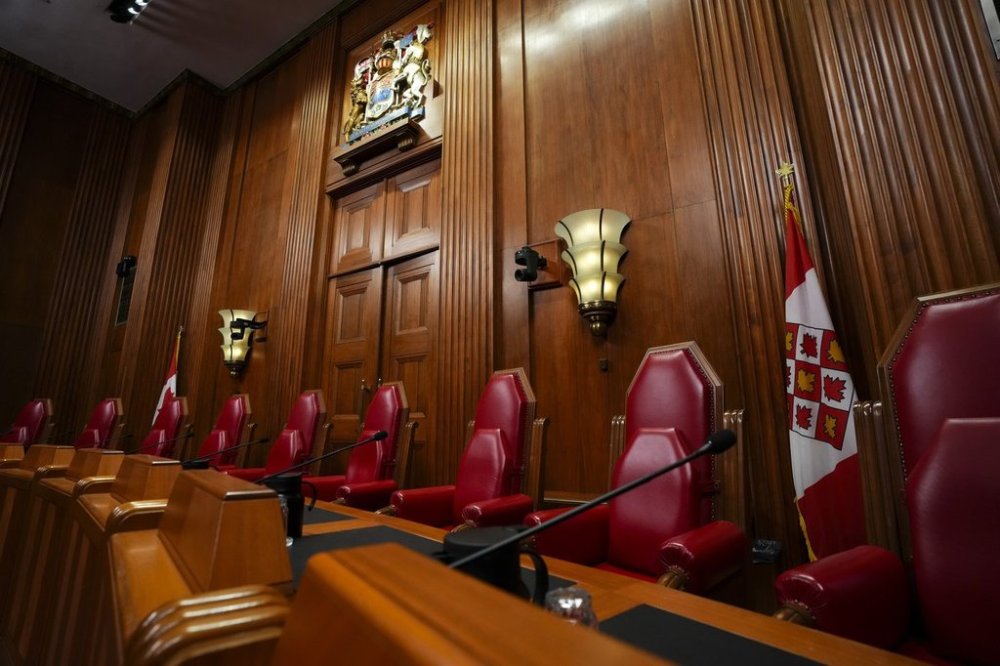
The Supreme Court of Canada is set to review a significant case regarding the ethics ruling involving former Prime Minister Justin Trudeau and his relationship with WE Charity. A group advocating for political accountability, Democracy Watch, argues that the courts should assess the reasonableness of a federal ethics ruling made by the former ethics commissioner, Mario Dion.
In a recent filing, Democracy Watch contends that the Federal Court of Appeal should have the authority to examine its challenge of a report regarding Trudeau’s involvement in a decision linked to WE Charity. The federal government has responded by urging the Supreme Court to dismiss this appeal, asserting that the design of the Conflict of Interest Act precludes any judicial scrutiny of the ethics watchdog’s findings.
Background of the Case
In May 2021, Dion concluded that Trudeau did not breach the Conflict of Interest Act when he participated in a government decision concerning WE Charity. The charity was selected to manage a multimillion-dollar program intended to encourage student volunteerism during the COVID-19 pandemic. This decision sparked controversy due to the Trudeau family’s ties to WE Charity; Trudeau himself had participated in eight WE Day events since 2007, and his wife had served as an honorary ambassador. Additionally, Trudeau’s mother and brother had engaged in paid activities for the charity.
Trudeau later acknowledged that he should have recused himself from the decision-making process because of the appearance of a conflict of interest. Dion, however, stated that while it is advisable to recuse oneself in such situations, the act does not mandate it.
Legal Developments and Implications
Following the conclusion of the ethics investigation, Democracy Watch applied for a judicial review of Dion’s ruling in June 2021, claiming errors in both the interpretation of the law and factual inaccuracies regarding Trudeau’s connections with one of WE Charity’s founders. Federal lawyers defended the ruling, arguing that the Conflict of Interest Act prohibits judicial review concerning factual and legal questions.
The Federal Court of Appeal dismissed Democracy Watch’s application, suggesting that political oversight could serve as an adequate alternative to judicial scrutiny. Their decision emphasized that the Conflict of Interest Act allows for “dual parliamentary and judicial oversight,” indicating that accountability primarily lies with the legislative branch.
In response, Democracy Watch escalated the matter to the Supreme Court, which agreed in May 2024 to hear the appeal. In its filings, Democracy Watch stressed the importance of judicial oversight in maintaining lawful public administration, asserting that the courts must remain vigilant against legislative and executive overreach.
Federal lawyers countered that the Conflict of Interest Act was designed to permit court intervention only in specific circumstances, such as when the commissioner exceeds jurisdiction or acts unfairly. The Supreme Court is expected to hear oral arguments from various intervening parties on January 14 and 15, 2026, as the legal community watches closely for the implications of this ruling on political accountability in Canada.










Fauna Robotics Unveils Sprout: A Humanoid Robot for Home Use

Team Canada Faces Goaltending Concerns Ahead of Olympics

Celebrating the Life of Irena Peritz: A Legacy of Love and Resilience

India, U.S. Announce Urgent Trade Deal to Slash Tariffs Now

American Airlines Pilots Challenge Management After Poor Results

Kirsten Hillman Concludes Historic Ambassadorial Tenure in Washington

Centenarian Mildred “Blondie” Siegel Celebrates 100 Years of Life

Experts Warn of Rapid Rise in AI-Generated Threats to Canada

Trump Faces Criticism as Super Bowl Approaches Without His Presence

Secwepemc First Nation Seeks Aboriginal Title Over Kamloops Area

Scientists Unearth Ancient Antarctic Ice to Unlock Climate Secrets

Urgent Fire Erupts at Salvation Army on Christmas Evening

Canadian Curler E.J. Harnden Announces Retirement from Competition

Manitoba’s Burger Champion Shines Again Amid Dining Innovations

Fatal Crash on Highway 11 Claims Three Lives, Major Closure Ongoing

Trump and McCormick to Announce $70 Billion Energy Investments

Four Astronauts Return to Earth After International Space Station Mission

TransLink Launches Food Truck Program to Boost Revenue in Vancouver
-
 Politics3 months ago
Secwepemc First Nation Seeks Aboriginal Title Over Kamloops Area
-
 World7 months ago
Scientists Unearth Ancient Antarctic Ice to Unlock Climate Secrets
-
 Top Stories1 month ago
Urgent Fire Erupts at Salvation Army on Christmas Evening
-
 Sports1 month ago
Canadian Curler E.J. Harnden Announces Retirement from Competition
-
 Lifestyle5 months ago
Manitoba’s Burger Champion Shines Again Amid Dining Innovations
-
 Top Stories2 months ago
Fatal Crash on Highway 11 Claims Three Lives, Major Closure Ongoing
-
 Entertainment7 months ago
Trump and McCormick to Announce $70 Billion Energy Investments
-
 Science7 months ago
Four Astronauts Return to Earth After International Space Station Mission
-
 Lifestyle7 months ago
TransLink Launches Food Truck Program to Boost Revenue in Vancouver
-

 Technology5 months ago
Apple Notes Enhances Functionality with Markdown Support in macOS 26
-

 Top Stories1 month ago
Blue Jays Sign Kazuma Okamoto: Impact on Bo Bichette’s Future
-

 Top Stories2 months ago
NHL Teams Inquire About Marc-André Fleury’s Potential Return