
Politics
Tim Dolighan’s Latest Cartoon Sparks Debate on Free Speech

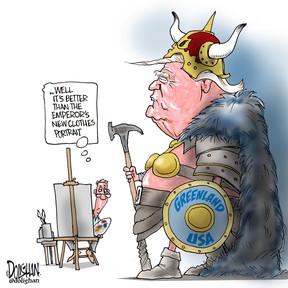
Tim Dolighan’s latest cartoon, published on January 22, 2026, has ignited a significant debate surrounding the limits of free speech and artistic expression. The cartoon, which addresses sensitive political topics, has drawn both praise and criticism, reflecting the polarized climate of public discourse today.
The piece, shared widely on social media platforms, features satirical depictions that challenge commonly held beliefs about governance and societal norms. Supporters argue that Dolighan effectively uses humor to critique power structures, while detractors claim the cartoon crosses a line into offensive territory.
Public Reaction and Context
The immediate public response has been intense, with thousands of comments flooding in across various forums. Proponents of Dolighan’s work emphasize the importance of satire in a democratic society, asserting that it serves as a vital tool for accountability. A spokesperson for the art community stated, “Cartoons like Dolighan’s are essential in sparking conversations that matter. They push boundaries and encourage critical thinking.”
Conversely, critics have expressed concerns about the potential for misunderstanding and the impact such portrayals may have on vulnerable groups. A representative from a leading advocacy group noted, “While we support free expression, we must also recognize the responsibility that comes with it, especially when dealing with sensitive issues.”
The Broader Implications for Artistic Freedom
This incident highlights a growing tension in the art world regarding the balance between creative freedom and societal sensitivity. As cultural climates shift, artists face increasing scrutiny over their work. According to a recent survey conducted by the International Arts Council, approximately 65% of artists report feeling pressure to self-censor their content to avoid backlash.
Dolighan’s cartoon has raised questions about where the line should be drawn. The artist himself commented, “Art should provoke thought and discussion, even if it makes some uncomfortable. That is the essence of creativity.”
As debates continue, the broader implications for artistic freedom remain a focal point. This situation may serve as a catalyst for future discussions about the roles and responsibilities of artists in society, particularly in a rapidly changing cultural landscape.
The ongoing discourse around Dolighan’s work underscores the importance of dialogue in navigating the complexities of free speech and creativity. As the art community reflects on this incident, it is clear that the conversation is far from over.













Morris Churches Unite for Annual Good Friday Walk With the Cross

Chloe Zhao’s ‘Buffy’ Reboot Cancelled: Sarah Michelle Gellar Speaks Out

Essential Ingredients for Life Found in Ryugu Asteroid Samples

Urgent Rescue: NSR Airlifts Injured Climber from Nanaimo

Riverside Heart Ball Achieves Record $815,000 for Mental Health

Cognizant Launches AI Factory to Enhance Enterprise AI Scalability

Samsung’s Galaxy Watch 9 to Feature Larger Battery Than Before

Toronto’s AIDS Memorial Faces Potential Redesign Amid Community Concerns

Bayern Munich Loses Luis Díaz Red Card Appeal Despite Referee’s Admission

Secwepemc First Nation Seeks Aboriginal Title Over Kamloops Area

Fatal Crash on Highway 11 Claims Three Lives, Major Closure Ongoing

Manitoba’s Burger Champion Shines Again Amid Dining Innovations

Canadian Curler E.J. Harnden Announces Retirement from Competition

Urgent Fire Erupts at Salvation Army on Christmas Evening

Scientists Unearth Ancient Antarctic Ice to Unlock Climate Secrets

Minister Faces Scrutiny Over Delayed Foreign Interference Watchdog Appointment

Trump and McCormick to Announce $70 Billion Energy Investments

Monika Hibbs Unveils Acres Market & Interiors in Major Rebrand
-
 Politics5 months ago
Secwepemc First Nation Seeks Aboriginal Title Over Kamloops Area
-
 Top Stories4 months ago
Fatal Crash on Highway 11 Claims Three Lives, Major Closure Ongoing
-
 Lifestyle7 months ago
Manitoba’s Burger Champion Shines Again Amid Dining Innovations
-
 Sports3 months ago
Canadian Curler E.J. Harnden Announces Retirement from Competition
-
 Top Stories3 months ago
Urgent Fire Erupts at Salvation Army on Christmas Evening
-
 World9 months ago
Scientists Unearth Ancient Antarctic Ice to Unlock Climate Secrets
-
 World5 months ago
Minister Faces Scrutiny Over Delayed Foreign Interference Watchdog Appointment
-
 Entertainment9 months ago
Trump and McCormick to Announce $70 Billion Energy Investments
-
 Lifestyle9 months ago
Monika Hibbs Unveils Acres Market & Interiors in Major Rebrand
-

 Science9 months ago
Four Astronauts Return to Earth After International Space Station Mission
-

 Lifestyle9 months ago
TransLink Launches Food Truck Program to Boost Revenue in Vancouver
-

 World1 month ago
Ranchman’s Cookhouse & Dancehall to Relocate by Early 2027