
Politics
U.S. Supreme Court Invalidates Trump’s Emergency Tariff Strategy

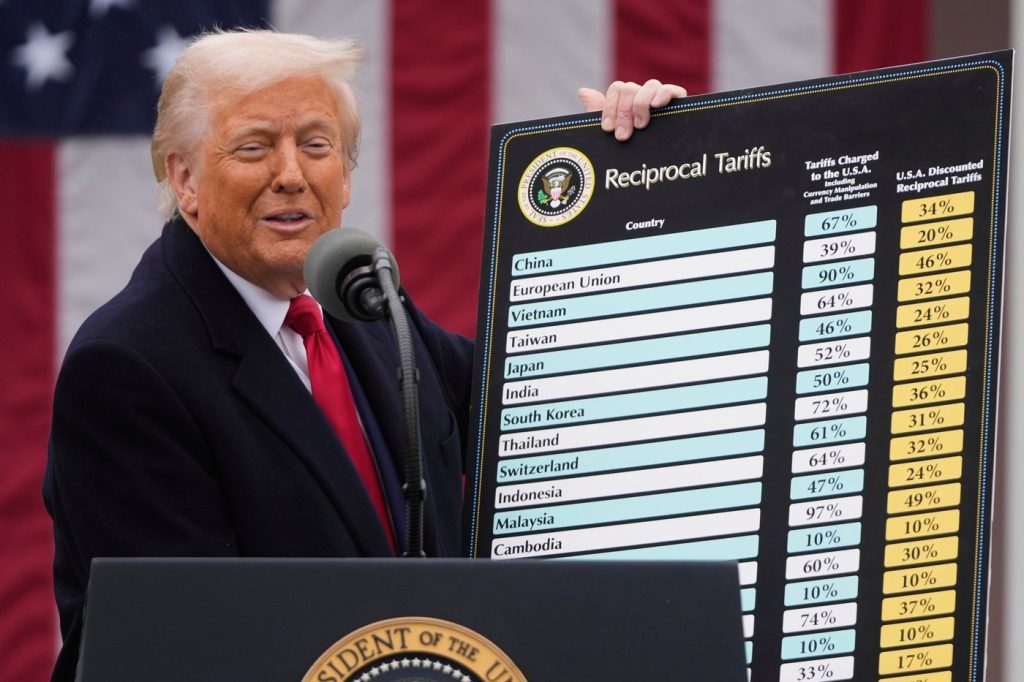
The U.S. Supreme Court has invalidated the use of emergency powers by former President Donald Trump to impose tariffs on various countries. This decision centers around the application of the International Emergency Economic Powers Act, which Trump invoked for his controversial “Liberation Day” tariffs, particularly affecting Canada, Mexico, and China.
The ruling marks a significant moment in the ongoing debate regarding presidential powers and trade policies. The Supreme Court’s decision, announced on March 15, 2024, concludes that the invocation of emergency powers for tariff implementation exceeded the intended scope of the law.
Trump’s use of the act had been a focal point of criticism, with many arguing that it undermined established trade agreements and economic relationships. The tariffs, particularly those targeting fentanyl-related goods, were part of a broader strategy to address drug trafficking and public health concerns, but they faced backlash from trade partners and domestic businesses.
In the wake of the court’s ruling, there are implications for future administrations regarding the limits of executive power in trade matters. The decision may also influence ongoing negotiations and discussions about international trade agreements, as countries reevaluate their positions in light of U.S. policy shifts.
This ruling has generated considerable attention from various sectors, including business, law, and international relations. Observers are now analyzing how this will affect tariff strategies and trade relations in the long term.
According to Kelly Geraldine Malone of The Canadian Press, the Supreme Court’s decision is viewed as a crucial check on executive authority, emphasizing the necessity for legislative oversight in matters of international trade. As the global economic landscape continues to evolve, this decision may reshape the approach of future administrations towards tariffs and emergency powers.
As the implications of this ruling unfold, stakeholders across different industries are closely monitoring developments, particularly in sectors affected by the tariffs. The conversation surrounding trade, tariffs, and emergency powers is likely to intensify in the coming weeks and months.













Morris Churches Unite for Annual Good Friday Walk With the Cross

Chloe Zhao’s ‘Buffy’ Reboot Cancelled: Sarah Michelle Gellar Speaks Out

Essential Ingredients for Life Found in Ryugu Asteroid Samples

Urgent Rescue: NSR Airlifts Injured Climber from Nanaimo

Riverside Heart Ball Achieves Record $815,000 for Mental Health

Cognizant Launches AI Factory to Enhance Enterprise AI Scalability

Samsung’s Galaxy Watch 9 to Feature Larger Battery Than Before

Toronto’s AIDS Memorial Faces Potential Redesign Amid Community Concerns

Bayern Munich Loses Luis Díaz Red Card Appeal Despite Referee’s Admission

Secwepemc First Nation Seeks Aboriginal Title Over Kamloops Area

Fatal Crash on Highway 11 Claims Three Lives, Major Closure Ongoing

Manitoba’s Burger Champion Shines Again Amid Dining Innovations

Canadian Curler E.J. Harnden Announces Retirement from Competition

Urgent Fire Erupts at Salvation Army on Christmas Evening

Scientists Unearth Ancient Antarctic Ice to Unlock Climate Secrets

Trump and McCormick to Announce $70 Billion Energy Investments

Minister Faces Scrutiny Over Delayed Foreign Interference Watchdog Appointment

Monika Hibbs Unveils Acres Market & Interiors in Major Rebrand
-
 Politics5 months ago
Secwepemc First Nation Seeks Aboriginal Title Over Kamloops Area
-
 Top Stories4 months ago
Fatal Crash on Highway 11 Claims Three Lives, Major Closure Ongoing
-
 Lifestyle7 months ago
Manitoba’s Burger Champion Shines Again Amid Dining Innovations
-
 Sports3 months ago
Canadian Curler E.J. Harnden Announces Retirement from Competition
-
 Top Stories3 months ago
Urgent Fire Erupts at Salvation Army on Christmas Evening
-
 World9 months ago
Scientists Unearth Ancient Antarctic Ice to Unlock Climate Secrets
-
 Entertainment9 months ago
Trump and McCormick to Announce $70 Billion Energy Investments
-
 World5 months ago
Minister Faces Scrutiny Over Delayed Foreign Interference Watchdog Appointment
-
 Lifestyle9 months ago
Monika Hibbs Unveils Acres Market & Interiors in Major Rebrand
-

 Science9 months ago
Four Astronauts Return to Earth After International Space Station Mission
-

 Lifestyle9 months ago
TransLink Launches Food Truck Program to Boost Revenue in Vancouver
-

 World1 month ago
Ranchman’s Cookhouse & Dancehall to Relocate by Early 2027