
Politics
University of Windsor Completes 90% of Anti-Black Racism Recommendations

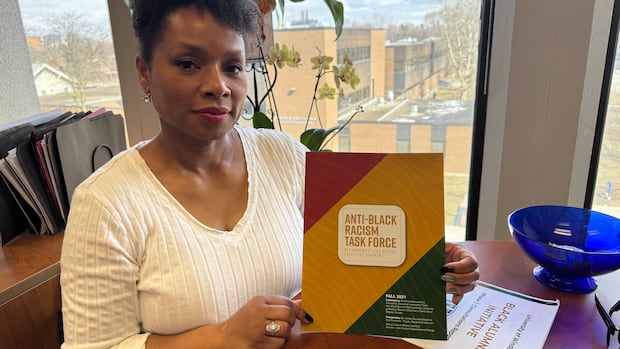
The University of Windsor has announced that it has fulfilled nearly 90% of the recommendations from a task force addressing anti-Black racism on campus. This initiative began in late 2020, following the murder of George Floyd in Minneapolis and the subsequent Black Lives Matter protests. The task force submitted its recommendations to the university in the fall of 2021, aiming to create a more inclusive environment for students of African descent.
Marium Tolson-Murtty, director in the Office of Human Rights, Conflict Resolution and Mediation at the University of Windsor, emphasized the task force’s significance, stating, “That really helped ignite efforts to address anti-Black racism at this level.” Although she acknowledges that the university has made substantial progress, she also noted that challenges remain. New scholarships for Black students have been established, the Black Scholars Institute was launched, and more Black faculty members have been hired. Additionally, a Black student support coordinator position was created, contributing to a sense of belonging among Black students on campus.
Progress and Remaining Challenges
Tolson-Murtty reported an increase in the number of racism complaints filed by students, indicating a growing comfort level in addressing such issues. “There’s not the need to feel that they have to remain silent,” she explained. This shift suggests that students now believe the university is willing to take action in response to reported injustices.
Despite the substantial completion rate of the recommendations, some initiatives remain unaddressed due to financial constraints faced by the university. “That might be just stalling things a little bit,” Tolson-Murtty noted. In January, J.J. McMurtry, President of the University of Windsor, warned that the institution is facing a future where its viability may be at risk without significant changes to its funding structure.
Kaitlyn Ellsworth, who occupies the role of Black student support coordinator, expressed optimism about the steps taken thus far but highlighted a critical gap: the absence of a Black studies program. “We don’t have enough courses speaking about Black people, Black lives, Black knowing, Black methodologies,” she stated. The demand for courses focused on Black identities is a recurring theme in feedback from students.
Future Initiatives and Student Support
While the university does not currently collect race-based data, Ellsworth estimates that at least 10% of the student population, or approximately 1,800 students, identify as Black. This data collection was also recommended by the task force, which considers it essential for achieving equity within the institution.
Ellsworth mentioned a desire among students for a dedicated lounge for Black students, another recommendation that has yet to be fully realized. She noted that many initiatives rely on the availability of financial resources, stating, “Some of it just isn’t feasible until it is. Until we have an influx of money.”
Another outstanding recommendation is an equity audit of the university’s athletic department. This audit aims to assess how the department hires coaches, recruits athletes, and addresses issues of discrimination. According to the task force’s report, the current culture within the athletics department has been described as “unhealthy, unwelcoming, anti-Black, and harmful to Black student athletes.”
As the University of Windsor continues to implement the remaining recommendations, the focus remains on fostering an environment that supports and uplifts its Black students. The ongoing efforts reflect a commitment to addressing anti-Black racism and promoting equity across the campus community.












Morris Churches Unite for Annual Good Friday Walk With the Cross

Chloe Zhao’s ‘Buffy’ Reboot Cancelled: Sarah Michelle Gellar Speaks Out

Essential Ingredients for Life Found in Ryugu Asteroid Samples

Urgent Rescue: NSR Airlifts Injured Climber from Nanaimo

Riverside Heart Ball Achieves Record $815,000 for Mental Health

Cognizant Launches AI Factory to Enhance Enterprise AI Scalability

Samsung’s Galaxy Watch 9 to Feature Larger Battery Than Before

Toronto’s AIDS Memorial Faces Potential Redesign Amid Community Concerns

Bayern Munich Loses Luis Díaz Red Card Appeal Despite Referee’s Admission

Secwepemc First Nation Seeks Aboriginal Title Over Kamloops Area

Fatal Crash on Highway 11 Claims Three Lives, Major Closure Ongoing

Manitoba’s Burger Champion Shines Again Amid Dining Innovations

Canadian Curler E.J. Harnden Announces Retirement from Competition

Urgent Fire Erupts at Salvation Army on Christmas Evening

Scientists Unearth Ancient Antarctic Ice to Unlock Climate Secrets

Minister Faces Scrutiny Over Delayed Foreign Interference Watchdog Appointment

Trump and McCormick to Announce $70 Billion Energy Investments

Monika Hibbs Unveils Acres Market & Interiors in Major Rebrand
-
 Politics5 months ago
Secwepemc First Nation Seeks Aboriginal Title Over Kamloops Area
-
 Top Stories4 months ago
Fatal Crash on Highway 11 Claims Three Lives, Major Closure Ongoing
-
 Lifestyle7 months ago
Manitoba’s Burger Champion Shines Again Amid Dining Innovations
-
 Sports3 months ago
Canadian Curler E.J. Harnden Announces Retirement from Competition
-
 Top Stories3 months ago
Urgent Fire Erupts at Salvation Army on Christmas Evening
-
 World9 months ago
Scientists Unearth Ancient Antarctic Ice to Unlock Climate Secrets
-
 World5 months ago
Minister Faces Scrutiny Over Delayed Foreign Interference Watchdog Appointment
-
 Entertainment9 months ago
Trump and McCormick to Announce $70 Billion Energy Investments
-
 Lifestyle9 months ago
Monika Hibbs Unveils Acres Market & Interiors in Major Rebrand
-

 Science9 months ago
Four Astronauts Return to Earth After International Space Station Mission
-

 Lifestyle9 months ago
TransLink Launches Food Truck Program to Boost Revenue in Vancouver
-

 World1 month ago
Ranchman’s Cookhouse & Dancehall to Relocate by Early 2027