
Politics
US Airstrikes Target Islamic State Militants in Nigeria’s Northwest

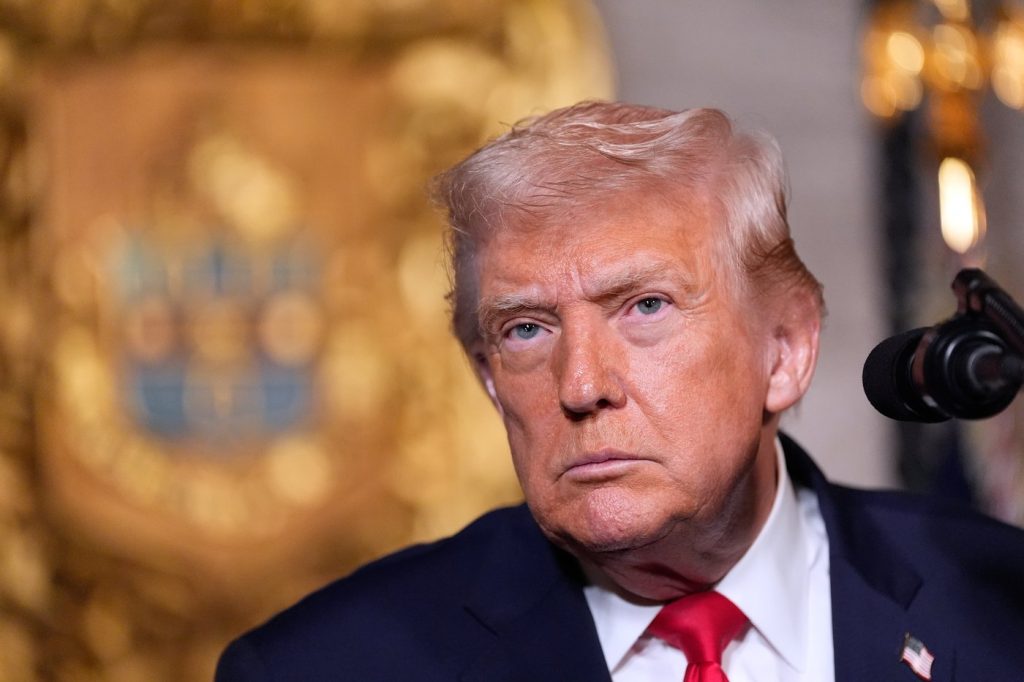
The United States carried out airstrikes on August 3, 2023, targeting Islamic State militants in northwestern Nigeria. This operation represents a significant escalation in a long-standing conflict that has challenged the Nigerian military for years. U.S. President Donald Trump described the strikes as “powerful and deadly,” emphasizing that they were aimed at militants responsible for the brutal killings of innocent civilians, primarily Christians. However, security experts note that Nigeria’s security crisis affects both religious communities, with Muslims being the majority in the north.
Nigeria has been grappling with numerous armed groups, including at least two factions affiliated with the Islamic State. These include the Islamic State West Africa Province (ISWAP) in the northeast and the lesser-known Islamic State Sahel Province (ISSP), referred to locally as Lakurawa, which operates in the northwest. Although officials did not specify which group was targeted, analysts indicated that Lakurawa has become increasingly lethal in states like Sokoto and Kebbi, often attacking remote communities and security forces.
Militant Background and Activities
Lakurawa has been active in northwest Nigeria since around 2017, initially invited by traditional leaders to provide security against banditry. Over time, however, the group has become more oppressive, enforcing a strict interpretation of sharia law that has alienated local populations. James Barnett, an Africa researcher at the Hudson Institute, noted that communities now perceive Lakurawa as more dangerous than the very bandits they were meant to protect.
The militant group has established control over territories in Sokoto and Kebbi, engaging in killings, kidnappings, and armed robbery. Some attacks attributed to Lakurawa, however, may actually stem from ISSP, which has expanded its operations from Niger into northwestern Nigeria. The Armed Conflict Location & Event Data Project highlighted that ISSP has maintained a low profile while infiltrating the Niger-Nigeria border region.
Underlying Issues and Government Response
Nigeria’s security challenges are deeply rooted in governance issues rather than solely military failures. The absence of effective state authority in conflict-prone areas facilitates recruitment for armed groups. Data shows that these regions experience high levels of poverty, hunger, and unemployment, creating fertile ground for militant activities. Nigeria’s Minister of Defense, Christopher Musa, previously stated that military action alone addresses only 30% of the security crisis; the remaining 70% hinges on improved governance.
Experts emphasize that the lack of state presence in remote communities allows non-state actors to position themselves as alternative authorities. Malik Samuel, a Nigerian security researcher with Good Governance Africa, pointed out that the situation has deteriorated to the extent that communities view these militants as a greater threat than the very banditry they initially sought to mitigate.
The recent U.S. airstrikes are considered crucial support for Nigeria’s military, which faces significant challenges in combatting multiple security threats across different regions. In states like Sokoto, the Nigerian military conducts airstrikes against militant hideouts and has initiated mass recruitment efforts to bolster its forces. Nonetheless, analysts caution that military operations often lack sustainability, as militants can swiftly relocate using motorcycles to evade detection.
The dynamics of the conflict are further complicated by the militants’ tactics, as they frequently use hostages, including schoolchildren, as human shields, complicating airstrike operations. As Nigeria continues to confront these formidable challenges, the international community’s support, particularly from the United States, remains a critical factor in addressing the escalating violence and instability.









Canada Must Revise Education Strategies to Improve Math Scores

American Airlines: A Century of Evolution and Dominance

Doug Ford Rides Snowmobile to Support Muskoka Hospital Fundraising

Winnipeg’s Shivers & Shimmies Gala Features International Star THIS WEEKEND

Money Williams Leads Montana to Last-Minute 73-68 Win Over Idaho

Seahawks Logo Sparks Cultural Awakening Ahead of Super Bowl

Beloved Educator Dianne Sharp Passes Away at 78

3 Doors Down Lead Singer Brad Arnold Dies at 47 After Cancer Battle

Fungi Flourish on Carrot Waste: A Solution for Global Hunger

Secwepemc First Nation Seeks Aboriginal Title Over Kamloops Area

Scientists Unearth Ancient Antarctic Ice to Unlock Climate Secrets

Urgent Fire Erupts at Salvation Army on Christmas Evening

Canadian Curler E.J. Harnden Announces Retirement from Competition

Manitoba’s Burger Champion Shines Again Amid Dining Innovations

Fatal Crash on Highway 11 Claims Three Lives, Major Closure Ongoing

Trump and McCormick to Announce $70 Billion Energy Investments

Four Astronauts Return to Earth After International Space Station Mission

TransLink Launches Food Truck Program to Boost Revenue in Vancouver
-
 Politics3 months ago
Secwepemc First Nation Seeks Aboriginal Title Over Kamloops Area
-
 World7 months ago
Scientists Unearth Ancient Antarctic Ice to Unlock Climate Secrets
-
 Top Stories1 month ago
Urgent Fire Erupts at Salvation Army on Christmas Evening
-
 Sports1 month ago
Canadian Curler E.J. Harnden Announces Retirement from Competition
-
 Lifestyle5 months ago
Manitoba’s Burger Champion Shines Again Amid Dining Innovations
-
 Top Stories2 months ago
Fatal Crash on Highway 11 Claims Three Lives, Major Closure Ongoing
-
 Entertainment7 months ago
Trump and McCormick to Announce $70 Billion Energy Investments
-
 Science7 months ago
Four Astronauts Return to Earth After International Space Station Mission
-
 Lifestyle7 months ago
TransLink Launches Food Truck Program to Boost Revenue in Vancouver
-

 Technology5 months ago
Apple Notes Enhances Functionality with Markdown Support in macOS 26
-

 Top Stories1 month ago
Blue Jays Sign Kazuma Okamoto: Impact on Bo Bichette’s Future
-

 Top Stories2 months ago
NHL Teams Inquire About Marc-André Fleury’s Potential Return