
Science
Advances in DNA Analysis Lead to Convictions in Cold Cases

In a significant legal development, advances in DNA technology have led to the resolution of several cold cases in Quebec, culminating in the October 2025 conviction of Réal Courtemanche for the murder of 10-year-old Marie-Chantale Desjardins. This breakthrough not only offers closure to families but also highlights the potential of modern forensic methods in solving long-standing cases.
During the court proceedings, Sylvie Desjardins, the victim’s mother, addressed Courtemanche directly, stating, “You thought you were taking a life, but in truth, you only added weight to your own existence.” The haunting case had remained unsolved for over three decades, with the young girl’s body discovered in 1994, just days after she had left a friend’s house. Her bicycle was found nearby, amplifying the tragedy of the crime.
The resolution of this case is part of a broader trend in Quebec, where the use of advanced DNA analysis has resulted in the successful closure of multiple cold cases. Diane Séguin, head of the DNA section at the provincial crime lab, noted that her team analyzes up to 50 cold cases annually and has facilitated the resolution of eight to ten in recent years. This progress stems from improved DNA extraction techniques and the application of genetic genealogy.
The process involves comparing DNA from crime scenes to public DNA databases, which contain profiles submitted by individuals researching their ancestry. “I’m optimistic that the more people put their DNA in those banks and accept to be part of criminal research, the more there will be some matches,” Séguin remarked.
In Quebec, the forensic lab processes between 30,000 and 40,000 pieces of evidence each year, generating approximately 4,000 to 5,000 DNA profiles for the national databank. The first step in both cold and active cases is to upload evidence-derived DNA profiles to the crime scene index, searching for matches with known offenders. This technique has allowed authorities to revisit decades-old evidence, yielding new insights with contemporary equipment.
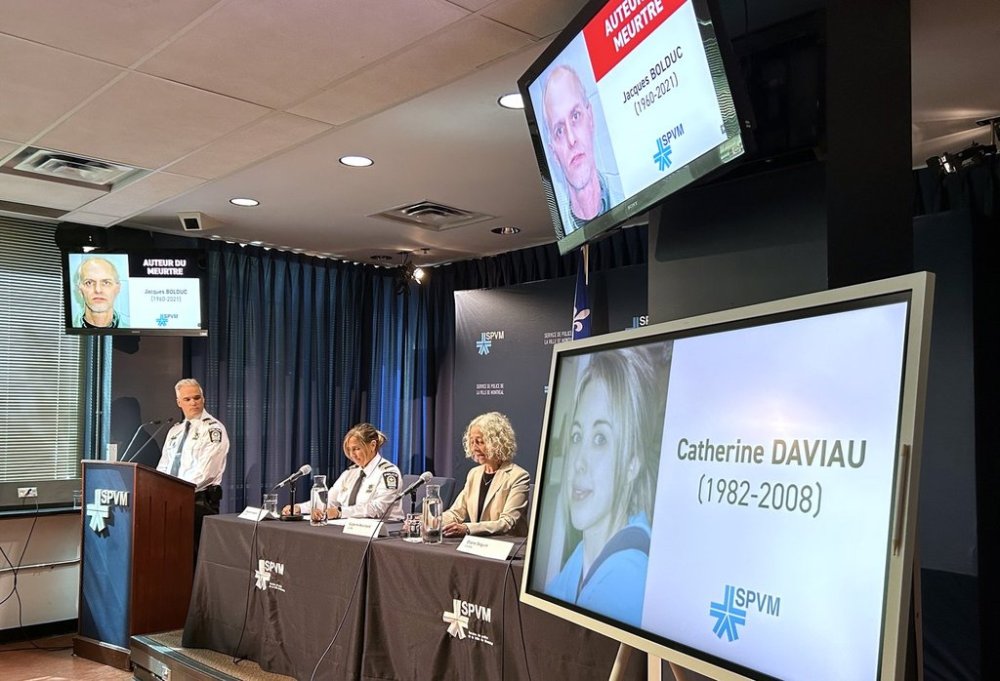
The lab’s capabilities also extend to “patronymic research,” linking DNA profiles with surnames. While not foolproof, this method can sometimes connect a DNA sample to a family name. In one notable instance, this technique led to the identification of Jacques Bolduc, a suspect in the 2008 murder of 26-year-old Catherine Daviau. The investigation revealed that Bolduc had no prior connection to the victim, having responded to an online advertisement she had posted.
Despite the excitement surrounding these advancements, Séguin cautioned that the results from genetic genealogy serve primarily as leads for police investigations. It remains the responsibility of law enforcement to gather further evidence to substantiate these leads.
The implications of these forensic advancements extend beyond cold cases. Séguin expressed a desire to apply genetic genealogy techniques to active investigations, particularly in cases of sexual assault. “If we have a series of sexual assaults and the perpetrator is unknown, they might commit another crime,” she explained. She encouraged public participation, urging individuals to upload their DNA profiles to databases like FamilyTreeDNA or GEDmatch to aid investigations.
Recent breakthroughs illustrate the efficacy of these methods. In September 2025, Quebec provincial police arrested a suspect in a 1979 manslaughter case linked to a home invasion in Causapscal. Similarly, a body discovered in Prince Edward Island in 1997 was confirmed to belong to a Quebec man who had been missing since the previous year.
The ongoing evolution of DNA technology has also sparked discussions about the potential expansion of the national DNA databank. Michael Arntfield, a criminologist at Western University and former police detective, highlighted the need for a broader list of crimes necessitating DNA uploads. He acknowledged the civil rights concerns this raises but emphasized the potential to solve crimes more efficiently.
“With increased buy-in to this technique, there may come a time when the term cold case could be retired,” Arntfield suggested, noting its potential role in real-time investigations.
As DNA analysis continues to evolve, families like the Desjardins can find solace in the hope that justice, once delayed, may finally be served. The ongoing efforts in Quebec exemplify the power of technology in bringing closure to victims and their families, transforming cold cases into stories of resolution.













Morris Churches Unite for Annual Good Friday Walk With the Cross

Chloe Zhao’s ‘Buffy’ Reboot Cancelled: Sarah Michelle Gellar Speaks Out

Essential Ingredients for Life Found in Ryugu Asteroid Samples

Urgent Rescue: NSR Airlifts Injured Climber from Nanaimo

Riverside Heart Ball Achieves Record $815,000 for Mental Health

Cognizant Launches AI Factory to Enhance Enterprise AI Scalability

Samsung’s Galaxy Watch 9 to Feature Larger Battery Than Before

Toronto’s AIDS Memorial Faces Potential Redesign Amid Community Concerns

Bayern Munich Loses Luis Díaz Red Card Appeal Despite Referee’s Admission

Secwepemc First Nation Seeks Aboriginal Title Over Kamloops Area

Fatal Crash on Highway 11 Claims Three Lives, Major Closure Ongoing

Manitoba’s Burger Champion Shines Again Amid Dining Innovations

Canadian Curler E.J. Harnden Announces Retirement from Competition

Urgent Fire Erupts at Salvation Army on Christmas Evening

Scientists Unearth Ancient Antarctic Ice to Unlock Climate Secrets

Minister Faces Scrutiny Over Delayed Foreign Interference Watchdog Appointment

Trump and McCormick to Announce $70 Billion Energy Investments

Monika Hibbs Unveils Acres Market & Interiors in Major Rebrand
-
 Politics5 months ago
Secwepemc First Nation Seeks Aboriginal Title Over Kamloops Area
-
 Top Stories4 months ago
Fatal Crash on Highway 11 Claims Three Lives, Major Closure Ongoing
-
 Lifestyle7 months ago
Manitoba’s Burger Champion Shines Again Amid Dining Innovations
-
 Sports3 months ago
Canadian Curler E.J. Harnden Announces Retirement from Competition
-
 Top Stories4 months ago
Urgent Fire Erupts at Salvation Army on Christmas Evening
-
 World9 months ago
Scientists Unearth Ancient Antarctic Ice to Unlock Climate Secrets
-
 World5 months ago
Minister Faces Scrutiny Over Delayed Foreign Interference Watchdog Appointment
-
 Entertainment9 months ago
Trump and McCormick to Announce $70 Billion Energy Investments
-
 Lifestyle9 months ago
Monika Hibbs Unveils Acres Market & Interiors in Major Rebrand
-

 Science9 months ago
Four Astronauts Return to Earth After International Space Station Mission
-

 Lifestyle9 months ago
TransLink Launches Food Truck Program to Boost Revenue in Vancouver
-

 World1 month ago
Ranchman’s Cookhouse & Dancehall to Relocate by Early 2027