
Science
AI Innovation Set to Transform Women’s Cancer Treatment in Victoria

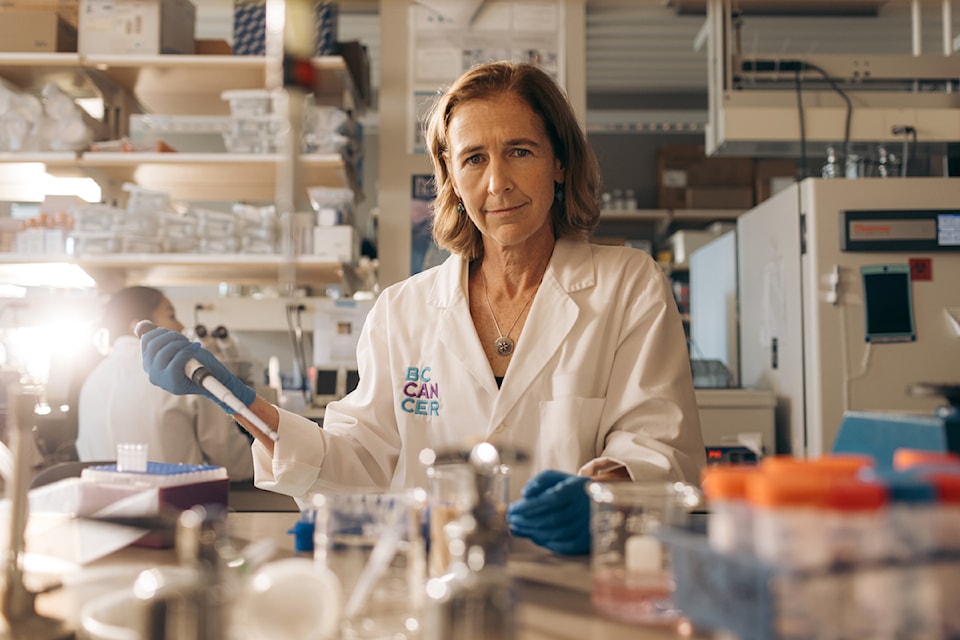
Researchers in British Columbia are on the verge of enhancing women’s cancer treatment through an innovative application of artificial intelligence. Dr. Jessica McAlpine and Dr. Ali Bashashati, leading figures at BC Cancer and the University of British Columbia (UBC), are pioneering a method to improve the diagnosis and treatment of endometrial cancer, which ranks as the sixth most common cancer among women. This initiative could soon be implemented in Victoria, British Columbia.
Endometrial cancer often presents challenges for accurate diagnosis because its cells can appear ambiguous under traditional microscopy. Consequently, this ambiguity increases the likelihood of inconsistent or subjective diagnoses. Determining appropriate treatment can thus be complex for healthcare providers. The research team has made significant strides by categorizing endometrial cancer into four distinct groups, each associated with varying clinical outcomes. Yet, a diverse group remained difficult to classify, leading to the development of the AI-based ProMisE test.
AI’s Role in Precision Treatment
According to Dr. McAlpine, the AI system has the capability to analyze tumour images and identify features that may elude pathologists and conventional molecular tools. “We were able to look at these images of tumors and identify things that the pathologist couldn’t see and that the molecular tools couldn’t identify,” she stated. This technology can help pinpoint which patients appear to have a positive prognosis but may actually face poorer outcomes, allowing doctors to tailor treatment strategies effectively.
Dr. McAlpine emphasized that AI could also help in reducing unnecessary treatments for some patients. “Because of the tools we now have, some patients can avoid the toxicity of chemotherapy and radiation altogether,” she noted. The implementation of these AI tools, which involve advanced scanners and hardware, could begin in centers like Victoria within the next year, contingent on securing philanthropic funding and necessary approvals.
“We plan to pilot it in a couple of centers, and Victoria is potentially one of those,” Dr. McAlpine added. The city could play a crucial role in this initiative, especially given its strong research and oncology teams. This project carries personal significance for Dr. Brad Nelson, who was recently appointed the Immunotherapy Research Chair at BC Cancer in Victoria. Dr. Nelson has previously expressed concern over the lack of research focused on women’s cancers, a topic close to his heart.
The legacy of the Trev & Joyce Deeley Research Centre in Victoria further underscores the importance of this research. Established in 2003 following a $5 million donation in memory of Joyce Deeley, who succumbed to ovarian cancer, the center aims to advance cancer research and treatment.
Impact on Gynecological Cancer Research
Dr. William Litchfield, associate vice president of the BC Cancer Foundation (Vancouver Island), highlighted the critical nature of this research. “Gynecological cancers are some of the most difficult cancers to treat and historically are an understudied area of cancer research,” he stated, reflecting on the potential of the innovative work being conducted at BC Cancer. “The innovative research underway at BC Cancer is incredibly important and holds the potential to save lives on the Island and across B.C.”
The announcement coincides with Gynecological Cancer Awareness Month, observed in September, which aims to raise awareness about these cancers. Dr. McAlpine noted that while the application of AI in this context is a promising start, it is merely the beginning. “There are so many other applications we’re also looking at,” she said. The goal is to offer a more personalized approach to treatment, ensuring that patients are not subjected to a one-size-fits-all methodology.
As this research progresses, the integration of AI into cancer care has the potential to redefine treatment protocols, leading to better patient outcomes and more efficient healthcare delivery. With Victoria poised to be at the forefront of this transformation, the future of women’s cancer treatment in British Columbia looks promising.













Charlottetown Youth Committee Urgently Seeks Young Voices Now

Alberta’s Largest Craft Sale Invites Holiday Shoppers to Edmonton

Hunter McVey Discusses His Role in ABC’s ‘9-1-1 Nashville’

McGill University Climbs to Third in National Research Rankings

Children’s Hospitals Report Surge in Flu Cases Amid Early Season

Market Rotation Accelerates with Small Caps and Commodity Trends

Samsung’s Galaxy Buds 4 Leak Reveals Battery Capacities Ahead of Launch

Urgent Snow Squall Warning Issued for Newmarket, Vaughan Today

Kelowna Unveils Historic $1B Budget, Tax Increase Under 5%

Secwepemc First Nation Seeks Aboriginal Title Over Kamloops Area

Scientists Unearth Ancient Antarctic Ice to Unlock Climate Secrets

Trump and McCormick to Announce $70 Billion Energy Investments

Four Astronauts Return to Earth After International Space Station Mission

TransLink Launches Food Truck Program to Boost Revenue in Vancouver

Apple Notes Enhances Functionality with Markdown Support in macOS 26

Manitoba’s Burger Champion Shines Again Amid Dining Innovations

Urgent Update: Fatal Crash on Highway 99 Claims Life of Pitt Meadows Man

Ukrainian Tennis Star Elina Svitolina Faces Death Threats Online
-
 Politics4 weeks ago
Secwepemc First Nation Seeks Aboriginal Title Over Kamloops Area
-
 World5 months ago
Scientists Unearth Ancient Antarctic Ice to Unlock Climate Secrets
-
 Entertainment5 months ago
Trump and McCormick to Announce $70 Billion Energy Investments
-
 Science5 months ago
Four Astronauts Return to Earth After International Space Station Mission
-
 Lifestyle5 months ago
TransLink Launches Food Truck Program to Boost Revenue in Vancouver
-
 Technology3 months ago
Apple Notes Enhances Functionality with Markdown Support in macOS 26
-
 Lifestyle3 months ago
Manitoba’s Burger Champion Shines Again Amid Dining Innovations
-
 Top Stories2 months ago
Urgent Update: Fatal Crash on Highway 99 Claims Life of Pitt Meadows Man
-
 Politics4 months ago
Ukrainian Tennis Star Elina Svitolina Faces Death Threats Online
-

 Sports5 months ago
Search Underway for Missing Hunter Amid Hokkaido Bear Emergency
-

 Politics5 months ago
Carney Engages First Nations Leaders at Development Law Summit
-

 Technology5 months ago
Frosthaven Launches Early Access on July 31, 2025