
Science
AI Innovations Set to Enhance Women’s Cancer Care in Victoria


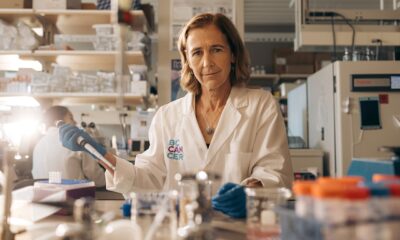
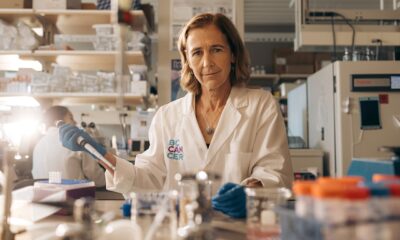
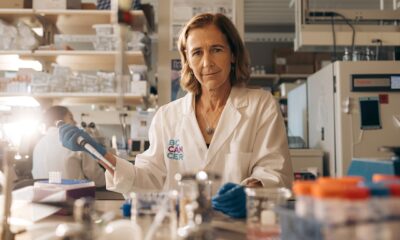
Researchers in British Columbia are on the brink of a significant advancement in women’s cancer treatment, particularly for endometrial cancer. Dr. Jessica McAlpine and Dr. Ali Bashashati, leading experts at BC Cancer and the University of British Columbia (UBC), have developed an artificial intelligence (AI) system that aims to improve the diagnosis and treatment of this prevalent form of cancer. Endometrial cancer, the sixth most common cancer among women, often presents diagnostic challenges due to the ambiguous appearance of its cells, which can lead to inconsistencies in diagnosis.
The researchers’ work focuses on categorizing endometrial cancer into four distinct groups, each with unique clinical outcomes. Despite this advancement, a significant diversity remained within one of the groups, prompting the introduction of the AI ProMisE test. “We were able to look at these images of tumours and identify things that the pathologist couldn’t see and that the molecular tools couldn’t identify,” McAlpine stated. This breakthrough allows medical professionals to better predict patient outcomes, directing them toward appropriate treatments to prevent recurrences.
Transformative Potential of AI in Cancer Treatment
The use of AI in this context offers numerous benefits. It not only identifies patients who may appear to have favorable prognoses but might actually face worse outcomes, thus facilitating timely interventions. “Because of the tools we now have, some patients can avoid the toxicity of chemotherapy and radiation altogether,” McAlpine added. This capability may reduce unnecessary treatments and mitigate the burden of travel for patients, particularly those in remote communities.
Plans are underway to implement these AI tools in treatment centers, including potential pilot programs in Victoria, possibly starting within the next year. McAlpine expressed optimism about collaborating with local researchers and oncologists, stating, “I think Victoria will be key, and they have a fantastic team of researchers and oncologists that we work with.”
The initiative resonates personally with Dr. Brad Nelson, who recently assumed the role of Immunotherapy Research Chair at BC Cancer in Victoria. His dedication to advancing research in women’s cancers stems from personal connections to the cause, including the loss of Joyce Deeley, a significant BC Cancer benefactor, to ovarian cancer in 2001. The Trev & Joyce Deeley Research Centre was established in her memory following a $5 million donation, underscoring the need for more attention to gynecological cancers.
A Growing Focus on Women’s Cancer Research
William Litchfield, Associate Vice President of the BC Cancer Foundation for Vancouver Island, emphasized the critical nature of this research. “Gynecological cancers are some of the most difficult cancers to treat and historically are an understudied area of cancer research,” he noted. Litchfield highlighted the potential life-saving implications of the innovative work being conducted at BC Cancer, especially for women on Vancouver Island and across British Columbia.
The announcement of these advancements coincides with Gynecological Cancer Awareness Month in September, further highlighting their significance. McAlpine acknowledged that while the application of AI in endometrial cancer treatment is just the beginning, the technology holds promise for further innovations. “There are so many other applications we’re also looking at,” she said, emphasizing the shift towards a more personalized approach in cancer treatment.
As the research progresses, the integration of AI in cancer care could profoundly alter treatment protocols, ensuring women receive the most effective and least invasive options available. With continued support and funding, the future of women’s cancer care in Victoria and beyond looks increasingly promising.






Urgent Call for $150M Federal Funding for Qikiqtarjuaq Port

Saskatchewan Government Adds $1 Billion to Deficit – Urgent Update

Thomson and Weston Families Secure Hudson’s Bay Charter for $18M

Family of Colombian Man Challenges U.S. Military Strikes After Death

Bloc Québécois Aims to Amend Bill C-9, Targeting Hate Speech Exemptions

Family and Friends Mourn the Loss of Donald James Wonnacott

Hollywood Stars Dine at South Osborne’s Vera Pizzeria

Calgary Teen Charged for Allegedly Creating AI-Generated Explicit Images

Dental Oversight Puts Niagara Detention Centre Inmates at Risk

Secwepemc First Nation Seeks Aboriginal Title Over Kamloops Area

Scientists Unearth Ancient Antarctic Ice to Unlock Climate Secrets

Trump and McCormick to Announce $70 Billion Energy Investments

Four Astronauts Return to Earth After International Space Station Mission

TransLink Launches Food Truck Program to Boost Revenue in Vancouver

Apple Notes Enhances Functionality with Markdown Support in macOS 26

Manitoba’s Burger Champion Shines Again Amid Dining Innovations

Urgent Update: Fatal Crash on Highway 99 Claims Life of Pitt Meadows Man

Ukrainian Tennis Star Elina Svitolina Faces Death Threats Online
-
 Politics4 weeks ago
Secwepemc First Nation Seeks Aboriginal Title Over Kamloops Area
-
 World5 months ago
Scientists Unearth Ancient Antarctic Ice to Unlock Climate Secrets
-
 Entertainment5 months ago
Trump and McCormick to Announce $70 Billion Energy Investments
-
 Science5 months ago
Four Astronauts Return to Earth After International Space Station Mission
-
 Lifestyle5 months ago
TransLink Launches Food Truck Program to Boost Revenue in Vancouver
-
 Technology3 months ago
Apple Notes Enhances Functionality with Markdown Support in macOS 26
-
 Lifestyle3 months ago
Manitoba’s Burger Champion Shines Again Amid Dining Innovations
-
 Top Stories2 months ago
Urgent Update: Fatal Crash on Highway 99 Claims Life of Pitt Meadows Man
-
 Politics4 months ago
Ukrainian Tennis Star Elina Svitolina Faces Death Threats Online
-

 Sports5 months ago
Search Underway for Missing Hunter Amid Hokkaido Bear Emergency
-

 Politics5 months ago
Carney Engages First Nations Leaders at Development Law Summit
-

 Technology5 months ago
Frosthaven Launches Early Access on July 31, 2025