
Science
Australian-Made Eris Rocket Launch Ends in Early Crash

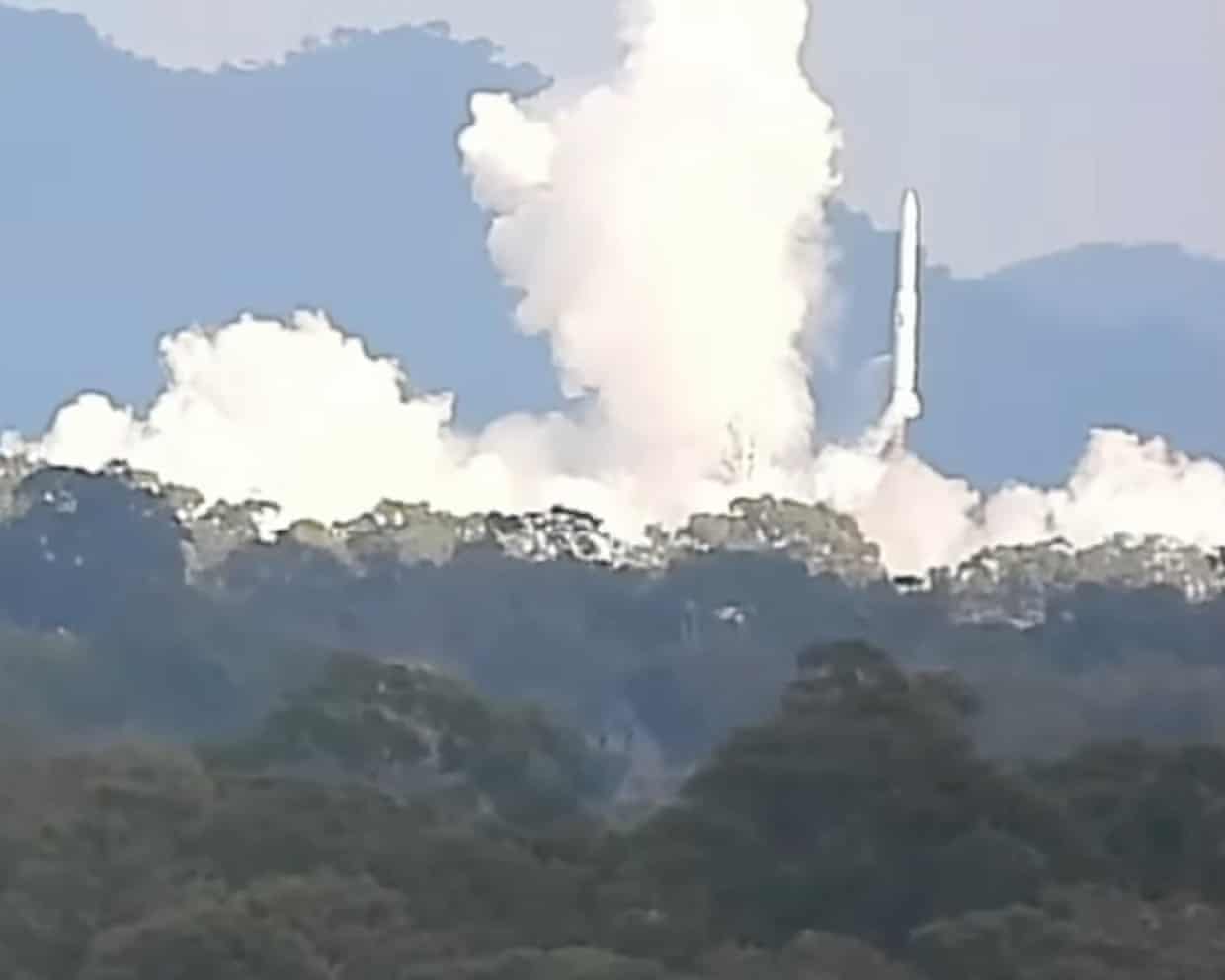
The launch of Australia’s first orbital rocket, the Eris, ended abruptly shortly after takeoff on March 6, 2024. The rocket, developed by Gold Coast-based Gilmour Space, ascended briefly from the Bowen orbital spaceport in north Queensland before crashing back to earth in a cloud of smoke. Despite the premature conclusion, the event marks a significant milestone for Australia’s burgeoning space industry.
The launch was highly anticipated, drawing attention from space enthusiasts who gathered on nearby hills. Among them was popular YouTuber Josh Keegan, known as Aussienaut, who streamed the event live. “OK we’re going, we’re going, it’s going!” Keegan exclaimed with excitement during the countdown. However, his enthusiasm quickly turned to disappointment as the rocket failed to maintain altitude. “It’s gone, it’s gone,” he said moments later. “There wasn’t sufficient thrust to actually keep it up. I believe that’s the end of the Eris rocket. We have a cloud, and that’s the end.”
Despite the setback, Gilmour Space expressed optimism in a statement released after the launch. The company highlighted that the Eris experienced 14 seconds of flight, bringing Australia closer to joining the elite group of six nations capable of launching spacecraft into orbit. “For a maiden test flight, especially after an extended 18-month wait on the pad for final approvals, this is a strong result and a major step forward for Australia’s sovereign space capability,” the statement read. “Most importantly, the team is safe and energised for Test Flight 2.”
CEO Adam Gilmour, in a social media post, echoed the sentiment, stating, “Got off the Pad, I am happy. Of course, I would have liked more flight time but happy with this.” The 23-meter-long, 30-tonne rocket was equipped with sensors designed to collect data that will inform future launch attempts.
The One Giant Leap Australia Foundation, which focuses on developing educational programs for the space workforce, congratulated Gilmour Space on its efforts. The foundation noted, “The only way to learn is to fail forward. We know more today than we did yesterday.”
Prior to the launch, Gilmour Space faced challenges, including a postponed attempt due to strong winds. The company had initially aimed to launch in May 2023 but did not proceed at that time. Recently, the Australian government provided AUD 5 million to support the development of the Eris launch vehicle and its next-generation liquid rocket engine.
As the Australian space sector continues to evolve, the unsuccessful launch of the Eris rocket serves as both a learning experience and a stepping stone towards future successes. With the commitment of companies like Gilmour Space and support from institutions, Australia is positioning itself to make significant strides in the global space arena.












Thomson and Weston Families Secure Hudson’s Bay Charter for $18M

Family of Colombian Man Challenges U.S. Military Strikes After Death

Bloc Québécois Aims to Amend Bill C-9, Targeting Hate Speech Exemptions

Family and Friends Mourn the Loss of Donald James Wonnacott

Hollywood Stars Dine at South Osborne’s Vera Pizzeria

Calgary Teen Charged for Allegedly Creating AI-Generated Explicit Images

Dental Oversight Puts Niagara Detention Centre Inmates at Risk

Israel and Lebanon Begin Talks for Economic Cooperation NOW

Winnipeg Considers Photo Reporting for Parking Violations

Secwepemc First Nation Seeks Aboriginal Title Over Kamloops Area

Scientists Unearth Ancient Antarctic Ice to Unlock Climate Secrets

Trump and McCormick to Announce $70 Billion Energy Investments

Four Astronauts Return to Earth After International Space Station Mission

TransLink Launches Food Truck Program to Boost Revenue in Vancouver

Apple Notes Enhances Functionality with Markdown Support in macOS 26

Manitoba’s Burger Champion Shines Again Amid Dining Innovations

Urgent Update: Fatal Crash on Highway 99 Claims Life of Pitt Meadows Man

Ukrainian Tennis Star Elina Svitolina Faces Death Threats Online
-
 Politics4 weeks ago
Secwepemc First Nation Seeks Aboriginal Title Over Kamloops Area
-
 World5 months ago
Scientists Unearth Ancient Antarctic Ice to Unlock Climate Secrets
-
 Entertainment5 months ago
Trump and McCormick to Announce $70 Billion Energy Investments
-
 Science5 months ago
Four Astronauts Return to Earth After International Space Station Mission
-
 Lifestyle5 months ago
TransLink Launches Food Truck Program to Boost Revenue in Vancouver
-
 Technology3 months ago
Apple Notes Enhances Functionality with Markdown Support in macOS 26
-
 Lifestyle3 months ago
Manitoba’s Burger Champion Shines Again Amid Dining Innovations
-
 Top Stories2 months ago
Urgent Update: Fatal Crash on Highway 99 Claims Life of Pitt Meadows Man
-
 Politics4 months ago
Ukrainian Tennis Star Elina Svitolina Faces Death Threats Online
-
 Sports5 months ago
Search Underway for Missing Hunter Amid Hokkaido Bear Emergency
-

 Politics5 months ago
Carney Engages First Nations Leaders at Development Law Summit
-

 Technology5 months ago
Frosthaven Launches Early Access on July 31, 2025