
Science
Curiosity Rover Discovers Unusual Structures on Mars

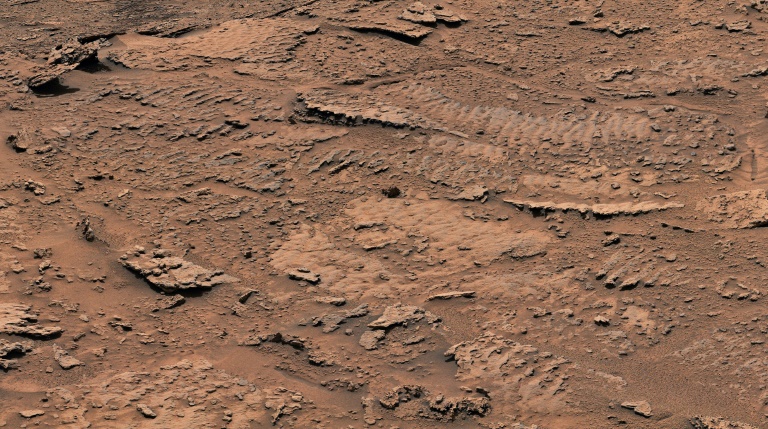
The Curiosity rover has identified unusual mineral formations on the surface of Mars that resemble coral. While this discovery provokes interest and curiosity, it does not provide conclusive evidence of past or present organic life on the planet. The findings highlight the complexity of Martian geology, suggesting that these structures may have formed through natural geological processes rather than biological activity.
Understanding the Discovery
The formations detected by the Curiosity rover exhibit branching patterns that are reminiscent of coral, a characteristic not typically associated with Martian rocks. Generally, Martian rock formations demonstrate sharp, right-angled fractures, indicating a straightforward geological structure. In contrast, these new formations present a departure from the norm, prompting further investigation into their origins.
Despite their coral-like appearance, scientists caution against jumping to conclusions. Mineralization can occur in various forms, producing intricate shapes without the influence of biological processes. For instance, many may recall the “grow your own crystals” kits, which showcase how minerals can take on diverse and complex shapes. This underscores the challenge of attributing the formations on Mars to biological causes alone.
The Role of Clays and Geological Processes
Mars is known to harbor clays, which can create fossilized formations that might resemble coral structures. These clays possess distinctive chemical properties, setting them apart from surrounding soils and other geological features. The potential for these clays to form habitats for microscopic life raises intriguing questions about the possibility of past life on the planet.
Interestingly, the distinct branching morphology of the Martian structures implies a degree of complexity that has endured for billions of years. Researchers have speculated about the role of clays as potential habitats for microbial colonies, leading to distinct shapes similar to Earth’s stromatolites. Although stromatolites are not easily recognized as life forms, they represent ancient life that still exists today.
This discovery prompts a broader inquiry related to the Fermi Paradox: if life exists elsewhere in the universe, how would we recognize it? The complexities of these formations challenge our understanding and perceptions of what constitutes life, particularly in the harsh environment of Mars.
As investigations continue, scientists remain focused on unraveling the mysteries of these Martian structures, emphasizing the need for careful analysis before drawing definitive conclusions about their origins. The findings from the Curiosity rover not only enrich our understanding of Mars but also encourage a reevaluation of how we define and recognize life beyond Earth.










Morris Churches Unite for Annual Good Friday Walk With the Cross

Chloe Zhao’s ‘Buffy’ Reboot Cancelled: Sarah Michelle Gellar Speaks Out

Essential Ingredients for Life Found in Ryugu Asteroid Samples

Urgent Rescue: NSR Airlifts Injured Climber from Nanaimo

Riverside Heart Ball Achieves Record $815,000 for Mental Health

Cognizant Launches AI Factory to Enhance Enterprise AI Scalability

Samsung’s Galaxy Watch 9 to Feature Larger Battery Than Before

Toronto’s AIDS Memorial Faces Potential Redesign Amid Community Concerns

Bayern Munich Loses Luis Díaz Red Card Appeal Despite Referee’s Admission

Secwepemc First Nation Seeks Aboriginal Title Over Kamloops Area

Fatal Crash on Highway 11 Claims Three Lives, Major Closure Ongoing

Manitoba’s Burger Champion Shines Again Amid Dining Innovations

Canadian Curler E.J. Harnden Announces Retirement from Competition

Urgent Fire Erupts at Salvation Army on Christmas Evening

Scientists Unearth Ancient Antarctic Ice to Unlock Climate Secrets

Minister Faces Scrutiny Over Delayed Foreign Interference Watchdog Appointment

Trump and McCormick to Announce $70 Billion Energy Investments

Monika Hibbs Unveils Acres Market & Interiors in Major Rebrand
-
 Politics5 months ago
Secwepemc First Nation Seeks Aboriginal Title Over Kamloops Area
-
 Top Stories4 months ago
Fatal Crash on Highway 11 Claims Three Lives, Major Closure Ongoing
-
 Lifestyle7 months ago
Manitoba’s Burger Champion Shines Again Amid Dining Innovations
-
 Sports4 months ago
Canadian Curler E.J. Harnden Announces Retirement from Competition
-
 Top Stories4 months ago
Urgent Fire Erupts at Salvation Army on Christmas Evening
-
 World9 months ago
Scientists Unearth Ancient Antarctic Ice to Unlock Climate Secrets
-
 World5 months ago
Minister Faces Scrutiny Over Delayed Foreign Interference Watchdog Appointment
-
 Entertainment9 months ago
Trump and McCormick to Announce $70 Billion Energy Investments
-
 Lifestyle9 months ago
Monika Hibbs Unveils Acres Market & Interiors in Major Rebrand
-

 Science9 months ago
Four Astronauts Return to Earth After International Space Station Mission
-

 Lifestyle9 months ago
TransLink Launches Food Truck Program to Boost Revenue in Vancouver
-
 World2 months ago
Ranchman’s Cookhouse & Dancehall to Relocate by Early 2027