
Science
Grad Student Leverages AI to Transform Lung Disease Treatment

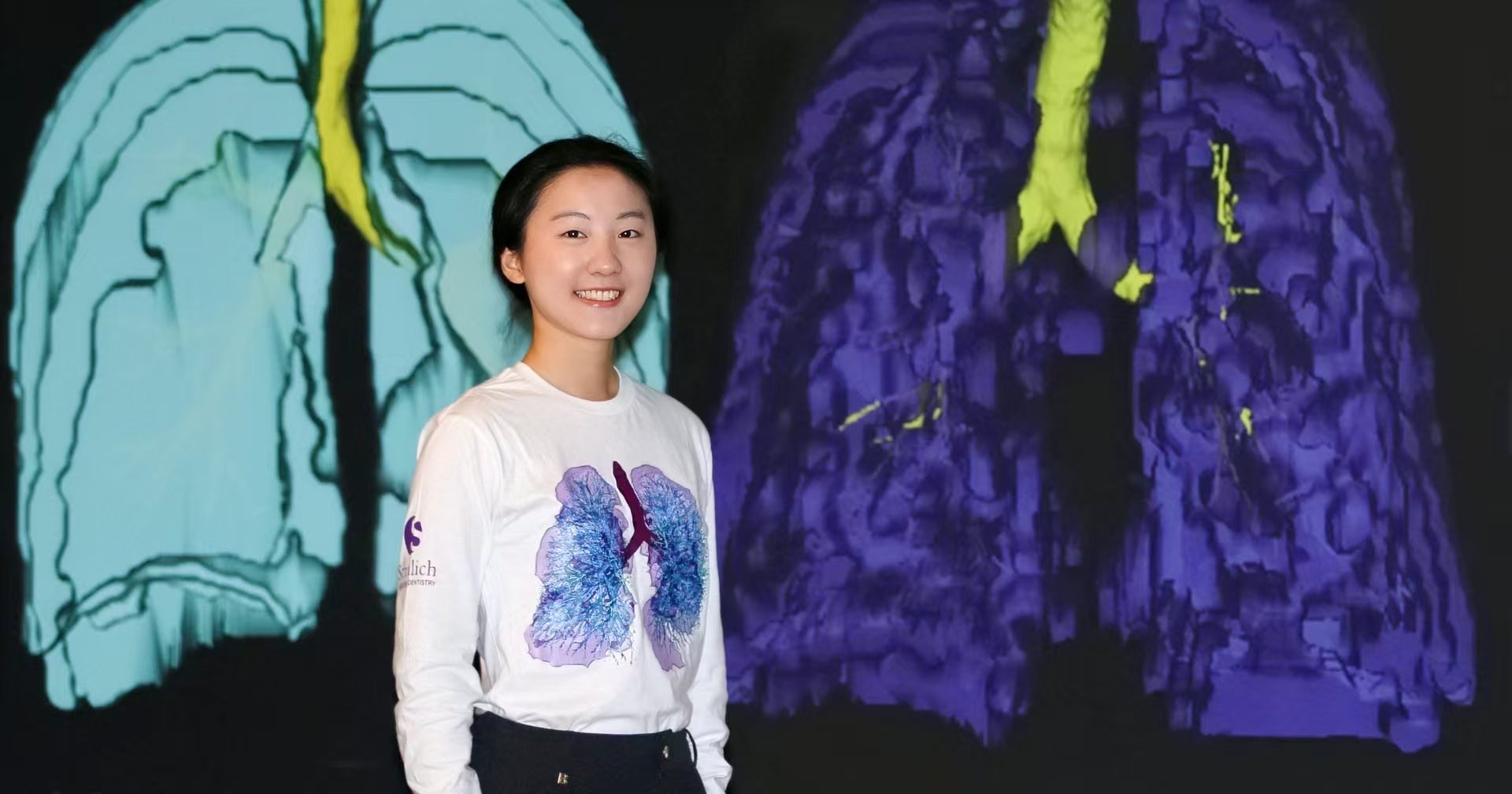
Artificial intelligence is revolutionizing the approach to lung disease management, paving the way for personalized treatment options. Yixiu (Helen) He, a master’s student at Western University, is at the forefront of these advancements. Working at the Advanced Pulmonary Imaging (API) Lab within the Robarts Research Institute, Helen is utilizing machine learning to enhance understanding and care for patients suffering from chronic lung conditions.
Helen is part of a research team led by Grace Parraga, a professor in medical biophysics who holds a Tier 1 Canada Research Chair in Lung Imaging. The API Lab focuses on developing innovative, non-invasive imaging techniques to detect lung damage that is often overlooked by traditional clinical methods. These techniques aim to predict disease progression and tailor therapies for patients with chronic lung diseases like asthma.
One of the critical challenges in asthma treatment is understanding patient responses to various therapies. As Parraga notes, “Detecting lung disease in patients with serious symptoms but normal clinical tests is challenging.” Helen’s role is to bridge this gap by creating tools that allow researchers to analyze how patients with severe asthma respond to treatments.
In her work, Helen combines data from lung function tests, including spirometry and oscillometry, with imaging results from MRI, CT, and X-ray scans. These analyses focus on identifying subtle differences in inhaled gas distribution, referred to as ‘texture features.’ To streamline this process, a statistical method known as Boruta analysis is employed to pinpoint the most critical features for training machine learning models.
The application of AI significantly accelerates the research process. “These models can analyze thousands of pixel-by-pixel comparisons at once to reveal hidden patterns in a tiny fraction of the time it would take a person to do the same by hand,” Helen explains. Through large datasets, machine learning models can recognize patterns and make predictions, enhancing the potential for personalized healthcare solutions.
Helen’s scholarship journey has been bolstered by the Vector Scholarship in Artificial Intelligence (VSAI), awarded to promising students in AI-related master’s programs across Ontario. The Vector Institute, an independent Canadian research organization, aims to promote innovation and economic growth through advancements in AI technology. Helen’s work not only contributes to patient outcomes but also optimizes resource use within the healthcare system. Parraga comments on Helen’s contributions, stating, “This work will improve overall patient outcomes and save time and money.”
The intersection of machine learning and healthcare not only excites Helen but also facilitates her rapid acquisition of technical skills. Despite her limited coding background, she quickly learned Python using AI tools, allowing her to tackle complex tasks more effectively. “With AI, you can be the connector – the person who learns different aspects to support interdisciplinary work,” she says.
Originally from Chongqing, China, Helen appreciates the financial support and networking opportunities provided by the Vector scholarship. “Vector helps me make connections with industry partners, entrepreneurs, and educators,” she notes. “I feel this is a really important area for study.”
Canada is recognized for its leadership in medical imaging and pulmonary functional imaging research, with Western University at the forefront. Parraga emphasizes the impact of this research, stating, “Western-trained imaging scientists have now established new approaches and strong teams who are positioning novel lung imaging markers and technologies to improve the health of patients worldwide.”
Through her innovative work in AI and machine learning, Helen He is not only enhancing the understanding of lung diseases but also contributing to a future where healthcare can be increasingly personalized and effective.












Morris Churches Unite for Annual Good Friday Walk With the Cross

Chloe Zhao’s ‘Buffy’ Reboot Cancelled: Sarah Michelle Gellar Speaks Out

Essential Ingredients for Life Found in Ryugu Asteroid Samples

Urgent Rescue: NSR Airlifts Injured Climber from Nanaimo

Riverside Heart Ball Achieves Record $815,000 for Mental Health

Cognizant Launches AI Factory to Enhance Enterprise AI Scalability

Samsung’s Galaxy Watch 9 to Feature Larger Battery Than Before

Toronto’s AIDS Memorial Faces Potential Redesign Amid Community Concerns

Bayern Munich Loses Luis Díaz Red Card Appeal Despite Referee’s Admission

Secwepemc First Nation Seeks Aboriginal Title Over Kamloops Area

Fatal Crash on Highway 11 Claims Three Lives, Major Closure Ongoing

Manitoba’s Burger Champion Shines Again Amid Dining Innovations

Canadian Curler E.J. Harnden Announces Retirement from Competition

Urgent Fire Erupts at Salvation Army on Christmas Evening

Scientists Unearth Ancient Antarctic Ice to Unlock Climate Secrets

Minister Faces Scrutiny Over Delayed Foreign Interference Watchdog Appointment

Trump and McCormick to Announce $70 Billion Energy Investments

Four Astronauts Return to Earth After International Space Station Mission
-
 Politics5 months ago
Secwepemc First Nation Seeks Aboriginal Title Over Kamloops Area
-
 Top Stories4 months ago
Fatal Crash on Highway 11 Claims Three Lives, Major Closure Ongoing
-
 Lifestyle7 months ago
Manitoba’s Burger Champion Shines Again Amid Dining Innovations
-
 Sports3 months ago
Canadian Curler E.J. Harnden Announces Retirement from Competition
-
 Top Stories3 months ago
Urgent Fire Erupts at Salvation Army on Christmas Evening
-
 World9 months ago
Scientists Unearth Ancient Antarctic Ice to Unlock Climate Secrets
-
 World5 months ago
Minister Faces Scrutiny Over Delayed Foreign Interference Watchdog Appointment
-
 Entertainment9 months ago
Trump and McCormick to Announce $70 Billion Energy Investments
-
 Science9 months ago
Four Astronauts Return to Earth After International Space Station Mission
-

 Lifestyle9 months ago
TransLink Launches Food Truck Program to Boost Revenue in Vancouver
-

 Lifestyle9 months ago
Monika Hibbs Unveils Acres Market & Interiors in Major Rebrand
-

 World1 month ago
Ranchman’s Cookhouse & Dancehall to Relocate by Early 2027