
Science
Industry Demands Practical Humanoid Robots Beyond Entertainment

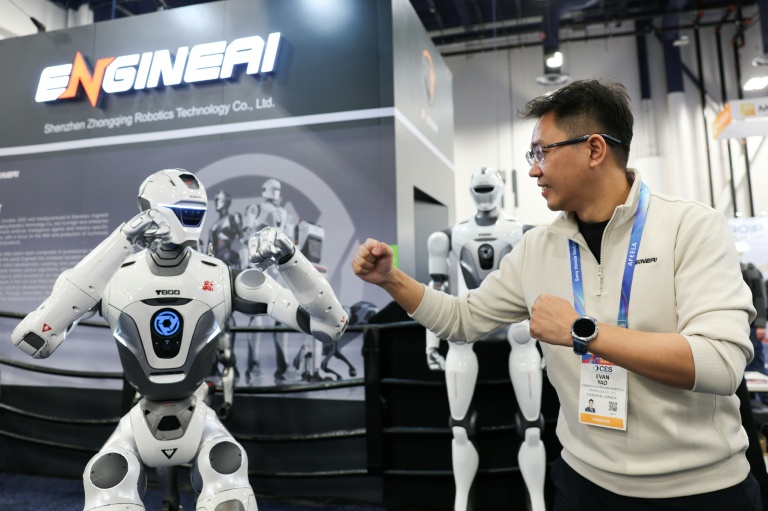
Humanoid robots showcased a range of impressive performances at the Consumer Electronics Show (CES), from dancing to playing ping-pong. However, industry experts are urging a shift in focus towards practical applications that can enhance productivity in real-world settings. As robotics take center stage at the annual CES event held in Las Vegas, insiders express concern that developing robots capable of functioning autonomously will require significant advancements in artificial intelligence (AI) and years of additional training.
To achieve true autonomy, humanoid robots must possess AI that effectively translates visual and auditory information into actionable responses. Current large language models, such as those powering tools like ChatGPT, do not adequately address the complexities needed for robots to operate in demanding environments like kitchens or factories. “If you want robots to learn embodied things, you have to put them inside a body,” stated Henny Admoni, an associate professor at the robotics institute at Carnegie Mellon University.
The sentiment is echoed by Christian Rokseth, founder of Humanoid Guide, who likens the current state of humanoid robots to “locking a child in a room and expecting it to learn about the world.” Despite advancements in hardware over the past year, Rokseth voices impatience for more substantial innovation. “They’ve shown robots dancing and doing kung fu; now show us that they can be productive,” he said.
Collaboration with Tech Giants
Companies like EngineAI, founded by Evan Yao, are striving to enhance AI capabilities in their robots. Yao indicated that his Shenzhen-based company is partnering with major tech firms such as Amazon and Meta to develop AI systems that simulate human behavior. “We are trying to simulate humans, but the robots will never become human,” Yao remarked, highlighting the emotional depth that distinguishes humans from machines.
In a different approach, Yiran Sui and her team at Robotera are training a humanoid robot to participate in the Beijing marathon later this year, demonstrating the diverse applications of robotic technology.
Growth in the Robotics Market
The Consumer Technology Association, which organizes CES, reported a vibrant and growing robotics industry, projecting the global market will reach $179 billion by 2030. The majority of this growth is expected to occur in factories, warehouses, and other business environments, where robots—often not humanoid—are already making significant contributions.
According to Artem Sokolov, founder of a London-based humanoid robotics startup, the design of humanoid robots should closely reflect human capabilities in order to thrive in industrial settings. At CES, Hyundai unveiled its humanoid robot, Atlas, developed in collaboration with Boston Dynamics, which is intended for testing in factory environments.
Despite the excitement around new humanoid robots, experts urge caution regarding claims of fully autonomous systems. Admoni pointed out that many of these robots are still dependent on human operators for control. “There has been a ton of new companies claiming that they are developing autonomous humanoid robots,” she noted. “But these systems tend to be teleoperated; you have a person in a suit or using controllers, and every movement of that person is then translated into the robot.”
Addressing Training Challenges
Innovative startups are exploring solutions to the training challenges that humanoid robots face. For instance, some are experimenting with having individuals wear cameras and haptic gloves while performing everyday tasks at home. “To make robots general machines, they need to be let out in the real world,” Rokseth emphasized, advocating for more practical training environments beyond assembly lines and warehouses.
The ongoing developments in humanoid robotics illustrate both the potential and the challenges of integrating these machines into everyday life. While the technology dazzles audiences with its capabilities, the industry remains focused on ensuring that these robots can deliver real-world benefits and not just entertainment.













Morris Churches Unite for Annual Good Friday Walk With the Cross

Chloe Zhao’s ‘Buffy’ Reboot Cancelled: Sarah Michelle Gellar Speaks Out

Essential Ingredients for Life Found in Ryugu Asteroid Samples

Urgent Rescue: NSR Airlifts Injured Climber from Nanaimo

Riverside Heart Ball Achieves Record $815,000 for Mental Health

Cognizant Launches AI Factory to Enhance Enterprise AI Scalability

Samsung’s Galaxy Watch 9 to Feature Larger Battery Than Before

Toronto’s AIDS Memorial Faces Potential Redesign Amid Community Concerns

Bayern Munich Loses Luis Díaz Red Card Appeal Despite Referee’s Admission

Secwepemc First Nation Seeks Aboriginal Title Over Kamloops Area

Fatal Crash on Highway 11 Claims Three Lives, Major Closure Ongoing

Manitoba’s Burger Champion Shines Again Amid Dining Innovations

Canadian Curler E.J. Harnden Announces Retirement from Competition

Urgent Fire Erupts at Salvation Army on Christmas Evening

Scientists Unearth Ancient Antarctic Ice to Unlock Climate Secrets

Minister Faces Scrutiny Over Delayed Foreign Interference Watchdog Appointment

Trump and McCormick to Announce $70 Billion Energy Investments

Monika Hibbs Unveils Acres Market & Interiors in Major Rebrand
-
 Politics5 months ago
Secwepemc First Nation Seeks Aboriginal Title Over Kamloops Area
-
 Top Stories4 months ago
Fatal Crash on Highway 11 Claims Three Lives, Major Closure Ongoing
-
 Lifestyle7 months ago
Manitoba’s Burger Champion Shines Again Amid Dining Innovations
-
 Sports3 months ago
Canadian Curler E.J. Harnden Announces Retirement from Competition
-
 Top Stories4 months ago
Urgent Fire Erupts at Salvation Army on Christmas Evening
-
 World9 months ago
Scientists Unearth Ancient Antarctic Ice to Unlock Climate Secrets
-
 World5 months ago
Minister Faces Scrutiny Over Delayed Foreign Interference Watchdog Appointment
-
 Entertainment9 months ago
Trump and McCormick to Announce $70 Billion Energy Investments
-
 Lifestyle9 months ago
Monika Hibbs Unveils Acres Market & Interiors in Major Rebrand
-
 Science9 months ago
Four Astronauts Return to Earth After International Space Station Mission
-

 Lifestyle9 months ago
TransLink Launches Food Truck Program to Boost Revenue in Vancouver
-

 World1 month ago
Ranchman’s Cookhouse & Dancehall to Relocate by Early 2027