
Science
Manitoba’s Churchill Marine Observatory Marks One Year of Research

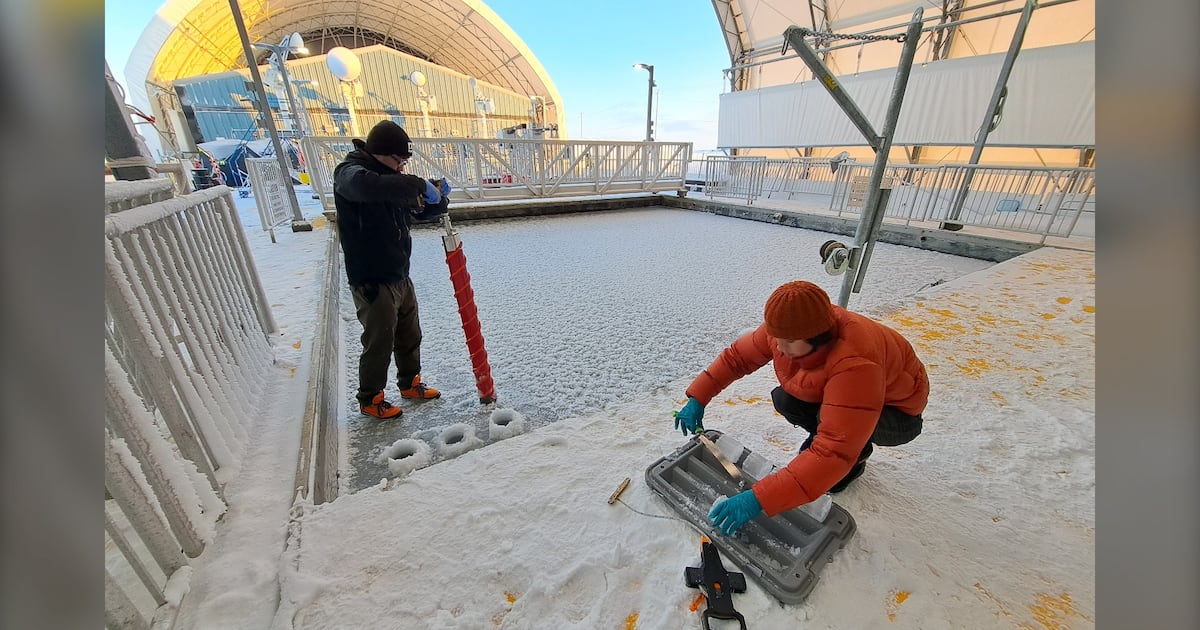
A multidisciplinary research facility dedicated to Arctic science in Churchill, Manitoba, is celebrating its first anniversary. The Churchill Marine Observatory (CMO), which officially opened on August 27, 2024, aims to address complex questions that have significant socioeconomic implications for the region. According to Dr. Feiyue Wang, the project lead and professor at the University of Manitoba’s Clayton H. Riddell Faculty of Environment, Earth, and Resources, the CMO’s establishment has “really put Manitoba on a map of marine research.”
The CMO, which represents an investment of approximately $45 million, is designed to facilitate a wide range of studies. This includes the ability to draw seawater from both the Hudson Bay and the mouth of the Churchill River. Wang explained that this unique setup enables researchers to conduct experimental studies, particularly as the environment surrounding Hudson Bay undergoes rapid changes. “We could actually test different scenarios and start to gain the knowledge to prepare the region,” he noted.
A significant aspect of the CMO is its focus on risk reduction and mitigation strategies, particularly concerning oil spills. Wang, whose background is in aquatic chemistry, highlighted the observatory’s capacity to investigate how natural microorganisms might degrade oil in ice-covered waters. Additionally, the facility is equipped to study how freshwater influences the marine ecosystem in Hudson Bay.
The CMO features advanced monitoring systems, including strings of sensors located at the bottom of the Churchill River and Hudson Bay. These sensors allow researchers to gather data on various physical and biological properties of the water. The observatory also operates a research vessel, the William Kennedy, which enhances mobility for sampling and monitoring activities.
While many projects are still in progress, Wang shared that the CMO supported three major research initiatives between November 2024 and February 2025. One of these projects investigated the early stages of thin ice formation, conducted in collaboration with researchers from Denmark. Another ongoing study is exploring the ability of microorganisms to break down oil in ice-covered waters, which is crucial for environmental management in the event of an oil spill.
Looking to the future, Wang expressed a strong desire for increased participation from Indigenous researchers and community members in the CMO’s research activities. He emphasized the importance of local involvement, stating that “folks who live there, who call that region home, are the ones who are going to be more invested in it.” The observatory has already incorporated some community involvement, but Wang aims to see this become a more prominent aspect of the CMO’s overall research direction.
As the CMO approaches its second year, it stands as a vital hub for Arctic research, poised to contribute significantly to our understanding of marine environments and the challenges they face.











Judges’ Association Sues Government Over $28,000 Pay Raise Rejection

Urgent Call for $150M Federal Funding for Qikiqtarjuaq Port

Saskatchewan Government Adds $1 Billion to Deficit – Urgent Update

Thomson and Weston Families Secure Hudson’s Bay Charter for $18M

Family of Colombian Man Challenges U.S. Military Strikes After Death

Bloc Québécois Aims to Amend Bill C-9, Targeting Hate Speech Exemptions

Family and Friends Mourn the Loss of Donald James Wonnacott

Hollywood Stars Dine at South Osborne’s Vera Pizzeria

Calgary Teen Charged for Allegedly Creating AI-Generated Explicit Images

Secwepemc First Nation Seeks Aboriginal Title Over Kamloops Area

Scientists Unearth Ancient Antarctic Ice to Unlock Climate Secrets

Trump and McCormick to Announce $70 Billion Energy Investments

Four Astronauts Return to Earth After International Space Station Mission

TransLink Launches Food Truck Program to Boost Revenue in Vancouver

Apple Notes Enhances Functionality with Markdown Support in macOS 26

Manitoba’s Burger Champion Shines Again Amid Dining Innovations

Urgent Update: Fatal Crash on Highway 99 Claims Life of Pitt Meadows Man

Ukrainian Tennis Star Elina Svitolina Faces Death Threats Online
-
 Politics4 weeks ago
Secwepemc First Nation Seeks Aboriginal Title Over Kamloops Area
-
 World5 months ago
Scientists Unearth Ancient Antarctic Ice to Unlock Climate Secrets
-
 Entertainment5 months ago
Trump and McCormick to Announce $70 Billion Energy Investments
-
 Science5 months ago
Four Astronauts Return to Earth After International Space Station Mission
-
 Lifestyle5 months ago
TransLink Launches Food Truck Program to Boost Revenue in Vancouver
-
 Technology3 months ago
Apple Notes Enhances Functionality with Markdown Support in macOS 26
-
 Lifestyle3 months ago
Manitoba’s Burger Champion Shines Again Amid Dining Innovations
-
 Top Stories2 months ago
Urgent Update: Fatal Crash on Highway 99 Claims Life of Pitt Meadows Man
-
 Politics4 months ago
Ukrainian Tennis Star Elina Svitolina Faces Death Threats Online
-
 Sports5 months ago
Search Underway for Missing Hunter Amid Hokkaido Bear Emergency
-
 Politics5 months ago
Carney Engages First Nations Leaders at Development Law Summit
-

 Technology5 months ago
Frosthaven Launches Early Access on July 31, 2025