
Science
MUHC Researcher Pioneers 3D-Printed Lung Tissue to Transform Care

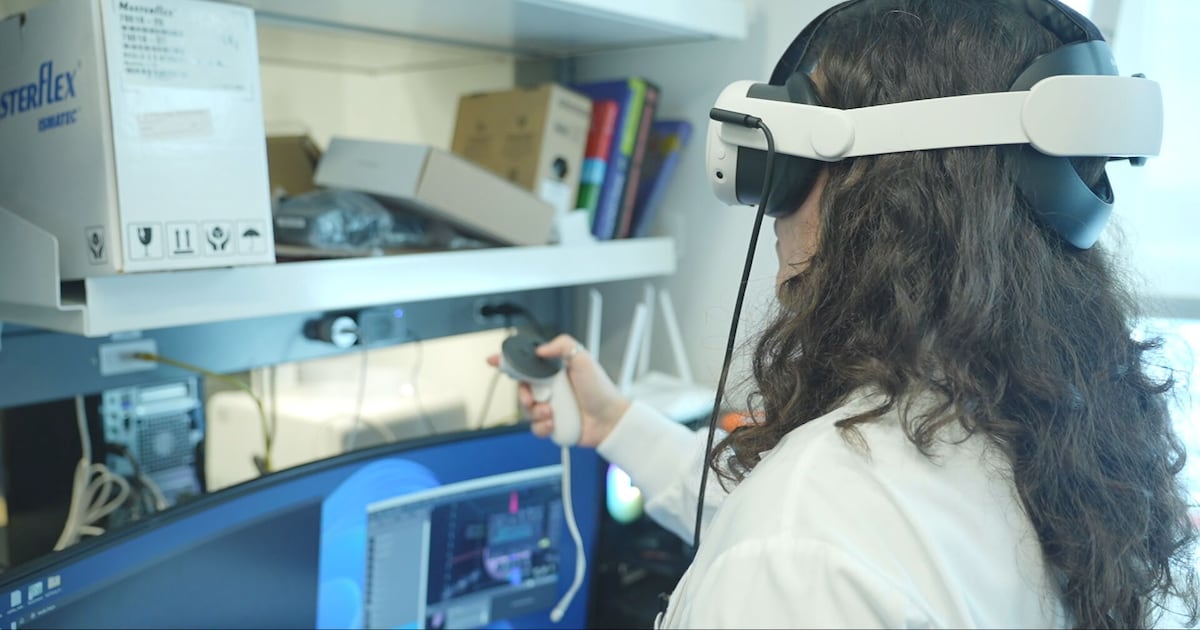
In a groundbreaking advancement, researchers at the McGill University Health Centre (MUHC) in Montreal are developing 3D-printed lung tissue that could significantly enhance respiratory care. Led by Dr. Darcy Wagner, the Canada Excellence Research Chair in Lung Regenerative Medicine, the team is working to create innovative solutions aimed at reducing the need for lung transplants.
Dr. Wagner, who utilizes virtual reality (VR) technology in her research, is striving to design lung-specific inks compatible with respiratory tissue. “We are making lung-specific inks. I would not recommend using the inks that we have for heart or for skin,” she stated. The ultimate goal is to produce 3D-printed patches that can connect healthy lung tissues, thereby promoting cleaner airways and enhancing lung function.
The inspiration for this ambitious project struck Wagner while she was in Munich, Germany. A seemingly simple experience making a pretzel led to her “aha” moment, demonstrating the potential of 3D printing to create complex shapes. “This was the moment I really believed that it was possible, when we first found materials and processes that could actually make something that looked like a complex object,” she explained.
Despite the promising beginnings, the complexity of lung anatomy presents challenges. Some features essential for gas exchange are so minute—measuring just one micrometre—that current printing technology cannot replicate them. Wagner aims to closely mimic these features with the printers and hopes to guide the body’s cells to complete the regeneration process.
The need for such innovations is pressing. Worldwide, approximately 7,000 lung transplants occur each year, with only one hospital in Quebec, the Centre hospitalier de l’Université de Montréal (CHUM), equipped to perform this intricate procedure. Statistics from Transplant Quebec reveal that there are currently 14 individuals on the waitlist for a lung transplant in the province. Wagner emphasizes the disparity in organ availability, noting that lungs have the highest failure rate among solid organ transplants, posing a significant challenge for patients.
Climate change and longer life spans are increasing the prevalence of respiratory ailments, leading to more patients in need of transplants. “If you are really lucky enough to get one of those rare lungs that are eligible for transplantation, you have the worst outcome of any solid organ transplants right now,” Wagner lamented.
The MUHC actively supports innovative research, recruiting experts like Wagner to foster breakthroughs in healthcare. Marie-Hélène Laramee, President and CEO of the MUHC Foundation, highlighted the importance of attracting talent that can push the boundaries of scientific exploration. “Recruiting people like Darcy to come and work at the MUHC is really important to ensure that our community has access to the latest and greatest in health care,” she stated.
While Wagner’s research remains in the early stages, the potential for 3D-printed lung tissue to revolutionize respiratory care is immense. If successful, this pioneering work could save countless lives, providing a new avenue for treatment in the face of growing respiratory challenges. The journey from laboratory innovation to clinical application may be long, but researchers are hopeful for a future where lung transplants become a thing of the past.













Morris Churches Unite for Annual Good Friday Walk With the Cross

Chloe Zhao’s ‘Buffy’ Reboot Cancelled: Sarah Michelle Gellar Speaks Out

Essential Ingredients for Life Found in Ryugu Asteroid Samples

Urgent Rescue: NSR Airlifts Injured Climber from Nanaimo

Riverside Heart Ball Achieves Record $815,000 for Mental Health

Cognizant Launches AI Factory to Enhance Enterprise AI Scalability

Samsung’s Galaxy Watch 9 to Feature Larger Battery Than Before

Toronto’s AIDS Memorial Faces Potential Redesign Amid Community Concerns

Bayern Munich Loses Luis Díaz Red Card Appeal Despite Referee’s Admission

Secwepemc First Nation Seeks Aboriginal Title Over Kamloops Area

Fatal Crash on Highway 11 Claims Three Lives, Major Closure Ongoing

Manitoba’s Burger Champion Shines Again Amid Dining Innovations

Canadian Curler E.J. Harnden Announces Retirement from Competition

Urgent Fire Erupts at Salvation Army on Christmas Evening

Scientists Unearth Ancient Antarctic Ice to Unlock Climate Secrets

Minister Faces Scrutiny Over Delayed Foreign Interference Watchdog Appointment

Trump and McCormick to Announce $70 Billion Energy Investments

Four Astronauts Return to Earth After International Space Station Mission
-
 Politics5 months ago
Secwepemc First Nation Seeks Aboriginal Title Over Kamloops Area
-
 Top Stories4 months ago
Fatal Crash on Highway 11 Claims Three Lives, Major Closure Ongoing
-
 Lifestyle7 months ago
Manitoba’s Burger Champion Shines Again Amid Dining Innovations
-
 Sports3 months ago
Canadian Curler E.J. Harnden Announces Retirement from Competition
-
 Top Stories3 months ago
Urgent Fire Erupts at Salvation Army on Christmas Evening
-
 World9 months ago
Scientists Unearth Ancient Antarctic Ice to Unlock Climate Secrets
-
 World5 months ago
Minister Faces Scrutiny Over Delayed Foreign Interference Watchdog Appointment
-
 Entertainment9 months ago
Trump and McCormick to Announce $70 Billion Energy Investments
-
 Science9 months ago
Four Astronauts Return to Earth After International Space Station Mission
-

 Lifestyle9 months ago
Monika Hibbs Unveils Acres Market & Interiors in Major Rebrand
-

 Lifestyle9 months ago
TransLink Launches Food Truck Program to Boost Revenue in Vancouver
-

 World1 month ago
Ranchman’s Cookhouse & Dancehall to Relocate by Early 2027