
Science
Museums Unveil “Scent of Eternity” in Ancient Egyptian Exhibits

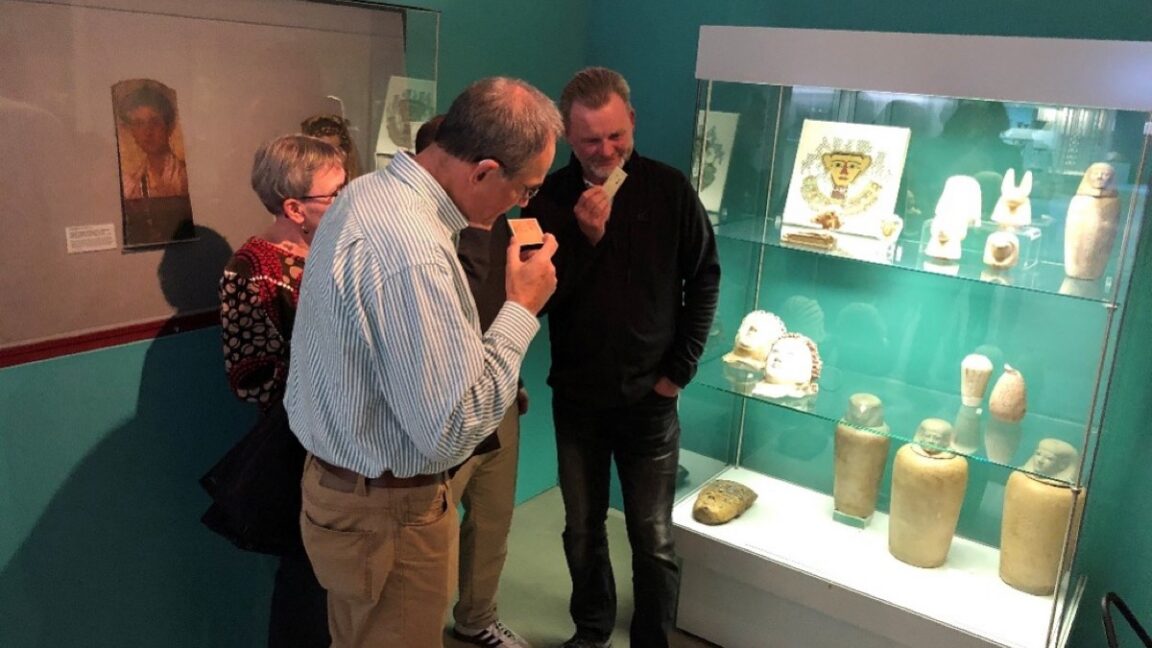
Scientists have made significant strides in understanding ancient Egyptian embalming practices by identifying the complex compounds used in the balms for mummification. In 2023, a study revealed that these recipes included ingredients not native to the region, prompting researchers to collaborate with perfumer Carole Calvez to recreate what co-author Barbara Huber described as “the scent of eternity.” This innovative approach aims to enhance visitors’ experiences at museums featuring Egyptian exhibits, fundamentally changing perceptions of embalming practices.
The exploration of Egyptian embalming techniques dates back to the Predynastic Period, when early Egyptians discovered that the dry desert climate helped preserve bodies buried in the sand. As cultural practices evolved, the need for preservation integrated into religious beliefs, leading to more sophisticated methods. Initially, bodies were laid on tables, and internal organs—except for the heart—were removed. According to Herodotus, the process involved extracting part of the brain through the nostrils and injecting drugs to liquefy the remaining matter. The cavity was then treated with spices, palm wine, and filled with aromatic plants, including bags of natron for dehydration, which typically took around 40 days.
Historical texts, notably The Ritual of Embalming and Herodotus’s Histories, provide limited details on the specific ingredients used in mummification. Recent advancements in biomolecular analysis, including gas chromatography, have provided new insights. For instance, a 2018 study utilized gas chromatography-mass spectrometry to analyze organic residues from mummy wrappings, uncovering a rich mixture of plant oils, aromatic extracts, and resins.
In her recent research published in the Journal of Archaeological Science, Huber focused on the balms used for embalming organs stored in canopic jars. The analysis revealed residues including beeswax, plant oils, and conifer resins, leading to a unique fragrance profile that balances a strong pine-like scent with sweeter undertones and smoky notes from bitumen. This scent composition has been articulated in Huber’s latest paper in Frontiers in Environmental Archaeology, which outlines methods for museums to incorporate scents into exhibits.
To implement this olfactory experience, Huber and her team established a collaboration with perfumer Carole Calvez, who crafted a scent suitable for museum environments. Calvez emphasized the creative challenge, stating, “The real challenge lies in imagining the scent as a whole,” highlighting the need to translate scientific data into a cohesive sensory experience that captures the complexity of ancient materials.
Two primary methods have been developed for introducing these scents into museum settings. The Museum August Kestner in Hanover, Germany, features a portable scented card as part of guided tours, allowing visitors to engage more intimately with the artifacts. Meanwhile, the Moesgaard Museum in Aarhus, Denmark, has installed a fixed scent station that has transformed visitor understanding of embalming practices. Curator Steffen Terp Laursen noted that incorporating scent adds “an emotional and sensory depth that text labels alone could never provide.”
This groundbreaking approach not only enhances educational experiences but also creates a new way to engage with ancient cultures. By bridging the gap between science and sensory experience, museums are redefining how historical practices are perceived and understood.
The ongoing research into ancient Egyptian mummification continues to shed light on the methods and materials used thousands of years ago. As museums integrate these findings into their exhibits, they invite visitors to explore the rich tapestry of history through both sight and smell, creating a multi-dimensional experience that honors the complexities of the past.


GSK Shares Rise for Seven Consecutive Sessions, Up 22% This Year

Invest in CT Real Estate Trust for Monthly Income at 5.8%

AT&T Unveils Affordable Smartphone and Smartwatch for Kids

Former Officer Gets Conditional Sentence for Data Abuse of 33 Women

Boldy, Horvat, and Vejmelka Shine as NHL Stars of the Week

Ski Jumping Officials Deny Rumours of Performance-Enhancing Practices

Man Arrested After 24-Hour Search for Alleged Abductor in Manitoba

Supreme Court Ruling Establishes Exception to Lawyer-Client Confidentiality

Discover the Best Carpet Cleaners for Tough Messes

Secwepemc First Nation Seeks Aboriginal Title Over Kamloops Area

Scientists Unearth Ancient Antarctic Ice to Unlock Climate Secrets

Urgent Fire Erupts at Salvation Army on Christmas Evening

Canadian Curler E.J. Harnden Announces Retirement from Competition

Manitoba’s Burger Champion Shines Again Amid Dining Innovations

Fatal Crash on Highway 11 Claims Three Lives, Major Closure Ongoing

Trump and McCormick to Announce $70 Billion Energy Investments

Four Astronauts Return to Earth After International Space Station Mission

TransLink Launches Food Truck Program to Boost Revenue in Vancouver
-
 Politics3 months ago
Secwepemc First Nation Seeks Aboriginal Title Over Kamloops Area
-
 World7 months ago
Scientists Unearth Ancient Antarctic Ice to Unlock Climate Secrets
-
 Top Stories1 month ago
Urgent Fire Erupts at Salvation Army on Christmas Evening
-
 Sports1 month ago
Canadian Curler E.J. Harnden Announces Retirement from Competition
-
 Lifestyle5 months ago
Manitoba’s Burger Champion Shines Again Amid Dining Innovations
-
 Top Stories2 months ago
Fatal Crash on Highway 11 Claims Three Lives, Major Closure Ongoing
-
 Entertainment7 months ago
Trump and McCormick to Announce $70 Billion Energy Investments
-
 Science7 months ago
Four Astronauts Return to Earth After International Space Station Mission
-
 Lifestyle7 months ago
TransLink Launches Food Truck Program to Boost Revenue in Vancouver
-

 Technology5 months ago
Apple Notes Enhances Functionality with Markdown Support in macOS 26
-

 Top Stories1 month ago
Blue Jays Sign Kazuma Okamoto: Impact on Bo Bichette’s Future
-

 Top Stories2 months ago
NHL Teams Inquire About Marc-André Fleury’s Potential Return