
Science
NASA Faces Mars Orbiter Crisis as MAVEN Loses Contact

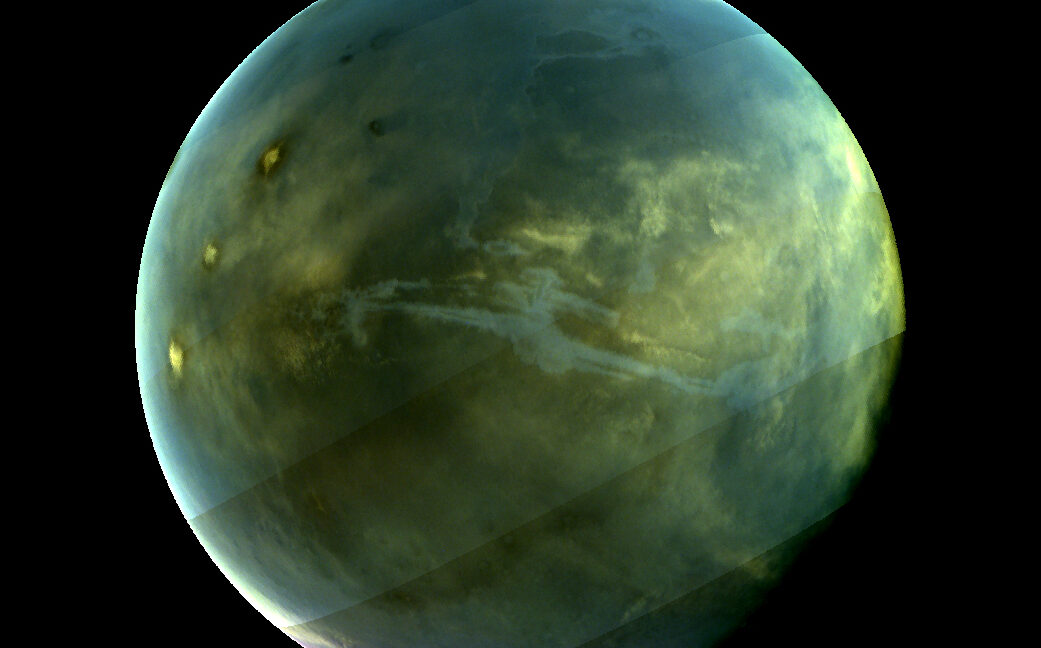
NASA has lost contact with its Mars Atmosphere and Volatile Evolution (MAVEN) spacecraft, an alarming development for the agency’s ongoing exploration efforts. The announcement came on December 6, 2023, when mission controllers revealed that they last received telemetry from MAVEN before it entered the shadow of Mars. Upon re-emerging, no signal was detected by NASA’s Deep Space Network. The agency is actively investigating this communication anomaly and will provide updates as new information becomes available.
Challenges in Mars Missions
MAVEN, which has been operational since its arrival at Mars in September 2014, was designed to study the interactions between the Sun and the Martian atmosphere. During its mission, MAVEN discovered crucial information about how solar wind erodes the Martian atmosphere, transforming it from a potentially habitable environment to the cold, barren landscape observed today. The spacecraft has exceeded its original design life, contributing significantly to NASA’s understanding of Mars.
MAVEN has also played a vital role in NASA’s Mars relay network, facilitating communication between rovers on the Martian surface and controllers on Earth. If MAVEN cannot be reestablished, NASA still has two other orbiters, but their longevity is a concern. The older of the two, Mars Odyssey, has been operational since 2001 and is projected to run out of fuel within the next few years. Meanwhile, the Mars Reconnaissance Orbiter (MRO), launched in 2005, remains in good health with enough fuel to continue functioning into the 2030s. MRO is particularly valuable due to its advanced camera, which is essential for mapping future landing sites.
Additional support comes from European missions, including the Mars Express and the ExoMars Trace Gas Orbiter. While Mars Express is over 22 years old and faces similar aging issues as Mars Odyssey, ExoMars, which arrived in 2016, is also operating beyond its original design specifications. Both European missions can relay data but are not dedicated communication satellites.
Future of Mars Exploration
The loss of MAVEN raises significant concerns about NASA’s communication capabilities at Mars, especially as the agency continues to operate active rovers such as Curiosity and Perseverance. These rovers can communicate directly with Earth, but without the support of orbiters, the volume of scientific data transmitted could diminish significantly. MAVEN’s unique orbit, extending up to 4,500 kilometers above Mars, allows it to relay data for extended periods, which is crucial for maximizing data throughput.
NASA had previously planned for a dedicated Mars Telecommunications Orbiter over 20 years ago but canceled the project in 2005. More recently, lawmakers included funding in a budget proposal for a high-performance telecom relay station for Mars, with $700 million allocated for development through a fixed-price contract. Companies such as Blue Origin and SpaceX have expressed interest in contributing to this initiative, although no timeline for requests for bids has been established.
As NASA navigates these challenges, the agency is also focusing on future missions to the Moon, reflecting a shift in priorities amidst a broader exploration landscape. The recent issues with MAVEN are likely to reignite discussions about the sustainability and reliability of NASA’s aging fleet of spacecraft at Mars, underscoring the need for innovative solutions to support ongoing and future exploration missions.













Fredericton Officials Urgently Seek Help Amid Public Safety Crisis

Newfoundland Woman Creates Nativity Shed Amid Wildfire Threat

Geminid Meteor Shower Peaks Tonight: Don’t Miss the Show!

U.S. Ambassador Urges Canada to Finalize F-35 Purchase Amid Debate

Mexico Enacts Harsh Penalties for Vaping Sales, Imposing Jail Time

Love and Heartache: Navigating Relationships and Jealousy

Celebrating Robert Archambeau’s Artistic Legacy Through New Book

Prairie Theatre Exchange Launches Holiday Improv Amid Mall Changes

NASA Faces Mars Orbiter Crisis as MAVEN Loses Contact

Secwepemc First Nation Seeks Aboriginal Title Over Kamloops Area

Scientists Unearth Ancient Antarctic Ice to Unlock Climate Secrets

Trump and McCormick to Announce $70 Billion Energy Investments

TransLink Launches Food Truck Program to Boost Revenue in Vancouver

Four Astronauts Return to Earth After International Space Station Mission

Manitoba’s Burger Champion Shines Again Amid Dining Innovations

Apple Notes Enhances Functionality with Markdown Support in macOS 26

Urgent Update: Fatal Crash on Highway 99 Claims Life of Pitt Meadows Man

Homemade Houseboat ‘Neverlanding’ Captivates Lake Huron Voyagers
-
 Politics1 month ago
Secwepemc First Nation Seeks Aboriginal Title Over Kamloops Area
-
 World5 months ago
Scientists Unearth Ancient Antarctic Ice to Unlock Climate Secrets
-
 Entertainment5 months ago
Trump and McCormick to Announce $70 Billion Energy Investments
-
 Lifestyle5 months ago
TransLink Launches Food Truck Program to Boost Revenue in Vancouver
-
 Science5 months ago
Four Astronauts Return to Earth After International Space Station Mission
-
 Lifestyle3 months ago
Manitoba’s Burger Champion Shines Again Amid Dining Innovations
-
 Technology3 months ago
Apple Notes Enhances Functionality with Markdown Support in macOS 26
-
 Top Stories2 months ago
Urgent Update: Fatal Crash on Highway 99 Claims Life of Pitt Meadows Man
-
 Top Stories2 weeks ago
Homemade Houseboat ‘Neverlanding’ Captivates Lake Huron Voyagers
-

 Politics4 months ago
Ukrainian Tennis Star Elina Svitolina Faces Death Threats Online
-

 Sports5 months ago
Search Underway for Missing Hunter Amid Hokkaido Bear Emergency
-

 Politics5 months ago
Carney Engages First Nations Leaders at Development Law Summit