
Science
NASA Loses Contact with MAVEN Mars Orbiter, Faces Communication Crisis

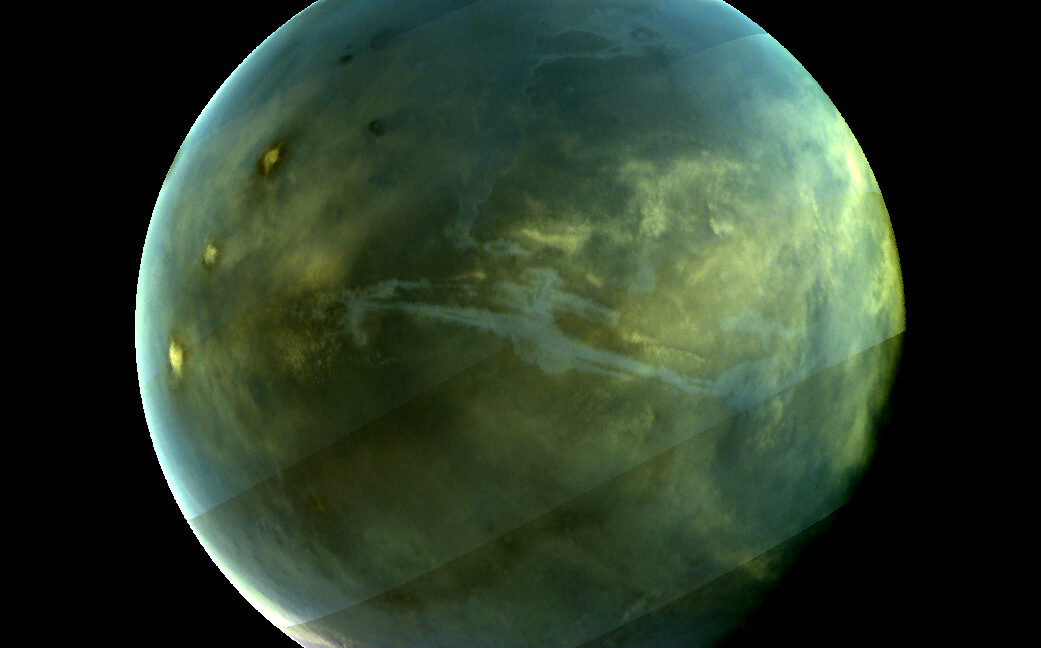
NASA has reported a significant setback in its Martian exploration efforts, having lost contact with the Mars Atmosphere and Volatile Evolution (MAVEN) spacecraft. The agency announced this development on Tuesday, highlighting that the spacecraft, which has been operational since September 2014, last communicated with mission controllers on December 6, 2023. The loss of contact occurred after MAVEN passed behind Mars, and subsequent attempts to reestablish communication through NASA’s Deep Space Network have not yielded results.
According to NASA, telemetry data prior to the communication loss indicated that all subsystems were functioning normally. The agency is currently investigating the anomaly, stating, “More information will be shared once it becomes available.” MAVEN plays a crucial role in studying the Martian atmosphere and its interaction with solar winds, having previously discovered how these factors have contributed to the planet’s transformation from a once habitable environment to its current inhospitable state.
MAVEN’s Contributions and Future Prospects
MAVEN’s primary mission has involved measuring isotopes of argon and conducting plasma observations to deepen understanding of Mars’ weather and atmospheric erosion processes. Built by Lockheed Martin, MAVEN has far exceeded its initial design life and has become integral to NASA’s communication relay network, facilitating data transmission between Martian rovers and Earth.
The loss of MAVEN poses a challenge, as the two remaining operational orbiters, the Mars Odyssey and Mars Reconnaissance Orbiter (MRO), are aging. Mars Odyssey has been in orbit since 2001 and is expected to run out of fuel within the next couple of years. MRO, launched in 2005, remains in good health, with sufficient fuel projected to last into the 2030s. Both orbiters are vital for high-resolution mapping and data relay, supporting ongoing and future missions on Mars.
NASA’s communication network is not solely reliant on its own spacecraft; two European missions, the Mars Express and ExoMars Trace Gas Orbiter, also assist in data relay, although they share similar aging concerns. The ExoMars orbiter, which arrived at Mars in 2016, is operating beyond its original lifetime.
Future of Mars Communications
The recent communication failure with MAVEN has reignited concerns regarding NASA’s reliance on aging spacecraft for communication and data gathering. As the agency navigates a busy agenda, including prioritizing lunar missions, the focus on Mars appears to be diminishing. In 2024, NASA explored commercial partnerships for future communication solutions, awarding study contracts to companies such as Blue Origin and SpaceX.
Past proposals for a dedicated Mars Telecommunications Orbiter were abandoned in 2005, but this concept resurfaced in recent legislative discussions, with lawmakers allocating $700 million for a high-performance telecom relay station in Mars orbit. This initiative aims to enhance communication capacities, particularly for supporting both current rovers and future manned missions.
As NASA continues to investigate the MAVEN anomaly, the implications of losing this orbiter extend beyond immediate communication challenges. The agency’s ongoing efforts to adapt to the evolving landscape of space exploration will be critical in maintaining robust data relay capabilities on Mars. The outcome of these investigations and potential future projects will shape the future of Martian exploration and communication for years to come.













Canadian Women Drop to No. 10 in FIFA Rankings After Losses

Nanaimo Food Bank Faces Crisis Over Delayed $5M Federal Funding

Sherrone Moore Fired, Jailed for Inappropriate Relationship

Free Child Admission to Science North This Holiday Season!

Machado Denies Maduro Government Knew Her Whereabouts in Oslo

Fredericton Officials Call for Government Support Amid Public Safety Concerns

Canada Revenue Agency Reports Major Call Response Improvements

Discover Tranquility: Experience Unique Ranch Life in Alberta

NASA Loses Contact with MAVEN Mars Orbiter, Faces Communication Crisis

Secwepemc First Nation Seeks Aboriginal Title Over Kamloops Area

Scientists Unearth Ancient Antarctic Ice to Unlock Climate Secrets

Trump and McCormick to Announce $70 Billion Energy Investments

TransLink Launches Food Truck Program to Boost Revenue in Vancouver

Four Astronauts Return to Earth After International Space Station Mission

Manitoba’s Burger Champion Shines Again Amid Dining Innovations

Apple Notes Enhances Functionality with Markdown Support in macOS 26

Urgent Update: Fatal Crash on Highway 99 Claims Life of Pitt Meadows Man

Homemade Houseboat ‘Neverlanding’ Captivates Lake Huron Voyagers
-
 Politics1 month ago
Secwepemc First Nation Seeks Aboriginal Title Over Kamloops Area
-
 World5 months ago
Scientists Unearth Ancient Antarctic Ice to Unlock Climate Secrets
-
 Entertainment5 months ago
Trump and McCormick to Announce $70 Billion Energy Investments
-
 Lifestyle5 months ago
TransLink Launches Food Truck Program to Boost Revenue in Vancouver
-
 Science5 months ago
Four Astronauts Return to Earth After International Space Station Mission
-
 Lifestyle3 months ago
Manitoba’s Burger Champion Shines Again Amid Dining Innovations
-
 Technology3 months ago
Apple Notes Enhances Functionality with Markdown Support in macOS 26
-
 Top Stories2 months ago
Urgent Update: Fatal Crash on Highway 99 Claims Life of Pitt Meadows Man
-
 Top Stories2 weeks ago
Homemade Houseboat ‘Neverlanding’ Captivates Lake Huron Voyagers
-

 Politics4 months ago
Ukrainian Tennis Star Elina Svitolina Faces Death Threats Online
-

 Sports5 months ago
Search Underway for Missing Hunter Amid Hokkaido Bear Emergency
-

 Politics5 months ago
Carney Engages First Nations Leaders at Development Law Summit