
Science
Power Struggle at NIH Intensifies Under Trump Administration

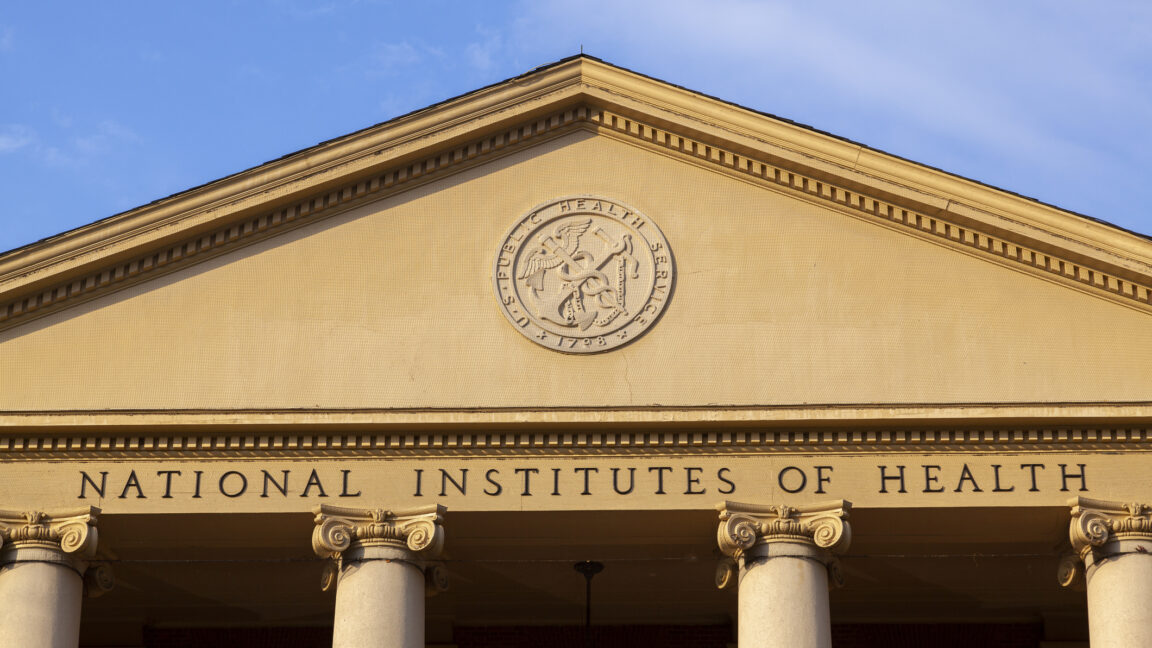
A significant power struggle is unfolding at the National Institutes of Health (NIH) as the Trump administration implements changes in leadership and hiring practices. This shift raises concerns about potential politicization within one of the United States’ leading biomedical research agencies. Historically, NIH has operated with a limited number of political appointees, allowing scientists and external experts to play a pivotal role in selecting institute directors.
As of November 2025, NIH employed approximately 17,500 staff members, a number that has decreased following budget cuts. Traditionally, only a few political appointees have occupied senior roles at NIH, which has helped maintain a degree of independence from political influence. However, the current administration’s approach suggests a departure from this established norm, leading to uncertainty about the future direction of the agency.
In the wake of the 2024 presidential election, Donald Trump appointed Jay Bhattacharya, a vocal critic of NIH, to lead the agency. This decision reflects the administration’s intention to reform how NIH operates and to increase political oversight over its leadership. The appointment comes at a time when NIH has faced scrutiny from conservative lawmakers, particularly regarding funding for controversial research and public health strategies during the COVID-19 pandemic.
Under Anthony Fauci, who directed the National Institute of Allergy and Infectious Diseases until 2022, NIH became a focal point for debates surrounding public health policy. Critics on the right labeled Fauci as an unelected official wielding substantial influence, particularly during the pandemic. This contentious backdrop has further fueled calls for changes in how NIH hires and retains its leaders.
In 2019, NIH announced plans to impose term limits on certain midlevel positions in an effort to diversify its management. Recently, Joseph Marine, a physician at Johns Hopkins University, suggested that similar term limits should be applied to the directors of individual NIH institutes. In his view, regular leadership turnover could foster innovation and a reassessment of priorities.
Recent developments have raised alarms among former and current NIH officials. Following Trump’s second inauguration, several senior officials, including Lawrence Tabak, the agency’s principal deputy director, were placed on administrative leave or left their positions unexpectedly. During the same period, the number of political appointees at NIH increased from four to nine, the highest in recent years.
Among the new appointees is Seana Cranston, who previously worked as a Republican Congressional staffer and now serves as chief of staff to the NIH Director. Her predecessor had been a career civil servant with nearly 40 years of experience at NIH. Another appointee, Michael Allen, assumed the role of chief operating officer for the $6.5 billion National Institute of Allergy and Infectious Diseases (NIAID) without a public announcement or visible background information.
The restructuring has not only affected administrative roles but has also altered the traditional process for appointing the directors of NIH’s 27 institutes and centers. In the spring of 2025, five directors, including the head of NIAID, were removed or placed on administrative leave, raising concerns about the political motivations behind these changes. In September, the search committee for the National Institute of Mental Health was disbanded and then rapidly reconvened, drawing scrutiny from insiders.
In a notable incident in October 2025, the directorship of the National Institute of Environmental Health Sciences was filled without a formal search process, reportedly by a close associate of Vice President JD Vance. This move has been described by former NIH officials as unprecedented, further eroding confidence in the integrity of the agency’s leadership selection process.
As of early January 2026, the total number of vacant leadership positions at NIH had risen to 15, including the director of the National Heart, Lung, and Blood Institute. The search for replacements is reportedly occurring on an expedited timeline, and the absence of traditional search committees has raised alarms about the potential politicization of these appointments.
The Department of Health and Human Services responded to inquiries regarding the changes, stating that an NIH leadership team with experience in scientific agency management would evaluate applicants and make recommendations to the NIH Director. However, the department did not clarify the composition of this team or the reasons behind the shift in hiring protocols.
Concerns about politicization have resonated with some NIH scientists. Mark Histed, an NIH scientist, emphasized the importance of including external members in search committees to maintain the integrity of the process. He argued that such inclusivity prevents the imposition of political agendas on the agency’s operations.
Legislators have taken notice of these developments. Language attached to the current appropriations bill urges NIH to uphold its longstanding practice of involving external scientists and stakeholders in hiring processes. Additionally, Diana DeGette, a Democratic representative from Colorado, introduced a bill aimed at protecting NIH from political interference, which includes proposals to limit the number of political appointees within the agency.
Former NIH grants chief Mike Lauer reflected on the historical context of the current changes. He noted a recurring tension between political administrations seeking greater control over agencies and civil servants advocating for autonomy and expertise. While some argue that increased political oversight can enhance accountability to the electorate, Lauer cautioned that it may also lead to short-term thinking and instability within the agency.
Political scientist Mark Richardson highlighted a trend wherein political parties increasingly seek to impose their agendas on scientific agencies like NIH, which have traditionally enjoyed bipartisan support. This trend represents a significant shift in the dynamics of federal scientific oversight.
As the situation at NIH continues to evolve, the implications of these changes remain to be seen. The balance between scientific integrity and political influence is now under scrutiny, and the future direction of one of the nation’s most crucial research institutions hangs in the balance.













Morris Churches Unite for Annual Good Friday Walk With the Cross

Chloe Zhao’s ‘Buffy’ Reboot Cancelled: Sarah Michelle Gellar Speaks Out

Essential Ingredients for Life Found in Ryugu Asteroid Samples

Urgent Rescue: NSR Airlifts Injured Climber from Nanaimo

Riverside Heart Ball Achieves Record $815,000 for Mental Health

Cognizant Launches AI Factory to Enhance Enterprise AI Scalability

Samsung’s Galaxy Watch 9 to Feature Larger Battery Than Before

Toronto’s AIDS Memorial Faces Potential Redesign Amid Community Concerns

Bayern Munich Loses Luis Díaz Red Card Appeal Despite Referee’s Admission

Secwepemc First Nation Seeks Aboriginal Title Over Kamloops Area

Fatal Crash on Highway 11 Claims Three Lives, Major Closure Ongoing

Manitoba’s Burger Champion Shines Again Amid Dining Innovations

Canadian Curler E.J. Harnden Announces Retirement from Competition

Urgent Fire Erupts at Salvation Army on Christmas Evening

Scientists Unearth Ancient Antarctic Ice to Unlock Climate Secrets

Minister Faces Scrutiny Over Delayed Foreign Interference Watchdog Appointment

Trump and McCormick to Announce $70 Billion Energy Investments

Four Astronauts Return to Earth After International Space Station Mission
-
 Politics5 months ago
Secwepemc First Nation Seeks Aboriginal Title Over Kamloops Area
-
 Top Stories4 months ago
Fatal Crash on Highway 11 Claims Three Lives, Major Closure Ongoing
-
 Lifestyle7 months ago
Manitoba’s Burger Champion Shines Again Amid Dining Innovations
-
 Sports3 months ago
Canadian Curler E.J. Harnden Announces Retirement from Competition
-
 Top Stories3 months ago
Urgent Fire Erupts at Salvation Army on Christmas Evening
-
 World9 months ago
Scientists Unearth Ancient Antarctic Ice to Unlock Climate Secrets
-
 World5 months ago
Minister Faces Scrutiny Over Delayed Foreign Interference Watchdog Appointment
-
 Entertainment9 months ago
Trump and McCormick to Announce $70 Billion Energy Investments
-
 Science9 months ago
Four Astronauts Return to Earth After International Space Station Mission
-

 Lifestyle9 months ago
Monika Hibbs Unveils Acres Market & Interiors in Major Rebrand
-

 Lifestyle9 months ago
TransLink Launches Food Truck Program to Boost Revenue in Vancouver
-

 World1 month ago
Ranchman’s Cookhouse & Dancehall to Relocate by Early 2027