
Science
Toyota Introduces Humanoid Robots to Enhance Efficiency at Woodstock Plant

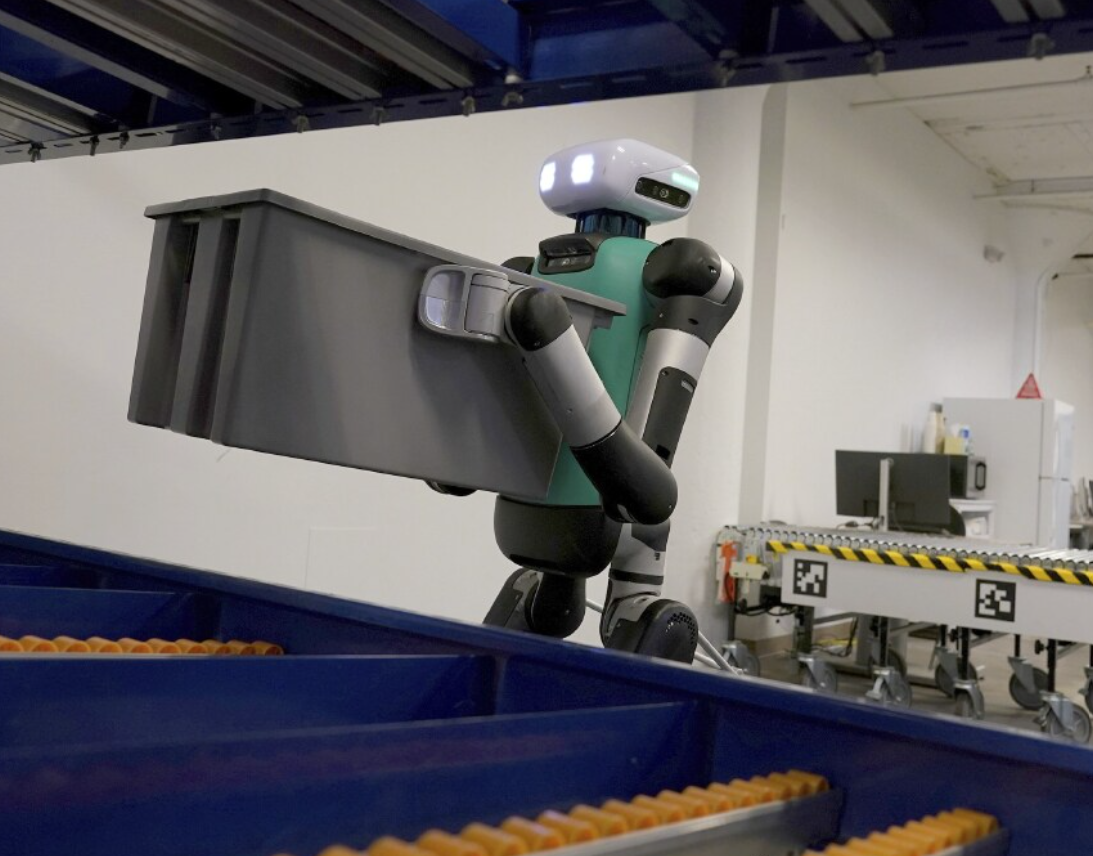
The Toyota automotive assembly plant in Woodstock, Ontario, is set to welcome three humanoid robots named Digit to assist with internal logistics tasks. This investment marks a significant step in the integration of advanced robotics into manufacturing, emphasizing the automaker’s commitment to improving efficiency while minimizing the physical strain on human workers.
The decision to incorporate humanoid robots is a notable development in a landscape where robotic technology has long been a staple of manufacturing processes. Michael Bouliane, a spokesperson for Toyota, confirmed that these robots will perform highly repetitive and physically demanding tasks, such as moving parts within the plant. “The tasks these three new robots will be performing are repetitive parts logistics tasks not directly related to assembling a vehicle,” Bouliane explained.
Concerns and Expectations from the Workforce
Opinions among employees about the introduction of robots are mixed. Lee Sperduti, a production worker with over 23 years of experience at Toyota, expressed curiosity about how these robots will be integrated into daily operations. He acknowledged the rapid growth of automation but raised questions about the potential for awkward interactions on the shop floor. “It could be awkward working with them,” he said.
There are broader concerns regarding the impact of automation on job security. Sperduti noted that while humanoid robots could take on tasks considered hazardous for humans, such as handling chemicals or heavy lifting, the overarching question remains: “Where does it end?”
Despite these concerns, Toyota has assured employees that no jobs will be lost due to the introduction of these robots. “The three new robots will help reduce strain on our team members and free them to do more value-added work in the production facility,” Bouliane stated. Currently, the Woodstock plant employs over 8,500 individuals and has over 500 automated delivery robots already in operation.
The Broader Landscape of Automation in Manufacturing
The shift towards increased automation is not isolated to Toyota. According to a recent report from the International Federation of Robotics, more than 540,000 robots were installed worldwide in various industries last year, doubling the number from a decade ago. David Adams, president of Global Automakers of Canada, noted that robots can significantly reduce the risk of repetitive strain injuries, suggesting that their use will become more commonplace as manufacturers strive to improve efficiency and competitiveness.
Adams emphasized the nature of the work these robots will perform, stating, “It’s the kind of work that doesn’t make a lot of sense for humans to do. This is to add to the workforce, not replace it.”
In contrast, Luis Domingues, London and area director for Unifor, the union representing many automotive workers, voiced concern that the adoption of humanoid robots may lead to job displacement in the long term. He remarked, “They’re coming, they will do what humans can do and they will displace workers.” Domingues cautioned that while robots do not require breaks or benefits, the industry must be careful not to undermine its own customer base.
Looking ahead, the humanoid robotics market is projected to grow from approximately $500 million now to over $6 billion by 2030, according to insights from Techbuzz. The report suggests that Toyota’s recent move illustrates that humanoid robotics technology is production-ready, setting a precedent for other industries. Major companies like Tesla and various startups are also racing to develop their robotic solutions, indicating a rapidly evolving sector.
The introduction of humanoid robots at Toyota’s Woodstock plant not only reflects the ongoing advancements in automation technology but also highlights the complex dialogue surrounding its implications for the workforce. As the industry progresses, the balance between enhancing productivity and ensuring job security will remain a critical focus for both manufacturers and employees alike.













Morris Churches Unite for Annual Good Friday Walk With the Cross

Chloe Zhao’s ‘Buffy’ Reboot Cancelled: Sarah Michelle Gellar Speaks Out

Essential Ingredients for Life Found in Ryugu Asteroid Samples

Urgent Rescue: NSR Airlifts Injured Climber from Nanaimo

Riverside Heart Ball Achieves Record $815,000 for Mental Health

Cognizant Launches AI Factory to Enhance Enterprise AI Scalability

Samsung’s Galaxy Watch 9 to Feature Larger Battery Than Before

Toronto’s AIDS Memorial Faces Potential Redesign Amid Community Concerns

Bayern Munich Loses Luis Díaz Red Card Appeal Despite Referee’s Admission

Secwepemc First Nation Seeks Aboriginal Title Over Kamloops Area

Fatal Crash on Highway 11 Claims Three Lives, Major Closure Ongoing

Manitoba’s Burger Champion Shines Again Amid Dining Innovations

Canadian Curler E.J. Harnden Announces Retirement from Competition

Urgent Fire Erupts at Salvation Army on Christmas Evening

Scientists Unearth Ancient Antarctic Ice to Unlock Climate Secrets

Trump and McCormick to Announce $70 Billion Energy Investments

Minister Faces Scrutiny Over Delayed Foreign Interference Watchdog Appointment

Four Astronauts Return to Earth After International Space Station Mission
-
 Politics5 months ago
Secwepemc First Nation Seeks Aboriginal Title Over Kamloops Area
-
 Top Stories4 months ago
Fatal Crash on Highway 11 Claims Three Lives, Major Closure Ongoing
-
 Lifestyle7 months ago
Manitoba’s Burger Champion Shines Again Amid Dining Innovations
-
 Sports3 months ago
Canadian Curler E.J. Harnden Announces Retirement from Competition
-
 Top Stories3 months ago
Urgent Fire Erupts at Salvation Army on Christmas Evening
-
 World9 months ago
Scientists Unearth Ancient Antarctic Ice to Unlock Climate Secrets
-
 Entertainment9 months ago
Trump and McCormick to Announce $70 Billion Energy Investments
-
 World5 months ago
Minister Faces Scrutiny Over Delayed Foreign Interference Watchdog Appointment
-
 Science9 months ago
Four Astronauts Return to Earth After International Space Station Mission
-

 Lifestyle9 months ago
Monika Hibbs Unveils Acres Market & Interiors in Major Rebrand
-

 Lifestyle9 months ago
TransLink Launches Food Truck Program to Boost Revenue in Vancouver
-

 World1 month ago
Ranchman’s Cookhouse & Dancehall to Relocate by Early 2027