
Science
Virtual Reality Project Transforms Shakespeare at University of Guelph

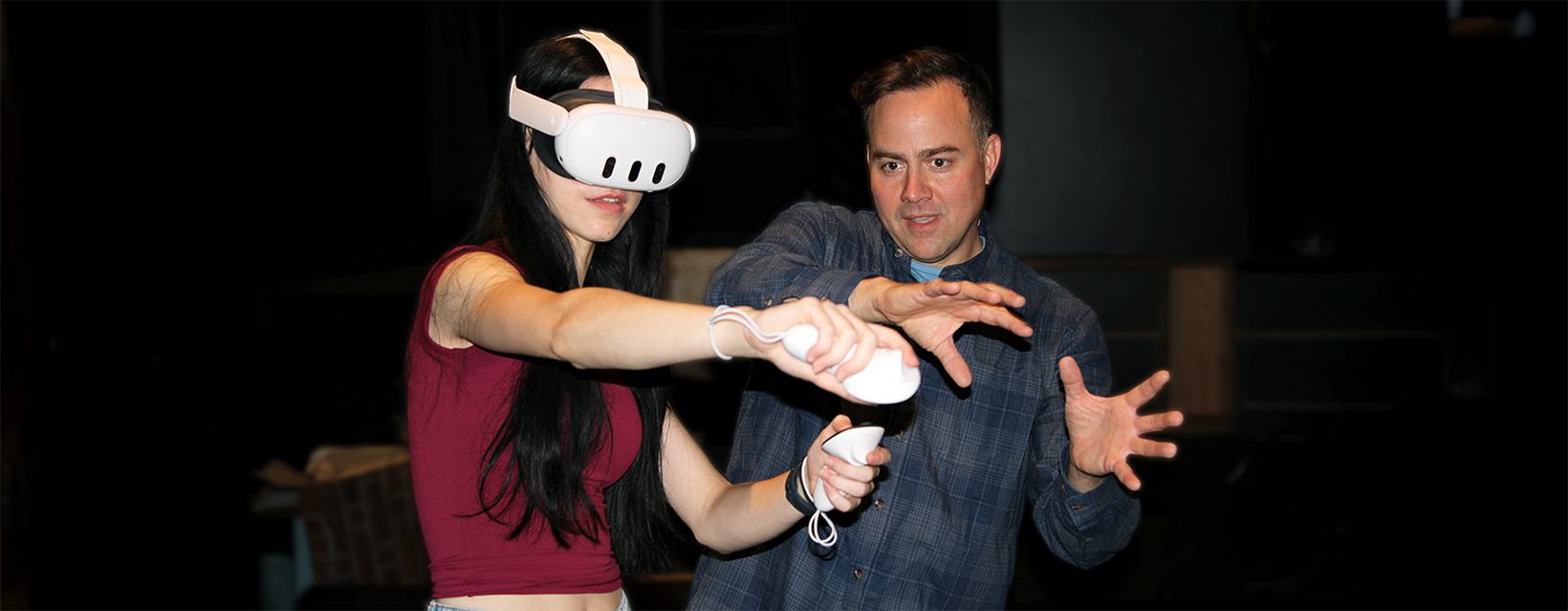
A groundbreaking virtual reality project has been awarded the University of Guelph’s 2025 Innovation of the Year Award. This initiative enables high school students to immerse themselves in Shakespearean plays, transforming traditional texts into interactive experiences. By leveraging cutting-edge technology, the project aims to make Shakespeare’s work accessible and engaging for learners everywhere.
The annual award, presented by the University’s Office of Research and the Research Innovation Office, acknowledges creative strategies and products that positively impact lives. Dr. Shayan Sharif, interim vice-president of research, remarked, “This project is a perfect example of turning innovation into real-world impact. By combining virtual reality with Shakespeare’s works, we’re improving life for students through an immersive approach that reimagines how these stories are experienced.”
Co-designer of the project, Dr. Peter Kuling, a professor in the School of Theatre, English, and Creative Writing, collaborated with Calian, a virtual reality development company based in Ottawa. Kuling explained, “I partnered with Calian because they understood the psychological and spatial experience of being ‘inside’ a scene.” Their expertise in environmental design, honed through projects for organizations like the Canadian War Museum, played a crucial role in creating realistic virtual spaces.
The project’s inception coincided with the COVID-19 pandemic, during which the Government of Ontario sought innovative digital teaching projects for educational institutions. Kuling recognized an opportunity to bridge the gap between theatre and digital learning. “I kept wondering what theatre could offer in a digital world,” he said. “This project gives students a chance to experience Shakespeare not as a distant text, but as a living, breathing world they can step inside.”
The initiative launched with the Hamlet VR Experience, followed by the Macbeth VR Experience. Each production offers a unique, interactive format lasting between 12 and 26 minutes. In Hamlet VR, participants assume the role of Bernardo, a castle guard, and can choose to deliver lines themselves or hear them performed by an actor. Similarly, in Macbeth VR, players become one of the three witches, casting spells and delivering prophecies, with the option to replay scenes from different perspectives.
These experiences are designed to be inclusive, showcasing diverse characters and environments that reflect contemporary Canadian society. Available for free to Ontario schools, the project has garnered interest from educators across North America and the United Kingdom.
Engagement in the Classroom
The incorporation of Shakespeare VR into classrooms has been met with enthusiasm. At John Fraser Secondary School in Mississauga, students have engaged deeply with the VR experiences. English and history teacher Robert Gale commented, “Watching students step inside the world of the play was incredible. The immersive details and 360-degree environment helped them feel the story rather than just read it, bringing Shakespeare to life in a way I’ve never seen in a classroom.”
As the project continues to grow, Kuling plans to expand the offerings to include additional Shakespeare plays, such as VR Julius Caesar and VR Antony and Cleopatra. He is also working on the Globe VR Experience, a virtual reality recreation of Shakespeare’s original theatre, set to launch in 2026. Kuling envisions this project as a means to deliver world-class performances directly to students without the need for travel.
“We can bring Shakespeare’s world directly to students, from high school to university,” he stated.
Kuling regards the Innovation of the Year Award as a collective achievement, emphasizing the collaborative spirit that drove the project. “This project was built on collaboration and creativity, and the award truly belongs to everyone who worked together to make something innovative and inspiring,” he said.
Numerous collaborators contributed to the initiative, including Theatre Studies PhD students Alice Hinchliffe and Erin O’Brien, and alumni Gabriella Sundar-Singh, Kyle Blair, and Kyle Golemba. The research was funded by the Ontario Exchange Network, marking a significant step towards enhancing educational opportunities and demonstrating the potential of the arts to innovate alongside technology.












Morris Churches Unite for Annual Good Friday Walk With the Cross

Chloe Zhao’s ‘Buffy’ Reboot Cancelled: Sarah Michelle Gellar Speaks Out

Essential Ingredients for Life Found in Ryugu Asteroid Samples

Urgent Rescue: NSR Airlifts Injured Climber from Nanaimo

Riverside Heart Ball Achieves Record $815,000 for Mental Health

Cognizant Launches AI Factory to Enhance Enterprise AI Scalability

Samsung’s Galaxy Watch 9 to Feature Larger Battery Than Before

Toronto’s AIDS Memorial Faces Potential Redesign Amid Community Concerns

Bayern Munich Loses Luis Díaz Red Card Appeal Despite Referee’s Admission

Secwepemc First Nation Seeks Aboriginal Title Over Kamloops Area

Fatal Crash on Highway 11 Claims Three Lives, Major Closure Ongoing

Manitoba’s Burger Champion Shines Again Amid Dining Innovations

Canadian Curler E.J. Harnden Announces Retirement from Competition

Urgent Fire Erupts at Salvation Army on Christmas Evening

Scientists Unearth Ancient Antarctic Ice to Unlock Climate Secrets

Minister Faces Scrutiny Over Delayed Foreign Interference Watchdog Appointment

Trump and McCormick to Announce $70 Billion Energy Investments

Monika Hibbs Unveils Acres Market & Interiors in Major Rebrand
-
 Politics5 months ago
Secwepemc First Nation Seeks Aboriginal Title Over Kamloops Area
-
 Top Stories4 months ago
Fatal Crash on Highway 11 Claims Three Lives, Major Closure Ongoing
-
 Lifestyle7 months ago
Manitoba’s Burger Champion Shines Again Amid Dining Innovations
-
 Sports3 months ago
Canadian Curler E.J. Harnden Announces Retirement from Competition
-
 Top Stories3 months ago
Urgent Fire Erupts at Salvation Army on Christmas Evening
-
 World9 months ago
Scientists Unearth Ancient Antarctic Ice to Unlock Climate Secrets
-
 World5 months ago
Minister Faces Scrutiny Over Delayed Foreign Interference Watchdog Appointment
-
 Entertainment9 months ago
Trump and McCormick to Announce $70 Billion Energy Investments
-
 Lifestyle9 months ago
Monika Hibbs Unveils Acres Market & Interiors in Major Rebrand
-
 Science9 months ago
Four Astronauts Return to Earth After International Space Station Mission
-

 Lifestyle9 months ago
TransLink Launches Food Truck Program to Boost Revenue in Vancouver
-

 World1 month ago
Ranchman’s Cookhouse & Dancehall to Relocate by Early 2027