
Science
Wegovy Negotiations Fail, Leaving Canadians Without Coverage Options

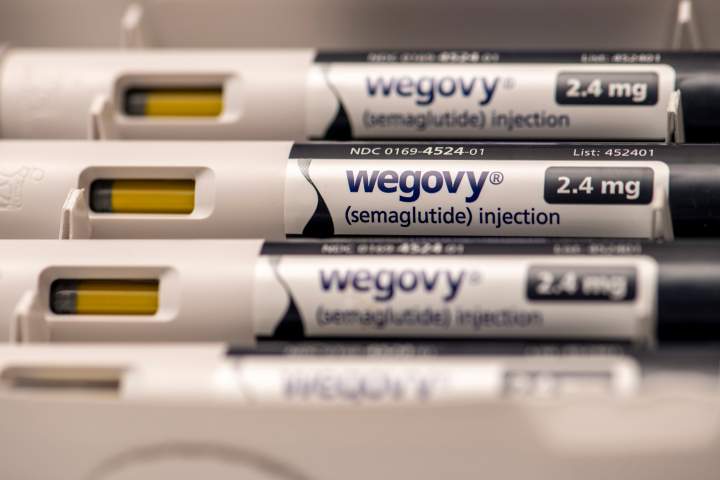
Negotiations aimed at securing public health coverage for the weight-loss drug Wegovy in Canada have stalled. Danish pharmaceutical company Novo Nordisk, the manufacturer of Wegovy, declined to engage in talks to lower the medication’s cost, which stands at approximately $5,066 annually for patients. This development leaves many Canadians without affordable access to the treatment, despite recommendations from health authorities.
The pan-Canadian Pharmaceutical Alliance (pCPA), which negotiates drug prices on behalf of provincial, territorial, and federal governments, had been asked by Canada’s Drug Agency to initiate discussions with Novo Nordisk. However, according to the pCPA, these negotiations “concluded without agreement,” as Novo Nordisk did not present any offers. The agency confirmed that the file has now been closed, but remains open to future negotiations should the company reconsider.
Canada’s Drug Agency recently indicated that Wegovy could be eligible for public reimbursement under specific conditions, particularly for individuals with a body mass index (BMI) of 27 or greater who also have pre-existing cardiovascular conditions. These conditions may include issues related to narrowed arteries that affect blood flow. To qualify for coverage, patients would need to be on a reduced-calorie diet and engage in increased physical activity while also benefiting from a cost reduction for the drug.
Despite these recommendations, the agency noted that Wegovy, as priced, does not provide satisfactory value to the health-care system. An analysis suggested that public drug plans could face costs of up to $600 million over three years, potentially escalating to $3.5 billion depending on the uptake of the drug among Canadians.
Ian Patton, director of advocacy and public engagement at Obesity Canada, emphasized the importance of accessibility to effective weight-loss medications. He acknowledged that while drugs like Wegovy are not a cure-all, they can have significant benefits for those who respond well to them. Patton stated, “When we have instances like this where a negotiation is broken off, it just means that Canadians will not have improved access to those treatments for a longer period of time.”
The failure to reach an agreement for Wegovy’s coverage reflects ongoing challenges in ensuring access to obesity medications in Canada. While semaglutide medications, which include Wegovy, Ozempic, and Zepound, are approved for use under particular conditions, the lack of public reimbursement remains a significant barrier for many patients.
In the United States, similar medications have seen price reductions, notably through initiatives announced earlier this month by former President Donald Trump, aimed at making these treatments more affordable for qualifying patients under the Medicare and Medicaid programs.
As the situation stands, many Canadians are left without viable options for accessing Wegovy, and the future of negotiations remains uncertain. The hope for generic alternatives may provide some relief, but for now, the lack of public coverage for Wegovy underscores a critical gap in health care access related to obesity treatment in Canada.









Urgent Protests Erupt in Toronto Over Israeli Officials’ War Crimes

Quebec Family Doctors Reject Key Provisions of New Health Law

Sentencing Hearing for B.C. Mom’s Killer Adjourned Amid Shock

Surrey Mayor Rejects $91M Police Budget, Threatens 18% Tax Hike

Crofton Mill Closure Hits Community Hard, 350 Jobs Lost

Kelowna Tiny Home Project Fails to Meet Success Claims

DIY Houseboat “Neverlanding” Docks in Michigan After Epic Journey

Man Awaits Sentencing After Stabbing TTC Rider, Victim Critical

Vancouver Man Wins $500,000 Lottery, Plans Condo Purchase Now

Secwepemc First Nation Seeks Aboriginal Title Over Kamloops Area

Scientists Unearth Ancient Antarctic Ice to Unlock Climate Secrets

Trump and McCormick to Announce $70 Billion Energy Investments

Four Astronauts Return to Earth After International Space Station Mission

TransLink Launches Food Truck Program to Boost Revenue in Vancouver

Apple Notes Enhances Functionality with Markdown Support in macOS 26

Manitoba’s Burger Champion Shines Again Amid Dining Innovations

Urgent Update: Fatal Crash on Highway 99 Claims Life of Pitt Meadows Man

Ukrainian Tennis Star Elina Svitolina Faces Death Threats Online
-
 Politics4 weeks ago
Secwepemc First Nation Seeks Aboriginal Title Over Kamloops Area
-
 World5 months ago
Scientists Unearth Ancient Antarctic Ice to Unlock Climate Secrets
-
 Entertainment5 months ago
Trump and McCormick to Announce $70 Billion Energy Investments
-
 Science5 months ago
Four Astronauts Return to Earth After International Space Station Mission
-
 Lifestyle5 months ago
TransLink Launches Food Truck Program to Boost Revenue in Vancouver
-
 Technology3 months ago
Apple Notes Enhances Functionality with Markdown Support in macOS 26
-
 Lifestyle3 months ago
Manitoba’s Burger Champion Shines Again Amid Dining Innovations
-
 Top Stories2 months ago
Urgent Update: Fatal Crash on Highway 99 Claims Life of Pitt Meadows Man
-
 Politics4 months ago
Ukrainian Tennis Star Elina Svitolina Faces Death Threats Online
-

 Sports5 months ago
Search Underway for Missing Hunter Amid Hokkaido Bear Emergency
-

 Politics5 months ago
Carney Engages First Nations Leaders at Development Law Summit
-

 Technology5 months ago
Frosthaven Launches Early Access on July 31, 2025