
Sports
Asian Hornet Nest Discovered in Wales Raises Urgent Warnings

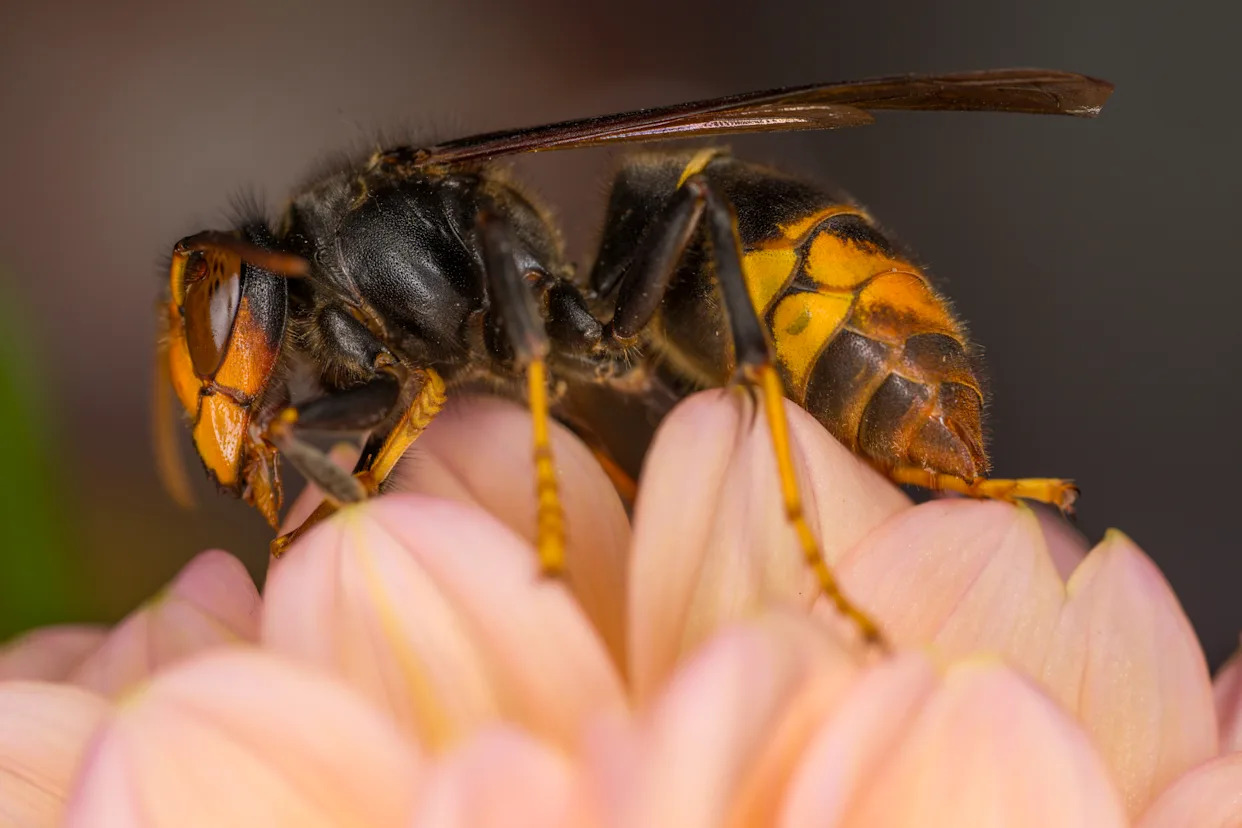
A nest of the invasive Asian hornet has been found in Wrexham, north Wales, marking the first confirmed sighting of this harmful species in the region. The discovery has prompted urgent warnings from the Welsh government, urging residents to remain vigilant and report any potential sightings of these dangerous insects.
The Asian hornet, also known as the yellow-legged hornet, is a non-native species that originates from East Asia. It poses a significant threat to local pollinators, particularly honeybees, which are crucial for biodiversity and agriculture in the UK. Although the species was first recorded in Europe in 2004, its presence in the UK has been increasing since the first confirmed sightings in 2016. In 2025, there were 544 credible sightings of Asian hornets across the UK, leading to the identification and destruction of 161 confirmed nests.
Growing Concerns Over Pollinator Safety
The Welsh government has issued a call for the public to be on alert as the presence of Asian hornets can have devastating effects on indigenous species. These hornets are particularly active from February to November, with sightings becoming more frequent from July onward. While they have predominantly been reported in the south of England, including Kent and Sussex, nests have also appeared as far north as County Durham, as well as in Yorkshire and near Liverpool.
According to a map published by the British Beekeepers Association, recent sightings include nests in Dundonald, Northern Ireland, in October, and another on the island of Tresco, part of the Isles of Scilly, in September. As the season progresses, it is vital for residents to familiarize themselves with the characteristics of Asian hornets to aid in early detection.
Identifying the Asian Hornet
Asian hornets can be mistaken for native species due to their size. They are approximately twice the size of a common wasp and slightly smaller than a European hornet. Key distinguishing features include a dark brown or black abdomen with a wide orange stripe on the fourth segment. Their legs appear as if dipped in yellow paint, and they have a distinctive black head with an orange face. Observers may notice these hornets hovering near beehives, attempting to catch bees and other insects.
Nests are typically located high in trees but can also be found on buildings or in hedges. The nests are round or pear-shaped with a small side entrance and may sometimes be constructed in abandoned birdboxes or beekeeping equipment.
The UK government has emphasized that while Asian hornets are not yet fully established in the UK, they pose a serious risk to pollinator populations. Although they do not present a greater threat to human health than native wasps, they can become aggressive when their nests are disturbed. Research indicates that one Asian hornet can kill up to 50 honeybees daily, and nests can house up to 6,000 hornets, potentially leading to significant declines in honeybee colonies during a single summer.
Individuals who suspect they have seen an Asian hornet are urged to report their sightings through the “Asian Hornet Watch” app available on both iPhone and Android platforms, or by using the UK government’s online reporting form. They can also email the UK Centre for Ecology & Hydrology at [email protected], ideally including a photograph if it can be done safely.
As the threat of Asian hornets continues to grow, maintaining awareness and reporting sightings will be crucial in safeguarding the UK’s native pollinator species.













UPEI’s High-Tech Simulation Centre Enhances Future Healthcare Skills

Canadian Astronaut Chris Hadfield Advocates for Eye Health

GPIQ and QYLD: Evaluating Strategies Amid Market Stagnation

Norovirus Outbreak Forces Canada’s Hockey Game Postponement

Fauna Robotics Unveils Sprout: A Humanoid Robot for Home Use

Team Canada Faces Goaltending Concerns Ahead of Olympics

Celebrating the Life of Irena Peritz: A Legacy of Love and Resilience

India, U.S. Announce Urgent Trade Deal to Slash Tariffs Now

American Airlines Pilots Challenge Management After Poor Results

Secwepemc First Nation Seeks Aboriginal Title Over Kamloops Area

Scientists Unearth Ancient Antarctic Ice to Unlock Climate Secrets

Urgent Fire Erupts at Salvation Army on Christmas Evening

Canadian Curler E.J. Harnden Announces Retirement from Competition

Manitoba’s Burger Champion Shines Again Amid Dining Innovations

Fatal Crash on Highway 11 Claims Three Lives, Major Closure Ongoing

Trump and McCormick to Announce $70 Billion Energy Investments

Four Astronauts Return to Earth After International Space Station Mission

TransLink Launches Food Truck Program to Boost Revenue in Vancouver
-
 Politics3 months ago
Secwepemc First Nation Seeks Aboriginal Title Over Kamloops Area
-
 World7 months ago
Scientists Unearth Ancient Antarctic Ice to Unlock Climate Secrets
-
 Top Stories1 month ago
Urgent Fire Erupts at Salvation Army on Christmas Evening
-
 Sports1 month ago
Canadian Curler E.J. Harnden Announces Retirement from Competition
-
 Lifestyle5 months ago
Manitoba’s Burger Champion Shines Again Amid Dining Innovations
-
 Top Stories2 months ago
Fatal Crash on Highway 11 Claims Three Lives, Major Closure Ongoing
-
 Entertainment7 months ago
Trump and McCormick to Announce $70 Billion Energy Investments
-
 Science7 months ago
Four Astronauts Return to Earth After International Space Station Mission
-
 Lifestyle7 months ago
TransLink Launches Food Truck Program to Boost Revenue in Vancouver
-

 Technology5 months ago
Apple Notes Enhances Functionality with Markdown Support in macOS 26
-

 Top Stories1 month ago
Blue Jays Sign Kazuma Okamoto: Impact on Bo Bichette’s Future
-

 Top Stories2 months ago
NHL Teams Inquire About Marc-André Fleury’s Potential Return