
Sports
Chaos at Africa Cup Final Raises Concerns for Morocco’s 2030 World Cup Bid

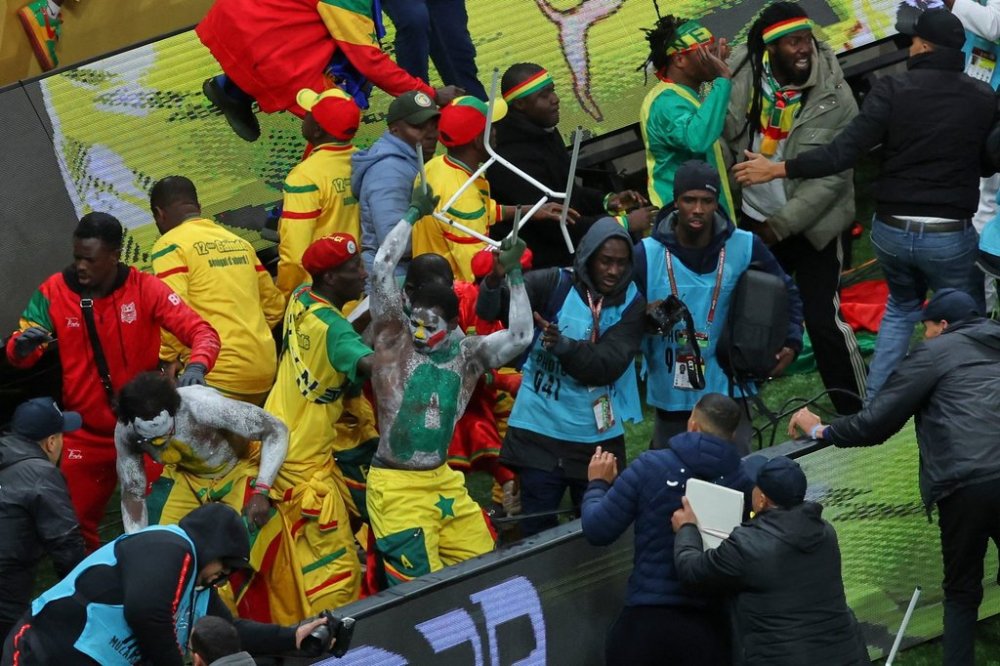
Morocco’s aspirations as a co-host for the 2030 World Cup faced significant scrutiny following the chaotic conclusion of the Africa Cup of Nations final. The match, held on March 15, 2024, was marred by violent clashes between fans and stewards, overshadowing Morocco’s efforts to present itself as a capable host for the upcoming global event.
The final unfolded dramatically, with Senegal’s team expressing outrage after a potential game-winning goal was disallowed in stoppage time. Seconds later, Morocco was awarded a contentious penalty, igniting fierce protests from Senegalese supporters. In a scene of disorder, fans breached security barriers, disrupting the match and leading to physical confrontations with stewards. Reports indicate that police had to intervene to restore order amidst the chaos.
Tensions escalated further as players clashed on the sidelines. Morocco’s coach, Walid Regragui, was seen attempting to diffuse the situation. The FIFA president, Gianni Infantino, condemned the “unacceptable scenes” and expressed disappointment over the Senegalese players’ decision to leave the field in protest after the penalty was awarded.
Despite these disturbances, play resumed, culminating in Senegal’s Pape Gueye scoring the decisive goal in extra time, leading to a 1-0 victory for Senegal. The post-match atmosphere was equally charged, with Senegal’s coach having to cancel his press conference after being met with hostility from journalists.
The events during the final raised serious questions about Morocco’s readiness to host major international events. Security failures allowed fans to reach the pitch, and additional incidents highlighted ongoing issues. For instance, Senegal’s reserve goalkeeper, Yéhvann Diouf, struggled with Moroccan ball boys who were reportedly taking towels from the starting goalkeeper, Édouard Mendy. Similar complaints were voiced during prior matches, further tarnishing Morocco’s image as a host.
In addition to these security concerns, the atmosphere in the Prince Moulay Abdellah Stadium was marked by loud whistles directed at opposing teams, detracting from the sportsmanship expected at such events. The Senegalese Football Federation issued a strong condemnation of local authorities regarding the treatment of its team upon arrival in Rabat.
Despite these setbacks, Morocco remains a key co-host for the 2030 World Cup, alongside Spain and Portugal. The nation is planning to host the final at the under-construction Hassan II Stadium, which is set to become the world’s largest soccer arena with a capacity of 115,000 when completed in 2028.
Morocco has made substantial investments in infrastructure, including excellent rail links connecting major cities such as Rabat, Casablanca, and Agadir. The national railway, ONCF, has developed a user-friendly ticketing app available in multiple languages, catering to international fans. The road networks between cities have also received praise from journalists covering the tournament.
Looking ahead, Morocco will host the Women’s Africa Cup starting from March 17, 2024. As the country aims to solidify its status as a soccer powerhouse, it remains to be seen how it will address the challenges highlighted by the Africa Cup of Nations final.













Morris Churches Unite for Annual Good Friday Walk With the Cross

Chloe Zhao’s ‘Buffy’ Reboot Cancelled: Sarah Michelle Gellar Speaks Out

Essential Ingredients for Life Found in Ryugu Asteroid Samples

Urgent Rescue: NSR Airlifts Injured Climber from Nanaimo

Riverside Heart Ball Achieves Record $815,000 for Mental Health

Cognizant Launches AI Factory to Enhance Enterprise AI Scalability

Samsung’s Galaxy Watch 9 to Feature Larger Battery Than Before

Toronto’s AIDS Memorial Faces Potential Redesign Amid Community Concerns

Bayern Munich Loses Luis Díaz Red Card Appeal Despite Referee’s Admission

Secwepemc First Nation Seeks Aboriginal Title Over Kamloops Area

Fatal Crash on Highway 11 Claims Three Lives, Major Closure Ongoing

Manitoba’s Burger Champion Shines Again Amid Dining Innovations

Canadian Curler E.J. Harnden Announces Retirement from Competition

Urgent Fire Erupts at Salvation Army on Christmas Evening

Scientists Unearth Ancient Antarctic Ice to Unlock Climate Secrets

Minister Faces Scrutiny Over Delayed Foreign Interference Watchdog Appointment

Trump and McCormick to Announce $70 Billion Energy Investments

Monika Hibbs Unveils Acres Market & Interiors in Major Rebrand
-
 Politics5 months ago
Secwepemc First Nation Seeks Aboriginal Title Over Kamloops Area
-
 Top Stories4 months ago
Fatal Crash on Highway 11 Claims Three Lives, Major Closure Ongoing
-
 Lifestyle7 months ago
Manitoba’s Burger Champion Shines Again Amid Dining Innovations
-
 Sports4 months ago
Canadian Curler E.J. Harnden Announces Retirement from Competition
-
 Top Stories4 months ago
Urgent Fire Erupts at Salvation Army on Christmas Evening
-
 World9 months ago
Scientists Unearth Ancient Antarctic Ice to Unlock Climate Secrets
-
 World5 months ago
Minister Faces Scrutiny Over Delayed Foreign Interference Watchdog Appointment
-
 Entertainment9 months ago
Trump and McCormick to Announce $70 Billion Energy Investments
-
 Lifestyle9 months ago
Monika Hibbs Unveils Acres Market & Interiors in Major Rebrand
-

 Science9 months ago
Four Astronauts Return to Earth After International Space Station Mission
-

 Lifestyle9 months ago
TransLink Launches Food Truck Program to Boost Revenue in Vancouver
-

 World2 months ago
Ranchman’s Cookhouse & Dancehall to Relocate by Early 2027