
Sports
Grand Slam Track Faces Bankruptcy After Troubled Rookie Season

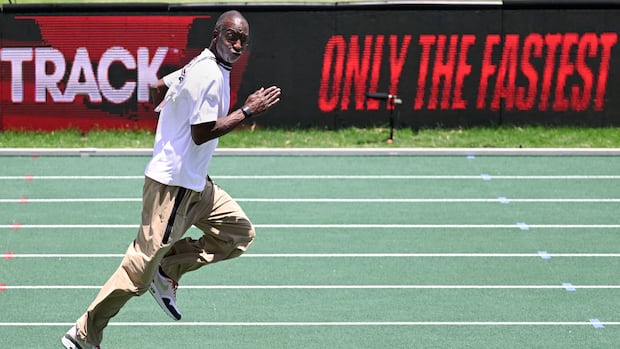
Grand Slam Track (GST) has filed for Chapter 11 bankruptcy following a disappointing inaugural season that failed to deliver on its ambitious promises to athletes and fans alike. The league, which aimed to revolutionize professional track and field, struggled with financial mismanagement and dwindling support from investors, ultimately leading to its premature end.
In June, during a guest appearance on CBC Sports’ “Trackside,” I discussed the implications of GST canceling its season finale. At that time, I suspected the league was facing a financial crisis. Recent developments have confirmed my concerns: GST was never adequately funded to support the payouts it had promised to top athletes, including six-figure winner’s cheques aimed at reshaping the sport’s pay scale.
As reported in The Athletic in August, GST’s primary investor, the asset-management firm Eldridge, reassessed its commitment after witnessing low attendance at the league’s kickoff event in Kingston, Jamaica. The decision not to follow through on a non-binding term sheet left GST without the necessary capital to operate effectively. Athletes delivered world-leading performances, but they were compensated far below expectations, leading to widespread dissatisfaction.
With the league now facing a significant financial reckoning, GST’s bankruptcy filing indicates that it owes substantial amounts to various creditors. Among those awaiting payment are Momentum-CHP, a production company owed over $3 million USD, and Girraphic, a graphics firm with a claim exceeding $690,000 USD. Furthermore, Olympic gold medalist Sydney McLaughlin-Levrone is among the athletes owed more than $356,250 USD.
Despite the financial turmoil, GST’s leadership, notably fronted by Olympic legend Micheal Johnson, has expressed intentions to revive the league for a second season. However, questions loom about how they plan to manage their debts, attract new talent, and engage both existing and potential fans.
The league’s challenges extend beyond financial issues; they also highlight a crucial question: What is Grand Slam Track’s narrative? Successful sports startups typically share compelling stories that resonate with fans, generating investment and interest. In contrast, GST struggled to articulate a clear vision, akin to the XFL, which failed to connect with audiences due to its unclear identity.
While GST’s tagline, “Only the Fastest,” captures the essence of its mission, it lacks the storytelling depth that can engage fans on an emotional level. The Ultimate Fighting Championship (UFC) serves as a prime example of effective branding, as it successfully transformed mixed martial arts into a mainstream phenomenon through well-crafted narratives and relatable athletes.
In contrast, GST’s story has largely revolved around cancellations, non-payments, and bankruptcy. Such negative press does little to build the brand’s reputation, and without substantial financial backing to erase its debts, the league faces an uphill battle in crafting a new narrative for a potential resurgence in 2026.
As GST navigates its bankruptcy proceedings, the path ahead remains uncertain. The league must not only address its financial obligations but also redefine its identity to attract fans and sponsors. The sports landscape is unforgiving, and without a compelling story, the dream of a successful second season may remain just that—a dream.













Morris Churches Unite for Annual Good Friday Walk With the Cross

Chloe Zhao’s ‘Buffy’ Reboot Cancelled: Sarah Michelle Gellar Speaks Out

Essential Ingredients for Life Found in Ryugu Asteroid Samples

Urgent Rescue: NSR Airlifts Injured Climber from Nanaimo

Riverside Heart Ball Achieves Record $815,000 for Mental Health

Cognizant Launches AI Factory to Enhance Enterprise AI Scalability

Samsung’s Galaxy Watch 9 to Feature Larger Battery Than Before

Toronto’s AIDS Memorial Faces Potential Redesign Amid Community Concerns

Bayern Munich Loses Luis Díaz Red Card Appeal Despite Referee’s Admission

Secwepemc First Nation Seeks Aboriginal Title Over Kamloops Area

Fatal Crash on Highway 11 Claims Three Lives, Major Closure Ongoing

Manitoba’s Burger Champion Shines Again Amid Dining Innovations

Canadian Curler E.J. Harnden Announces Retirement from Competition

Urgent Fire Erupts at Salvation Army on Christmas Evening

Scientists Unearth Ancient Antarctic Ice to Unlock Climate Secrets

Trump and McCormick to Announce $70 Billion Energy Investments

Minister Faces Scrutiny Over Delayed Foreign Interference Watchdog Appointment

Four Astronauts Return to Earth After International Space Station Mission
-
 Politics5 months ago
Secwepemc First Nation Seeks Aboriginal Title Over Kamloops Area
-
 Top Stories4 months ago
Fatal Crash on Highway 11 Claims Three Lives, Major Closure Ongoing
-
 Lifestyle7 months ago
Manitoba’s Burger Champion Shines Again Amid Dining Innovations
-
 Sports3 months ago
Canadian Curler E.J. Harnden Announces Retirement from Competition
-
 Top Stories3 months ago
Urgent Fire Erupts at Salvation Army on Christmas Evening
-
 World9 months ago
Scientists Unearth Ancient Antarctic Ice to Unlock Climate Secrets
-
 Entertainment9 months ago
Trump and McCormick to Announce $70 Billion Energy Investments
-
 World5 months ago
Minister Faces Scrutiny Over Delayed Foreign Interference Watchdog Appointment
-
 Science9 months ago
Four Astronauts Return to Earth After International Space Station Mission
-

 Lifestyle9 months ago
Monika Hibbs Unveils Acres Market & Interiors in Major Rebrand
-

 Lifestyle9 months ago
TransLink Launches Food Truck Program to Boost Revenue in Vancouver
-

 World1 month ago
Ranchman’s Cookhouse & Dancehall to Relocate by Early 2027