
Technology
Canada Joins NASA’s Artemis Program with Innovative Lunar Vehicle

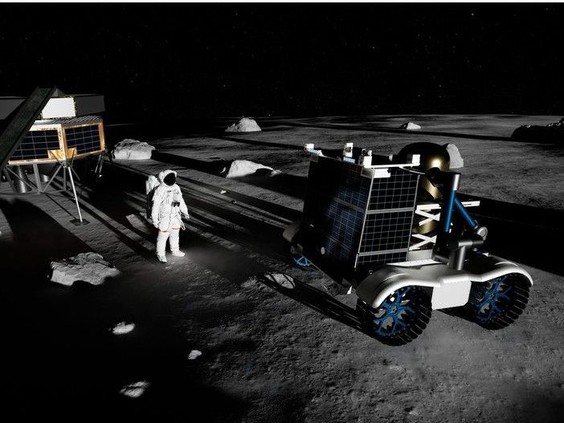
Canada is making significant strides in space exploration by contributing vital technologies to NASA’s Artemis program, which aims to return humans to the moon for the first time in over 50 years. A notable addition from Canada is the Lunar Utility Vehicle (LUV), a mobility platform designed to assist both human and robotic activities on the lunar surface.
In recent developments, Canada’s lunar program has begun to reflect a broader geographic diversity, moving beyond the traditional hubs of Ontario and Quebec. In November, Mission Control Space Services announced a partnership with Eagle Flight Network (EFN), an Indigenous-owned space-infrastructure firm based in Calgary. This collaboration is particularly significant as EFN is the only organization from western Canada involved in the LUV’s early development stages.
The LUV initiative is part of the Canadian Space Agency’s Lunar Exploration Accelerator Program (LEAP), which promotes research, technology development, and mission concepts that will support the Artemis lunar missions. In July 2025, Mission Control was awarded a contract aimed at enhancing various aspects of the LUV’s development. The focus will include evaluating its mobility, mission profile, and technical options based on its size and capabilities.
Designing for Lunar Challenges
The LUV is envisioned as a versatile platform capable of supporting astronauts during surface operations, transporting equipment, and carrying scientific instruments. Its design takes into account the unique challenges presented by the lunar south pole, where conditions are considerably more demanding than previous lunar landing sites. Here, sunlight strikes at low angles, temperature fluctuations are extreme, and the terrain features crater rims, shadowed areas, and steep slopes.
Due to these harsh conditions, engineering a reliable vehicle necessitates extensive testing on Earth prior to constructing any mission hardware. EFN’s role centers on ground-segment considerations, focusing on how mission data is transmitted securely across Canada and how future support infrastructure may be established. The company has also been developing Indigenous-hosted ground station sites and mobile systems for applications such as Earth observation, wildfire detection, and satellite communications.
This collaboration not only marks a significant step for Canada in international space exploration but also highlights the growing importance of Indigenous participation in high-tech fields. As the Artemis program progresses, the contributions of Canadian technologies like the LUV will play a critical role in the future of lunar exploration, paving the way for sustained human presence on the moon and beyond.












Morris Churches Unite for Annual Good Friday Walk With the Cross

Chloe Zhao’s ‘Buffy’ Reboot Cancelled: Sarah Michelle Gellar Speaks Out

Essential Ingredients for Life Found in Ryugu Asteroid Samples

Urgent Rescue: NSR Airlifts Injured Climber from Nanaimo

Riverside Heart Ball Achieves Record $815,000 for Mental Health

Cognizant Launches AI Factory to Enhance Enterprise AI Scalability

Samsung’s Galaxy Watch 9 to Feature Larger Battery Than Before

Toronto’s AIDS Memorial Faces Potential Redesign Amid Community Concerns

Bayern Munich Loses Luis Díaz Red Card Appeal Despite Referee’s Admission

Secwepemc First Nation Seeks Aboriginal Title Over Kamloops Area

Fatal Crash on Highway 11 Claims Three Lives, Major Closure Ongoing

Manitoba’s Burger Champion Shines Again Amid Dining Innovations

Canadian Curler E.J. Harnden Announces Retirement from Competition

Urgent Fire Erupts at Salvation Army on Christmas Evening

Scientists Unearth Ancient Antarctic Ice to Unlock Climate Secrets

Minister Faces Scrutiny Over Delayed Foreign Interference Watchdog Appointment

Trump and McCormick to Announce $70 Billion Energy Investments

Monika Hibbs Unveils Acres Market & Interiors in Major Rebrand
-
 Politics5 months ago
Secwepemc First Nation Seeks Aboriginal Title Over Kamloops Area
-
 Top Stories4 months ago
Fatal Crash on Highway 11 Claims Three Lives, Major Closure Ongoing
-
 Lifestyle7 months ago
Manitoba’s Burger Champion Shines Again Amid Dining Innovations
-
 Sports4 months ago
Canadian Curler E.J. Harnden Announces Retirement from Competition
-
 Top Stories4 months ago
Urgent Fire Erupts at Salvation Army on Christmas Evening
-
 World9 months ago
Scientists Unearth Ancient Antarctic Ice to Unlock Climate Secrets
-
 World5 months ago
Minister Faces Scrutiny Over Delayed Foreign Interference Watchdog Appointment
-
 Entertainment9 months ago
Trump and McCormick to Announce $70 Billion Energy Investments
-
 Lifestyle9 months ago
Monika Hibbs Unveils Acres Market & Interiors in Major Rebrand
-
 Science9 months ago
Four Astronauts Return to Earth After International Space Station Mission
-

 Lifestyle9 months ago
TransLink Launches Food Truck Program to Boost Revenue in Vancouver
-

 World2 months ago
Ranchman’s Cookhouse & Dancehall to Relocate by Early 2027