
Technology
Canadian Auto Industry Faces Turbulence Amid Tariffs and Job Cuts

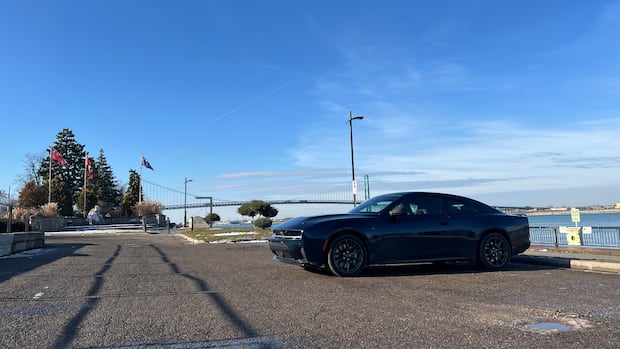
The Canadian auto industry has encountered significant challenges in 2025, marked by uncertainty and disruption. Factors such as U.S. tariffs, shifting market demands, and corporate decisions have led to job changes and operational adjustments across the sector, affecting thousands of workers.
Impact of U.S. Tariffs on Canadian Automakers
The threat of tariffs imposed by U.S. President Donald Trump has loomed large over the Canadian automotive landscape this year. On March 4, 2025, the U.S. introduced a 25 percent tariff on a broad range of Canadian products. Although Trump later exempted certain goods aligned with the existing trade agreement known as CUSMA, the auto sector remained under pressure.
Despite some temporary relief, the tariffs have impacted profits, investment strategies, and employment. Reports indicate that automakers have faced billions in losses due to tariffs, exacerbated by steep levies on aluminum and steel. As CUSMA enters a review phase in 2026, the future of trade relations remains uncertain, which could lead to further changes in tariff policies.
Shifts in Electric Vehicle Production and Job Losses
In September, Prime Minister Mark Carney announced a pause on the government’s electric vehicle (EV) mandate, aimed at alleviating pressures from U.S. tariffs. This decision came after the auto industry lobbied for the repeal, citing lower-than-expected consumer demand for EVs. Environmental advocates criticized the move, fearing it could hinder climate initiatives.
In a notable shift, Stellantis announced in October 2025 that it would not produce the Jeep Compass at its Brampton, Ontario plant, opting instead to manufacture the vehicle in Belvidere, Illinois. This decision raised concerns among the approximately 3,000 workers at the Brampton facility, who now face an uncertain future. Federal officials have expressed discontent, claiming Stellantis violated funding agreements, with the government previously providing over $220 million to support the plant.
General Motors (GM) has also made significant cuts, including the elimination of a third shift at its Oshawa, Ontario plant, resulting in the loss of around 750 jobs. The company cited evolving trade environments and forecasted demand as reasons for this operational change. Meanwhile, GM announced plans to cease production of its BrightDrop electric delivery vans at its Ingersoll, Ontario facility, impacting an additional 1,200 employees.
The auto industry’s landscape is further complicated as companies reassess their production strategies. For instance, the NextStar Energy plant in Windsor, which was initially set to focus on EV batteries, has pivoted to prioritize batteries for power grid storage systems. This facility aims to employ 2,500 workers and is currently halfway toward that goal.
The upcoming year is poised to be pivotal for the Canadian auto sector, with the CUSMA review on the horizon and contract negotiations set to begin as collective agreements with the Big Three automakers—GM, Ford, and Stellantis—expire in September 2026. As the industry navigates these turbulent waters, the impact on workers and the future direction of Canadian automotive production remains to be seen.













Morris Churches Unite for Annual Good Friday Walk With the Cross

Chloe Zhao’s ‘Buffy’ Reboot Cancelled: Sarah Michelle Gellar Speaks Out

Essential Ingredients for Life Found in Ryugu Asteroid Samples

Urgent Rescue: NSR Airlifts Injured Climber from Nanaimo

Riverside Heart Ball Achieves Record $815,000 for Mental Health

Cognizant Launches AI Factory to Enhance Enterprise AI Scalability

Samsung’s Galaxy Watch 9 to Feature Larger Battery Than Before

Toronto’s AIDS Memorial Faces Potential Redesign Amid Community Concerns

Bayern Munich Loses Luis Díaz Red Card Appeal Despite Referee’s Admission

Secwepemc First Nation Seeks Aboriginal Title Over Kamloops Area

Fatal Crash on Highway 11 Claims Three Lives, Major Closure Ongoing

Manitoba’s Burger Champion Shines Again Amid Dining Innovations

Canadian Curler E.J. Harnden Announces Retirement from Competition

Urgent Fire Erupts at Salvation Army on Christmas Evening

Scientists Unearth Ancient Antarctic Ice to Unlock Climate Secrets

Minister Faces Scrutiny Over Delayed Foreign Interference Watchdog Appointment

Trump and McCormick to Announce $70 Billion Energy Investments

Monika Hibbs Unveils Acres Market & Interiors in Major Rebrand
-
 Politics5 months ago
Secwepemc First Nation Seeks Aboriginal Title Over Kamloops Area
-
 Top Stories4 months ago
Fatal Crash on Highway 11 Claims Three Lives, Major Closure Ongoing
-
 Lifestyle7 months ago
Manitoba’s Burger Champion Shines Again Amid Dining Innovations
-
 Sports4 months ago
Canadian Curler E.J. Harnden Announces Retirement from Competition
-
 Top Stories4 months ago
Urgent Fire Erupts at Salvation Army on Christmas Evening
-
 World9 months ago
Scientists Unearth Ancient Antarctic Ice to Unlock Climate Secrets
-
 World5 months ago
Minister Faces Scrutiny Over Delayed Foreign Interference Watchdog Appointment
-
 Entertainment9 months ago
Trump and McCormick to Announce $70 Billion Energy Investments
-
 Lifestyle9 months ago
Monika Hibbs Unveils Acres Market & Interiors in Major Rebrand
-

 Science9 months ago
Four Astronauts Return to Earth After International Space Station Mission
-

 Lifestyle9 months ago
TransLink Launches Food Truck Program to Boost Revenue in Vancouver
-

 World2 months ago
Ranchman’s Cookhouse & Dancehall to Relocate by Early 2027