
Technology
Edmontonians Face AI Surveillance as Police Trial Bodycams

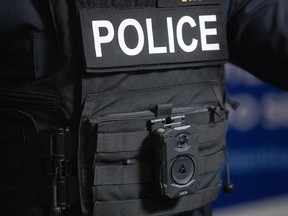
The Edmonton Police Service (EPS) has announced a controversial plan to implement artificial intelligence (AI) facial recognition technology on officers’ body-worn cameras, raising significant concerns among residents. This initiative, touted as a world-first pilot in partnership with Axon, an American body-camera manufacturer, is set to redefine the role of these cameras from instruments of accountability to tools of mass surveillance.
Originally designed to enhance police transparency, body-worn cameras were meant to document interactions between law enforcement and the public. They aimed to create an objective record, deter misconduct, and foster trust within the community. However, the EPS appears to be shifting this foundational purpose. Instead of primarily monitoring police conduct, the cameras will now enable officers to surveil the public, effectively treating community members as potential suspects.
This “proof of concept” is scheduled to run through December 2023, during which the system will assess its ability to identify individuals with outstanding warrants or other safety flags. Operating in “silent mode,” the technology will not provide live alerts to officers. Instead, footage will be reviewed later for algorithmic matches against police databases, raising ethical concerns about privacy and consent.
Edmontonians may unknowingly be subjected to scans while going about their daily lives, their faces compared to criminal databases without their knowledge or approval. This raises alarm for many, as the public is being transformed into a pool of potential suspects, undermining the very trust that body-worn cameras were intended to build.
Global Testing Ground for Controversial Technology
The decision to utilize Edmonton as a testing ground for Axon’s facial recognition technology is unprecedented. No other police service globally has deployed such technology on body-worn cameras. This move places Edmontonians in a position where they may be unwitting participants in a trial for a product that Axon could market to other jurisdictions in the future.
This initiative contradicts Axon’s own prior commitments. In 2019, the company’s independent AI Ethics Board deemed facial recognition technology too flawed and biased for ethical deployment on body-worn cameras, recommending against its use. Axon had publicly promised to refrain from integrating facial recognition into its cameras, making the current trial perplexing and fraught with potential risks.
The implications of real-time identification and tracking by police are profound. If law enforcement can monitor individuals continuously, it could create a chilling effect on fundamental rights. Citizens may hesitate to participate in lawful protests or frequent certain public spaces, knowing their identities could be captured and stored in a police database.
Impact on Civil Liberties and Communities
The situation raises critical questions about the protection of rights under the Canadian Charter of Rights and Freedoms. Section 8 guarantees individuals protection against unreasonable search and seizure. The practice of running facial scans on everyone without suspicion, warrants, or consent appears to conflict with this protection. Furthermore, Section 7 ensures life, liberty, and security of the person, while Section 15 promotes equality. The potential for constant biometric monitoring disproportionately affects racialized and marginalized communities, exacerbating existing inequalities.
Surveillance technologies are not impartial. Studies have shown that facial-recognition systems exhibit higher error rates for women and individuals of color. The deployment of such a system in Edmonton could lead to unjust outcomes, including more false accusations or unwarranted stops for racialized residents.
The legal and social ramifications of mass biometric surveillance stretch the boundaries of constitutional rights and privacy expectations. The Canadian courts have yet to provide definitive rulings on these issues. Given Axon’s previous report criticizing the deployment of facial recognition technology, it raises concerns whether these systems have become sufficiently accurate and unbiased to justify their current rollout.
Despite advancements in technology, facial recognition remains deeply flawed, performing well only in controlled settings with clear images of well-represented groups. In real-world scenarios, such as those involving moving officers, crowded streets, and poor lighting, the reliability of these systems diminishes significantly.
As Edmonton embarks on this experimental journey, the community deserves a choice regarding their participation. An open debate on the implications of integrating AI surveillance into policing is essential before the EPS transforms accountability cameras into pervasive identification tools. The residents of Edmonton should not be the first to bear the legal and social costs of this untested technology.











FBI Arrests Suspect in 2016 Washington Pipe Bomb Case

Trevor Halford Takes Helm as Interim Leader of BC Conservatives

Marie Helene Juliette Assman: A Life Remembered, 1934-2025

Dave Chappelle Faces Hecklers During Edmonton Debut Performance

New Study Highlights Mental Health Benefits of Remote Work

Vanda Pharmaceuticals Rises 7% After FDA Lifts Tradipitant Hold

Dave Chappelle Heckled During Edmonton Debut, Apology Song Follows

B.C. Chiefs Condemn Minister Over Pipeline Deal Amid Controversy

Bloc Threatens Political Consequences Over Hate Speech Bill

Secwepemc First Nation Seeks Aboriginal Title Over Kamloops Area

Scientists Unearth Ancient Antarctic Ice to Unlock Climate Secrets

Trump and McCormick to Announce $70 Billion Energy Investments

Four Astronauts Return to Earth After International Space Station Mission

TransLink Launches Food Truck Program to Boost Revenue in Vancouver

Apple Notes Enhances Functionality with Markdown Support in macOS 26

Manitoba’s Burger Champion Shines Again Amid Dining Innovations

Urgent Update: Fatal Crash on Highway 99 Claims Life of Pitt Meadows Man

Ukrainian Tennis Star Elina Svitolina Faces Death Threats Online
-
 Politics4 weeks ago
Secwepemc First Nation Seeks Aboriginal Title Over Kamloops Area
-
 World5 months ago
Scientists Unearth Ancient Antarctic Ice to Unlock Climate Secrets
-
 Entertainment5 months ago
Trump and McCormick to Announce $70 Billion Energy Investments
-
 Science5 months ago
Four Astronauts Return to Earth After International Space Station Mission
-
 Lifestyle5 months ago
TransLink Launches Food Truck Program to Boost Revenue in Vancouver
-
 Technology3 months ago
Apple Notes Enhances Functionality with Markdown Support in macOS 26
-
 Lifestyle3 months ago
Manitoba’s Burger Champion Shines Again Amid Dining Innovations
-
 Top Stories2 months ago
Urgent Update: Fatal Crash on Highway 99 Claims Life of Pitt Meadows Man
-
 Politics4 months ago
Ukrainian Tennis Star Elina Svitolina Faces Death Threats Online
-

 Sports5 months ago
Search Underway for Missing Hunter Amid Hokkaido Bear Emergency
-

 Politics5 months ago
Carney Engages First Nations Leaders at Development Law Summit
-

 Technology5 months ago
Frosthaven Launches Early Access on July 31, 2025