
Technology
Halifax Faces Traffic Surge as Return to Office Looms

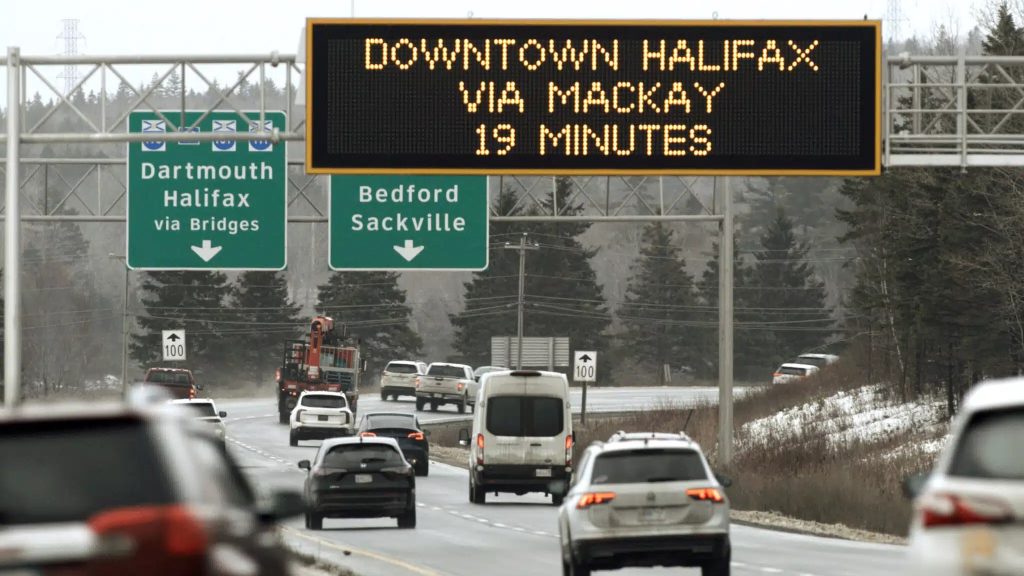
The Halifax Regional Municipality (HRM) is poised for a significant increase in traffic congestion as many companies prepare to implement return-to-office measures. According to transportation expert and professor at Dalhousie University, Ahsan Habib, auto trips in the city could rise by as much as 43 percent. This anticipated surge comes as public servants and private companies begin to reinstate in-office work, leading to more vehicles on the road.
Halifax is already grappling with serious traffic issues. The recent annual traffic index from geolocation company TomTom ranks Halifax as the third most congested city in Canada, trailing only behind Vancouver and Toronto. According to the report, drivers in Halifax lose an average of 111 hours annually to rush hour traffic, which equates to approximately four days and 15 hours of lost time. During peak hours, it can take up to 36 minutes to travel just 10 km.
In light of these challenges, Habib emphasizes the need for immediate action. He notes that the return to office policies are a contributing factor, but the increasing population of the municipality is also a significant issue. “We need to take steps, we need to plan our infrastructure. We have not responded adequately to our population growth with our public transit system,” he stated.
Call for Coordinated Response
Habib advocates for a comprehensive and coordinated response from both the municipality and the provincial government. He suggests that more investment is necessary in bus rapid transit (BRT) systems or other expedited transit options. The HRM’s Rapid Transit Strategy includes plans for four BRT lines and three new ferry routes, but the completion of these projects could take up to eight years.
“We need to keep our downtown vibrant,” Habib said. “If we have a vibrant HRM, we have a better Nova Scotia.” He believes that once an effective transit system is established in the downtown area, it can subsequently expand to the suburbs and integrate with the regional transit network.
To address the immediate congestion, Habib encourages residents to consider public transportation alternatives. “We need to shift our gear,” he remarked. “We need to take a demand management approach.”
Although structural transit solutions will not materialize overnight, individual actions can mitigate congestion. For those returning to work or increasing their travel frequency, utilizing public transit can help alleviate some of the pressure on roads.
As traffic conditions in Halifax become increasingly challenging, the call for a shift in transit planning and usage has never been more urgent. The future of the municipality’s traffic landscape depends on prompt and effective action from leaders and residents alike.











Morris Churches Unite for Annual Good Friday Walk With the Cross

Chloe Zhao’s ‘Buffy’ Reboot Cancelled: Sarah Michelle Gellar Speaks Out

Essential Ingredients for Life Found in Ryugu Asteroid Samples

Urgent Rescue: NSR Airlifts Injured Climber from Nanaimo

Riverside Heart Ball Achieves Record $815,000 for Mental Health

Cognizant Launches AI Factory to Enhance Enterprise AI Scalability

Samsung’s Galaxy Watch 9 to Feature Larger Battery Than Before

Toronto’s AIDS Memorial Faces Potential Redesign Amid Community Concerns

Bayern Munich Loses Luis Díaz Red Card Appeal Despite Referee’s Admission

Secwepemc First Nation Seeks Aboriginal Title Over Kamloops Area

Fatal Crash on Highway 11 Claims Three Lives, Major Closure Ongoing

Manitoba’s Burger Champion Shines Again Amid Dining Innovations

Canadian Curler E.J. Harnden Announces Retirement from Competition

Urgent Fire Erupts at Salvation Army on Christmas Evening

Scientists Unearth Ancient Antarctic Ice to Unlock Climate Secrets

Minister Faces Scrutiny Over Delayed Foreign Interference Watchdog Appointment

Trump and McCormick to Announce $70 Billion Energy Investments

Four Astronauts Return to Earth After International Space Station Mission
-
 Politics5 months ago
Secwepemc First Nation Seeks Aboriginal Title Over Kamloops Area
-
 Top Stories4 months ago
Fatal Crash on Highway 11 Claims Three Lives, Major Closure Ongoing
-
 Lifestyle7 months ago
Manitoba’s Burger Champion Shines Again Amid Dining Innovations
-
 Sports3 months ago
Canadian Curler E.J. Harnden Announces Retirement from Competition
-
 Top Stories3 months ago
Urgent Fire Erupts at Salvation Army on Christmas Evening
-
 World9 months ago
Scientists Unearth Ancient Antarctic Ice to Unlock Climate Secrets
-
 World5 months ago
Minister Faces Scrutiny Over Delayed Foreign Interference Watchdog Appointment
-
 Entertainment9 months ago
Trump and McCormick to Announce $70 Billion Energy Investments
-
 Science9 months ago
Four Astronauts Return to Earth After International Space Station Mission
-
 Lifestyle9 months ago
TransLink Launches Food Truck Program to Boost Revenue in Vancouver
-

 Lifestyle9 months ago
Monika Hibbs Unveils Acres Market & Interiors in Major Rebrand
-

 World1 month ago
Ranchman’s Cookhouse & Dancehall to Relocate by Early 2027