
Technology
Manitoba Health System Integrates AI to Enhance MRI Efficiency

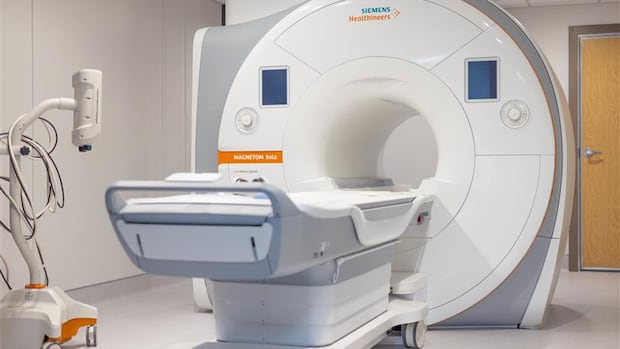
Artificial intelligence (AI) is increasingly being integrated into Manitoba’s health system, particularly in magnetic resonance imaging (MRI) technology. The province aims to have over half of its MRI machines equipped with AI by spring 2026, a move expected to significantly improve efficiency and patient care.
According to Dr. AbdulRazaq Sokoro, chief operating officer of provincial diagnostic services for Shared Health, AI integration allows for clearer images and quicker scans. He stated, “The patient will not notice any difference,” but added that scan durations are set to decrease from 20 minutes to just 10 minutes. New MRI machines, such as the mobile unit located at Thompson General Hospital, come with AI capabilities built in. Several existing units are also being retrofitted to incorporate this advanced technology, sourced from Siemens Healthineers.
Dr. Sokoro highlighted the positive results seen so far, noting that this initiative is a crucial part of addressing the long wait times for MRI procedures in the province. He emphasized that while AI is not the sole solution to the issue, it represents a significant step forward. “I am confident… that if we continue to leverage this technology across the province, we will make a significant dent in our wait times for MRI,” he remarked.
By spring 2026, nine out of the province’s 14 MRI scanners will utilize the new AI software, including those at Boundary Trails Health Centre, the Pan Am Clinic, and hospitals in Winnipeg, Brandon, and Selkirk. Dr. Sokoro noted that successful implementation relies on adjusting scan schedules, training staff, and updating protocols. Importantly, he reassured that the technology is designed to assist rather than replace healthcare professionals.
Concerns regarding data security and privacy were also addressed. Dr. Sokoro explained that the AI system is not cloud-based, meaning it operates directly on the physical machines without external data storage. “We were convinced and confident that we could use this,” he added, emphasizing the importance of safety in the transition.
Health Minister Uzoma Asagwara commented on the advancements, stating, “Sites using the new AI-enhanced technology are seeing significant gains that are already making a difference for patients.” Preliminary data indicates that Boundary Trails achieved an all-time high of 1,051 scans in October 2025, representing a remarkable increase in productivity. The Pan Am Clinic experienced a 90 percent rise during the same timeframe, while the Health Sciences Centre (HSC) noted a 24 percent productivity boost in its first month of AI implementation.
These improvements come as the health system re-establishes its MRI volume after pandemic disruptions. The upgrades are leading to not only shorter scan times but also fewer repeat exams and quicker results for patients.
AI’s influence extends beyond MRI technology in Manitoba’s healthcare system. The Health Sciences Centre is utilizing AI for weapons detection, and there is a pilot project underway to assist in note-taking during patient consultations. Minister Asagwara reiterated the province’s commitment to exploring how AI can improve healthcare delivery, stating, “How can AI really be a tool that helps improve care and outcomes for Manitobans?”
At CancerCare Manitoba, a new AI tool is in development to optimize scheduling for chemotherapy appointments. Currently, there are 66 chemotherapy chairs in Winnipeg, with an average of 5,519 treatments administered each month. Ken Borce, former vice-president of clinical operations and chief nursing officer at CancerCare Manitoba, highlighted the goal of this initiative: “We want our staff to do the best thing that they do, which is being in front of their patients and providing that care.”
The scheduling system, developed by Gray Oncology Solutions, is tailored to adhere to CancerCare’s existing policies and protocols. Borce emphasized that the project prioritizes patient safety and quality of care, stating, “Our innovation does not come at a cost of safety and quality.”
As CancerCare Manitoba prepares to implement this scheduling tool next year, officials confirmed that no staffing positions will be eliminated as a result of the new system. The initiative is expected to facilitate a more efficient approach to patient care while ensuring that healthcare professionals remain focused on their primary responsibilities.
The integration of AI into Manitoba’s health system marks a significant advancement in medical technology, promising to enhance patient experiences and streamline operations across various services. As the province continues to explore AI applications, the potential for improved healthcare delivery remains a focal point in shaping the future of Manitoba’s medical landscape.













Morris Churches Unite for Annual Good Friday Walk With the Cross

Chloe Zhao’s ‘Buffy’ Reboot Cancelled: Sarah Michelle Gellar Speaks Out

Essential Ingredients for Life Found in Ryugu Asteroid Samples

Urgent Rescue: NSR Airlifts Injured Climber from Nanaimo

Riverside Heart Ball Achieves Record $815,000 for Mental Health

Cognizant Launches AI Factory to Enhance Enterprise AI Scalability

Samsung’s Galaxy Watch 9 to Feature Larger Battery Than Before

Toronto’s AIDS Memorial Faces Potential Redesign Amid Community Concerns

Bayern Munich Loses Luis Díaz Red Card Appeal Despite Referee’s Admission

Secwepemc First Nation Seeks Aboriginal Title Over Kamloops Area

Fatal Crash on Highway 11 Claims Three Lives, Major Closure Ongoing

Manitoba’s Burger Champion Shines Again Amid Dining Innovations

Canadian Curler E.J. Harnden Announces Retirement from Competition

Urgent Fire Erupts at Salvation Army on Christmas Evening

Scientists Unearth Ancient Antarctic Ice to Unlock Climate Secrets

Minister Faces Scrutiny Over Delayed Foreign Interference Watchdog Appointment

Trump and McCormick to Announce $70 Billion Energy Investments

Monika Hibbs Unveils Acres Market & Interiors in Major Rebrand
-
 Politics5 months ago
Secwepemc First Nation Seeks Aboriginal Title Over Kamloops Area
-
 Top Stories4 months ago
Fatal Crash on Highway 11 Claims Three Lives, Major Closure Ongoing
-
 Lifestyle7 months ago
Manitoba’s Burger Champion Shines Again Amid Dining Innovations
-
 Sports3 months ago
Canadian Curler E.J. Harnden Announces Retirement from Competition
-
 Top Stories4 months ago
Urgent Fire Erupts at Salvation Army on Christmas Evening
-
 World9 months ago
Scientists Unearth Ancient Antarctic Ice to Unlock Climate Secrets
-
 World5 months ago
Minister Faces Scrutiny Over Delayed Foreign Interference Watchdog Appointment
-
 Entertainment9 months ago
Trump and McCormick to Announce $70 Billion Energy Investments
-
 Lifestyle9 months ago
Monika Hibbs Unveils Acres Market & Interiors in Major Rebrand
-

 Science9 months ago
Four Astronauts Return to Earth After International Space Station Mission
-

 Lifestyle9 months ago
TransLink Launches Food Truck Program to Boost Revenue in Vancouver
-

 World1 month ago
Ranchman’s Cookhouse & Dancehall to Relocate by Early 2027