
Technology
Spotting Snowy Owls: A Promising Winter for Birdwatchers

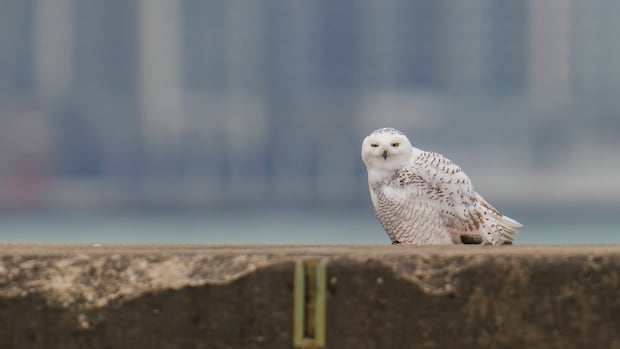
Birdwatchers in southern Canada may have a unique opportunity this winter to spot snowy owls, with reports indicating a significant increase in sightings. The Owl Foundation, a rehabilitation centre located in Ontario’s Niagara region, announced via social media that it has already admitted two young snowy owls this year. This early influx suggests that 2023 may be shaping up to be a notable irruption year for the species, which has been classified as threatened by the Committee on the Status of Endangered Wildlife in Canada.
An irruption refers to a sudden increase in the local population of a species, often due to environmental factors that drive animals southward from their usual habitats. Wildlife biologist and rehabilitator at the Owl Foundation, Brian Hayhoe, noted that the centre has typically seen only a handful of snowy owls each winter, often not until December or January. This year, however, young snowy owls are appearing much earlier than usual, suggesting a broader trend echoed by other wildlife centres across Ontario.
In addition to the sightings in Canada, two snowy owls have attracted attention near Chicago, further underscoring the possibility of an irruption year. Scott Weidensaul, a researcher with the snowy owl GPS tracking initiative Project SNOWstorm, confirmed that most sightings have occurred in the central and western Great Lakes regions, with some owls even reported as far west as British Columbia. “Maybe it’s going to shape up to be a decent year out there as well,” Weidensaul remarked.
Understanding Snowy Owl Irruptions
Irruptions of snowy owls are typically marked by large movements of birds southward every six years. Guy Fitzgéraltd, a veterinarian specializing in wild birds of prey at the Université de Montréal, explained that these irruptions happen when lemmings, a primary food source for snowy owls, are abundant in the Arctic. This abundance leads to increased breeding success, resulting in a higher number of chicks, which then must disperse to find food during winter.
Past irruptions were notably recorded in 2013-2014, when thousands of snowy owls migrated south. Fitzgéraltd mentioned that recent years have shown less dramatic peaks in numbers, suggesting potential issues in their northern breeding areas. Nicolas Lecomte, a professor at the Université de Moncton, has studied snowy owls for over 25 years and noted that irruptions frequently coincide with years of high lemming populations.
Snowy owls tend to inhabit agricultural fields and coastal regions during winter months. Observers can typically find them in the Prairies, where the landscape offers suitable hunting conditions. Jody Allaire, a communications director for Birds Canada, reported seeing snowy owls regularly during his travels in Alberta, emphasizing the joy of spotting these magnificent birds in their natural habitat.
Best Practices for Observing Snowy Owls
For those eager to witness snowy owls this winter, Allaire encourages families to venture out and enjoy the experience, while also advocating for responsible observation. He advises viewers to maintain a respectful distance to avoid disturbing the birds. “If the bird changes its behaviour because of your proximity, it’s time to go,” he said, highlighting the importance of minimizing stress on wildlife.
Fitzgéraltd adds that snowy owls are primarily nocturnal and require rest during the day. Disturbances can impact their health, leading to misinterpretations of their behavior. He frequently receives calls from individuals concerned about seemingly injured owls, unaware that they often rest with their eyes closed.
Another concern is the unethical practice of baiting owls with food, which can lead to dangerous interactions with vehicles. Conservationists strongly discourage this behaviour, as it creates a detrimental association between humans and food sources.
As the snowy owl population continues to face challenges, including habitat loss and climate change, the Committee on the Status of Endangered Wildlife in Canada reported a decline of over 40 percent in their numbers over the past 24 years. Birds Canada has documented a 56 percent decrease in snowy owls since 1970, emphasizing the need for public awareness and conservation efforts.
Weidensaul hopes that the excitement surrounding snowy owl sightings will inspire individuals to connect with the Arctic environment and reflect on the threats these magnificent birds face. “You’re not going to see a polar bear walking down the streets of Chicago,” he noted. “But these snowy owls bring a piece of the Arctic south with them.”











Forreston Launches Festive Season with Vibrant Holiday Events

Forreston Celebrates Holiday Spirit with Festive Events

AI Distorts Athletic Body Ideals, Ignoring Diversity and Reality

FDA Grants Breakthrough Status to Incyte’s Blood Cancer Treatment

Analysts Recommend Top Data Center Stocks for Investors

Urgent Fire Displaces Resident in Sudbury Apartment Complex

Two Dead, One Critical After Rideshare Crash on Hwy. 400

Air Transat to Suspend Flights Monday as Pilots Strike Looms

Urgent Update: Hepatitis B Vaccine Coverage Remains Unchanged

Secwepemc First Nation Seeks Aboriginal Title Over Kamloops Area

Scientists Unearth Ancient Antarctic Ice to Unlock Climate Secrets

Trump and McCormick to Announce $70 Billion Energy Investments

Four Astronauts Return to Earth After International Space Station Mission

TransLink Launches Food Truck Program to Boost Revenue in Vancouver

Apple Notes Enhances Functionality with Markdown Support in macOS 26

Manitoba’s Burger Champion Shines Again Amid Dining Innovations

Urgent Update: Fatal Crash on Highway 99 Claims Life of Pitt Meadows Man

Homemade Houseboat ‘Neverlanding’ Captivates Lake Huron Voyagers
-
 Politics1 month ago
Secwepemc First Nation Seeks Aboriginal Title Over Kamloops Area
-
 World5 months ago
Scientists Unearth Ancient Antarctic Ice to Unlock Climate Secrets
-
 Entertainment5 months ago
Trump and McCormick to Announce $70 Billion Energy Investments
-
 Science5 months ago
Four Astronauts Return to Earth After International Space Station Mission
-
 Lifestyle5 months ago
TransLink Launches Food Truck Program to Boost Revenue in Vancouver
-
 Technology3 months ago
Apple Notes Enhances Functionality with Markdown Support in macOS 26
-
 Lifestyle3 months ago
Manitoba’s Burger Champion Shines Again Amid Dining Innovations
-
 Top Stories2 months ago
Urgent Update: Fatal Crash on Highway 99 Claims Life of Pitt Meadows Man
-
 Top Stories1 week ago
Homemade Houseboat ‘Neverlanding’ Captivates Lake Huron Voyagers
-

 Politics4 months ago
Ukrainian Tennis Star Elina Svitolina Faces Death Threats Online
-
 Sports5 months ago
Search Underway for Missing Hunter Amid Hokkaido Bear Emergency
-

 Politics5 months ago
Carney Engages First Nations Leaders at Development Law Summit