
Top Stories
Bulgaria Adopts Euro Today Amid Price Fears and Protests

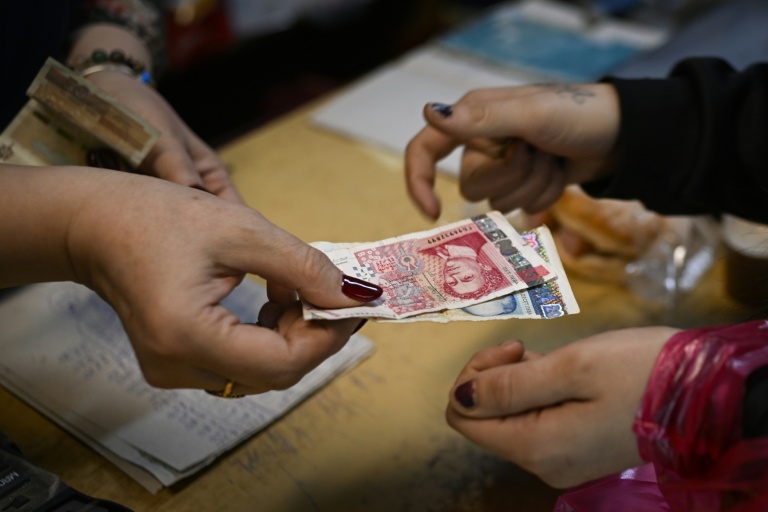
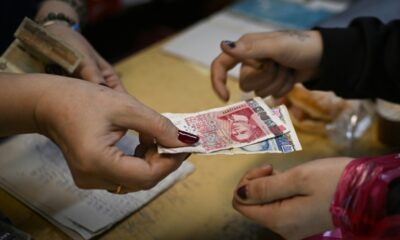
UPDATE: Bulgaria officially adopts the euro today, becoming the 21st country to make this significant move. As the nation transitions from the Bulgarian lev to the euro, many citizens express anxiety over potential price hikes and economic instability.
Public sentiment is divided; a protest campaign dubbed “keep the Bulgarian lev” has gained traction, fueled by fears of rising costs. “Prices will go up. That’s what friends of mine who live in Western Europe told me,” said Bilyana Nikolova, a grocery store owner in Chuprene. Concerns are particularly pronounced in poorer rural areas, where skepticism about the euro runs deep.
Despite these fears, government officials assert that adopting the euro will strengthen Bulgaria’s ties to the West and bolster its economy. Georgi Angelov, a senior economist at the Open Society Institute in Sofia, emphasized that joining the eurozone will finally allow Bulgaria to participate in decision-making within the monetary union.
As Bulgaria faces its eighth election in five years amidst ongoing political turmoil, the economic implications of this currency shift are critical. The country has been linked to the euro since 2020, when it entered the “waiting room” for euro adoption alongside Croatia.
The European Central Bank (ECB) president Christine Lagarde recently noted that the economic benefits of euro adoption are “substantial,” including potential savings of around 500 million euros ($580 million) for small and medium-sized enterprises due to reduced exchange fees. She predicts the effect on consumer prices will be “modest and short-lived,” estimating an impact of 0.2 to 0.4 percentage points based on previous transitions.
However, the latest survey from Eurobarometer indicates that 49 percent of Bulgarians oppose the euro. Amid rising inflation, food prices have surged 5 percent year-on-year as of November, significantly exceeding the eurozone average. With these economic pressures, many Bulgarians are anxious about the future.
Amidst these developments, Bulgaria’s parliament has strengthened watchdog bodies to investigate price surges linked to the euro transition. Yet, analysts warn that ongoing political instability risks delaying necessary anti-corruption reforms and could stymie economic growth.
As Bulgaria embarks on this momentous change, the nation’s ability to stabilize its government will be pivotal. “The challenge will be to have a stable government for at least one to two years, so we can fully reap the benefits of joining the euro area,” Angelov stressed.
With protests and public dissent looming, the impact of today’s euro adoption will be closely monitored both domestically and across the EU. The world watches as Bulgaria steps into a new economic era, fraught with challenges and potential rewards.









Morris Churches Unite for Annual Good Friday Walk With the Cross

Chloe Zhao’s ‘Buffy’ Reboot Cancelled: Sarah Michelle Gellar Speaks Out

Essential Ingredients for Life Found in Ryugu Asteroid Samples

Urgent Rescue: NSR Airlifts Injured Climber from Nanaimo

Riverside Heart Ball Achieves Record $815,000 for Mental Health

Cognizant Launches AI Factory to Enhance Enterprise AI Scalability

Samsung’s Galaxy Watch 9 to Feature Larger Battery Than Before

Toronto’s AIDS Memorial Faces Potential Redesign Amid Community Concerns

Bayern Munich Loses Luis Díaz Red Card Appeal Despite Referee’s Admission

Secwepemc First Nation Seeks Aboriginal Title Over Kamloops Area

Fatal Crash on Highway 11 Claims Three Lives, Major Closure Ongoing

Manitoba’s Burger Champion Shines Again Amid Dining Innovations

Canadian Curler E.J. Harnden Announces Retirement from Competition

Urgent Fire Erupts at Salvation Army on Christmas Evening

Scientists Unearth Ancient Antarctic Ice to Unlock Climate Secrets

Trump and McCormick to Announce $70 Billion Energy Investments

Minister Faces Scrutiny Over Delayed Foreign Interference Watchdog Appointment

Monika Hibbs Unveils Acres Market & Interiors in Major Rebrand
-
 Politics5 months ago
Secwepemc First Nation Seeks Aboriginal Title Over Kamloops Area
-
 Top Stories4 months ago
Fatal Crash on Highway 11 Claims Three Lives, Major Closure Ongoing
-
 Lifestyle7 months ago
Manitoba’s Burger Champion Shines Again Amid Dining Innovations
-
 Sports3 months ago
Canadian Curler E.J. Harnden Announces Retirement from Competition
-
 Top Stories3 months ago
Urgent Fire Erupts at Salvation Army on Christmas Evening
-
 World9 months ago
Scientists Unearth Ancient Antarctic Ice to Unlock Climate Secrets
-
 Entertainment9 months ago
Trump and McCormick to Announce $70 Billion Energy Investments
-
 World5 months ago
Minister Faces Scrutiny Over Delayed Foreign Interference Watchdog Appointment
-
 Lifestyle9 months ago
Monika Hibbs Unveils Acres Market & Interiors in Major Rebrand
-

 Science9 months ago
Four Astronauts Return to Earth After International Space Station Mission
-

 Lifestyle9 months ago
TransLink Launches Food Truck Program to Boost Revenue in Vancouver
-

 World1 month ago
Ranchman’s Cookhouse & Dancehall to Relocate by Early 2027