
Top Stories
Canada Post Contract Talks Urgent as Businesses Seek Alternatives

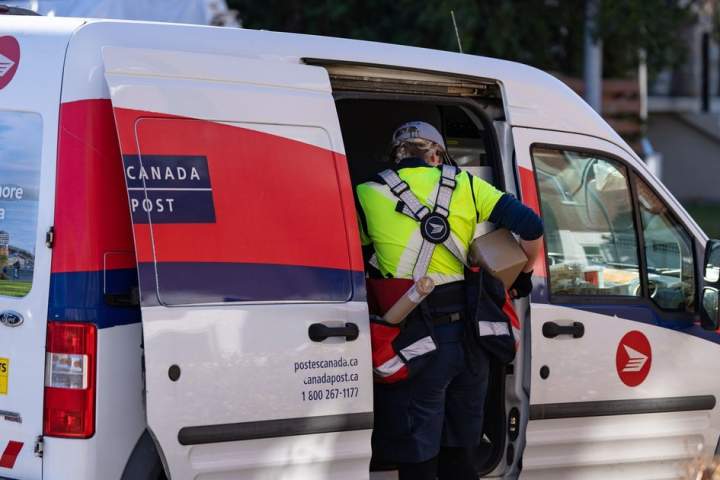
UPDATE: As negotiations between Canada Post and the Canadian Union of Postal Workers (CUPW) continue, small businesses face increasing uncertainty just weeks before the holiday shopping season. With Canada Post and CUPW confirming they are reviewing contract language for new collective agreements, many retailers are already seeking alternative shipping solutions to ensure their operations remain stable.
Negotiations, which have been ongoing for over two years, took a critical turn last month when both parties announced they had reached “agreements in principle.” However, a Canada Post spokesperson revealed on Tuesday that there are no further details on the timeline for finalizing these agreements, leading to heightened anxiety among small business owners.
“Our contractual language review is ongoing, and we have no additional updates at this time,” the spokesperson stated. CUPW acknowledged the difficulties faced during the bargaining process, emphasizing that strike activity has been temporarily suspended. However, the union retains the right to strike until new contracts are ratified.
With the potential for disruptions looming, Jasmin Guénette, vice-president of national affairs at the Canadian Federation of Independent Businesses (CFIB), warned, “If we don’t see an agreement reached soon, we could see more businesses going elsewhere and not using Canada Post.” Last year’s postal strike during the holiday season cost small businesses over $1 billion, a financial blow that is still fresh in their minds.
The impact of ongoing negotiations is already being felt, with many businesses turning to private shipping options such as UPS and FedEx, despite the higher costs. “The trade-off is certainty and quality in a time of instability,” Guénette explained.
Canada Post’s financial struggles have significantly worsened, with losses exceeding $1 billion in 2024 alone. The company reported a net negative impact of $208 million due to last year’s strike, which has contributed to ongoing concerns about its reliability as a shipping provider.
The federal government has directed Canada Post to implement reforms to improve its operations, including reducing letter delivery standards and transitioning to community mailbox services. However, CUPW’s national strike earlier this fall, aimed at protesting these government reforms, failed to roll back any changes, compounding the company’s financial and operational challenges.
Guénette emphasized the urgency of reaching a new agreement. “It is crucial for Canada Post to stabilize its operations and restore confidence among businesses,” he said. “The longer these negotiations drag on, the more it sends the message that things may not be moving as quickly as they should.”
In the meantime, small businesses continue to navigate this uncertain landscape, weighing the costs and benefits of switching to private carriers. As the holiday season approaches, the pressure mounts for Canada Post and CUPW to finalize their agreement, ensuring that retailers can rely on their services without the fear of disruption.
As developments unfold, stakeholders are keenly watching for an announcement on the tentative agreements. The outcome of these negotiations will not just impact the postal service but will also shape the operational landscape for countless small businesses across Canada.








Discover Unique Gifts at Vancouver’s Strathcona Holiday Market

White House Responds to Sabrina Carpenter’s Criticism of ICE Video

Wegovy Negotiations Fail, Leaving Canadians Without Coverage Options

Chronic Pain and Employment: Navigating Disability Benefits

Canada Offers Free Admission and Discounts with Canada Strong Pass

Samsung Galaxy Buds 4 Leak Reveals Open-Ear Design Features

Canada Post Contract Talks Urgent as Businesses Seek Alternatives

Windsor Launches Urgent Summer Student Job Lottery—Apply Now!

Urgent Update: Disability Rights Under Scrutiny Amid MAID Expansion

Secwepemc First Nation Seeks Aboriginal Title Over Kamloops Area

Scientists Unearth Ancient Antarctic Ice to Unlock Climate Secrets

Trump and McCormick to Announce $70 Billion Energy Investments

Four Astronauts Return to Earth After International Space Station Mission

TransLink Launches Food Truck Program to Boost Revenue in Vancouver

Apple Notes Enhances Functionality with Markdown Support in macOS 26

Manitoba’s Burger Champion Shines Again Amid Dining Innovations

Urgent Update: Fatal Crash on Highway 99 Claims Life of Pitt Meadows Man

Ukrainian Tennis Star Elina Svitolina Faces Death Threats Online
-
 Politics4 weeks ago
Secwepemc First Nation Seeks Aboriginal Title Over Kamloops Area
-
 World5 months ago
Scientists Unearth Ancient Antarctic Ice to Unlock Climate Secrets
-
 Entertainment5 months ago
Trump and McCormick to Announce $70 Billion Energy Investments
-
 Science5 months ago
Four Astronauts Return to Earth After International Space Station Mission
-
 Lifestyle5 months ago
TransLink Launches Food Truck Program to Boost Revenue in Vancouver
-
 Technology3 months ago
Apple Notes Enhances Functionality with Markdown Support in macOS 26
-
 Lifestyle3 months ago
Manitoba’s Burger Champion Shines Again Amid Dining Innovations
-
 Top Stories2 months ago
Urgent Update: Fatal Crash on Highway 99 Claims Life of Pitt Meadows Man
-
 Politics4 months ago
Ukrainian Tennis Star Elina Svitolina Faces Death Threats Online
-

 Sports5 months ago
Search Underway for Missing Hunter Amid Hokkaido Bear Emergency
-

 Politics5 months ago
Carney Engages First Nations Leaders at Development Law Summit
-

 Technology5 months ago
Frosthaven Launches Early Access on July 31, 2025