
Top Stories
China Vanke Avoids Default as Property Crisis Deepens Urgently

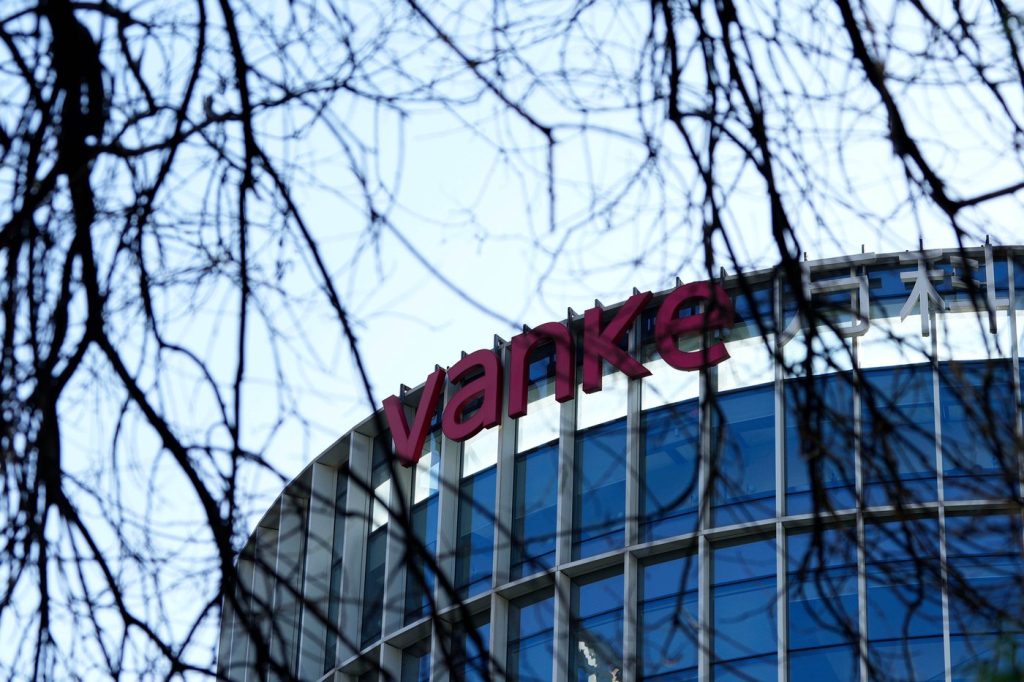
UPDATE: China Vanke, the once-mighty property developer, has narrowly avoided defaulting on a 2 billion yuan ($284 million) bond, revealing the ongoing crisis in China’s property market. This urgent situation highlights the fragile recovery as the company also seeks to delay repayment of an additional 3.7 billion yuan ($530 million) in debt due on December 28.
Despite government efforts to stabilize the sector, Vanke’s predicament underscores the challenges facing Chinese developers, as home prices continue to fall and investor confidence wanes. The company’s bondholders have agreed to extend the repayment deadline to February, but the risk of default still looms large.
Once the country’s largest homebuilder, Vanke’s financial woes are alarming. The developer, which is about one-third owned by state-backed Shenzhen Metro, reported a staggering 27% drop in revenue compared to last year in the latest quarter. With over $50 billion in debt, Vanke’s situation is precarious, particularly as it faces ongoing trading suspensions on several bonds due to plummeting prices.
“This is one of the most significant, quasi state-backed developers that may be defaulting on their repayment,” stated Foreky Wong, a founding partner at Fortune Ark Restructuring.
The broader property sector remains in distress, with home prices plummeting by over 20% since their peak in 2021. New home sales have dropped 11.2% in value year-on-year during the first 11 months of 2025, leading to widespread layoffs and a decline in consumer confidence.
“The continued slide in the property market remains one of the most significant risks to China’s efforts to shift to a domestically demand-driven growth model,” remarked Lynn Song, chief economist for Greater China at ING Bank.
As Vanke struggles, the fallout could extend to the entire real estate market. Economists predict that restoring confidence may take years, with Morningstar analysts projecting home prices may not rebound until 2027 due to excess supply. This long-term outlook raises concerns about the stability of the sector.
While Shenzhen Metro has injected more than 29 billion yuan ($4 billion) into Vanke this year, analysts warn that this may not be sufficient to meet the developer’s obligations. As of September 2025, Vanke reported just 60 billion yuan ($8 billion) in cash against short-term debts of approximately 151 billion yuan ($21 billion), highlighting its liquidity crisis.
S&P Global has downgraded Vanke to “selective default,” interpreting the extension of its bond repayment as a form of distressed debt restructuring. Similarly, Fitch Ratings has revised Vanke’s rating to “restricted default,” underscoring the severity of the situation.
Looking ahead, Vanke faces over 9.4 billion yuan in bond repayments within the next six months. As the company employs more than 120,000 people, the implications of a default could ripple throughout the real estate sector, complicating recovery efforts for other non-state-owned developers.
Analysts stress that without significant support from the Shenzhen government, Vanke’s financial stability will remain at risk. The urgency of this situation cannot be overstated, as the outcome will heavily influence the future of China’s faltering property market and the broader economy. Stay tuned for further updates on this developing story.












Morris Churches Unite for Annual Good Friday Walk With the Cross

Chloe Zhao’s ‘Buffy’ Reboot Cancelled: Sarah Michelle Gellar Speaks Out

Essential Ingredients for Life Found in Ryugu Asteroid Samples

Urgent Rescue: NSR Airlifts Injured Climber from Nanaimo

Riverside Heart Ball Achieves Record $815,000 for Mental Health

Cognizant Launches AI Factory to Enhance Enterprise AI Scalability

Samsung’s Galaxy Watch 9 to Feature Larger Battery Than Before

Toronto’s AIDS Memorial Faces Potential Redesign Amid Community Concerns

Bayern Munich Loses Luis Díaz Red Card Appeal Despite Referee’s Admission

Secwepemc First Nation Seeks Aboriginal Title Over Kamloops Area

Fatal Crash on Highway 11 Claims Three Lives, Major Closure Ongoing

Manitoba’s Burger Champion Shines Again Amid Dining Innovations

Canadian Curler E.J. Harnden Announces Retirement from Competition

Urgent Fire Erupts at Salvation Army on Christmas Evening

Scientists Unearth Ancient Antarctic Ice to Unlock Climate Secrets

Minister Faces Scrutiny Over Delayed Foreign Interference Watchdog Appointment

Trump and McCormick to Announce $70 Billion Energy Investments

Monika Hibbs Unveils Acres Market & Interiors in Major Rebrand
-
 Politics5 months ago
Secwepemc First Nation Seeks Aboriginal Title Over Kamloops Area
-
 Top Stories4 months ago
Fatal Crash on Highway 11 Claims Three Lives, Major Closure Ongoing
-
 Lifestyle7 months ago
Manitoba’s Burger Champion Shines Again Amid Dining Innovations
-
 Sports3 months ago
Canadian Curler E.J. Harnden Announces Retirement from Competition
-
 Top Stories4 months ago
Urgent Fire Erupts at Salvation Army on Christmas Evening
-
 World9 months ago
Scientists Unearth Ancient Antarctic Ice to Unlock Climate Secrets
-
 World5 months ago
Minister Faces Scrutiny Over Delayed Foreign Interference Watchdog Appointment
-
 Entertainment9 months ago
Trump and McCormick to Announce $70 Billion Energy Investments
-
 Lifestyle9 months ago
Monika Hibbs Unveils Acres Market & Interiors in Major Rebrand
-

 Science9 months ago
Four Astronauts Return to Earth After International Space Station Mission
-

 Lifestyle9 months ago
TransLink Launches Food Truck Program to Boost Revenue in Vancouver
-

 World1 month ago
Ranchman’s Cookhouse & Dancehall to Relocate by Early 2027