
Top Stories
Chinese Ambassador Urges Job Growth in Canada with EV Partnership

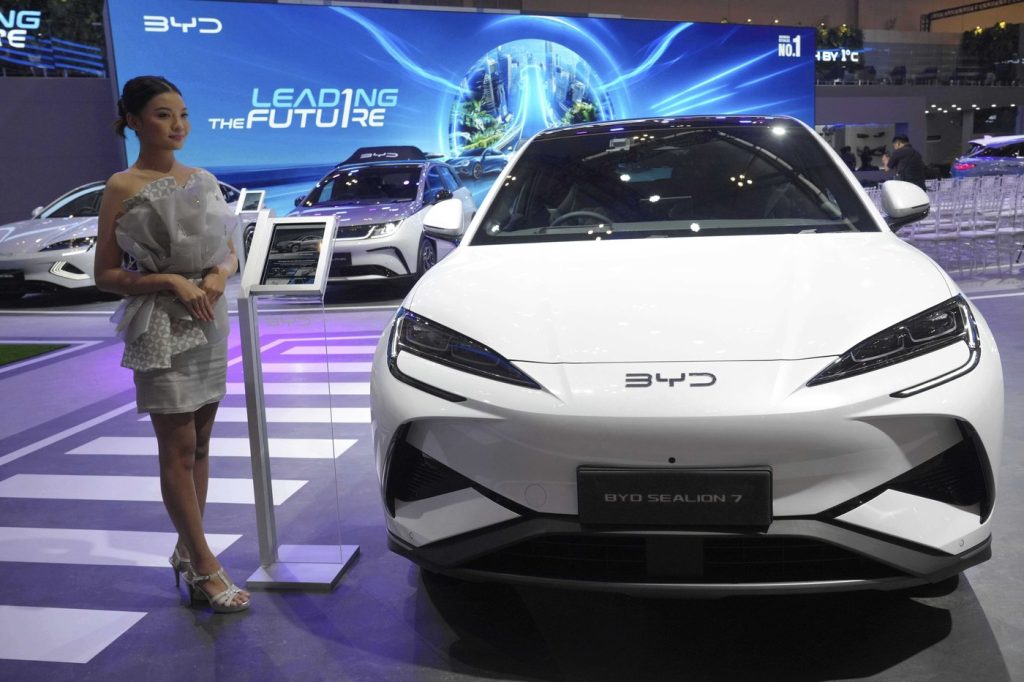
UPDATE: In a bold push for collaboration, Chinese Ambassador to Canada Wang Di announced that China aims to partner with Canadian autoworkers to create jobs and lower car prices through electric vehicle (EV) initiatives. This statement comes amidst growing criticism of Canada’s recent agreement to import a limited number of Chinese EVs.
During a press briefing in Ottawa on January 23, 2026, Wang emphasized the mutual benefits of this partnership, stating, “Only win-win cooperation can last.” The agreement, signed last week by Prime Minister Mark Carney and Chinese President Xi Jinping, allows for an annual quota of up to 49,000 Chinese EVs to enter Canada at a reduced tariff rate of 6.1%. Notably, half of these vehicles must be priced under $35,000 by 2030.
The deal has sparked significant debate, as critics warn it could flood the Canadian market with cheaper vehicles, undermining local manufacturers. Ontario Premier Doug Ford labeled the agreement a “lopsided deal,” fearing it could jeopardize access to the vital U.S. market for Canadian automakers.
Unifor union president Lana Payne also voiced concerns, calling the agreement a “self-inflicted wound” that would allow China to dominate the market, as seen in other regions. However, Wang reassured workers that this initiative aims to bolster Canada’s manufacturing sector, promoting local investment and job creation.
Wang stated, “China encourages and supports Chinese companies to invest and establish operations in Canada.” He urged that this partnership must be built on fairness and a non-discriminatory business environment for Chinese enterprises.
A senior government source indicated that Ottawa views the agreement not as a threat, but as part of a broader strategy to encourage Chinese EV manufacturing in Canada. Wang echoed this sentiment, highlighting that the collaboration could yield substantial benefits for both nations.
Critics, however, remain skeptical. Experts like Margaret McCuaig-Johnston from the China Strategic Risks Institute caution against China’s heavy subsidies that could lead to a surplus of low-cost vehicles, potentially destabilizing the market. Concerns about data privacy and surveillance linked to Chinese technology embedded in EVs also loom large.
During an online panel discussion by the Institute for Peace and Diplomacy, Wenran Jiang, head of the Canada-China Energy and Environment Forum, suggested that leveraging regional capabilities could enhance Canada’s position in the market. He pointed to Magna International, a Canadian auto parts leader, which successfully collaborates with a Chinese automaker in Austria, showcasing a model for potential success in Ontario.
As the situation develops, all eyes will be on the Canadian government’s next steps and the response from local industries. The urgency of securing a competitive edge in the evolving EV market has never been more critical for Canada.
Stay tuned for updates as this story unfolds.













Morris Churches Unite for Annual Good Friday Walk With the Cross

Chloe Zhao’s ‘Buffy’ Reboot Cancelled: Sarah Michelle Gellar Speaks Out

Essential Ingredients for Life Found in Ryugu Asteroid Samples

Urgent Rescue: NSR Airlifts Injured Climber from Nanaimo

Riverside Heart Ball Achieves Record $815,000 for Mental Health

Cognizant Launches AI Factory to Enhance Enterprise AI Scalability

Samsung’s Galaxy Watch 9 to Feature Larger Battery Than Before

Toronto’s AIDS Memorial Faces Potential Redesign Amid Community Concerns

Bayern Munich Loses Luis Díaz Red Card Appeal Despite Referee’s Admission

Secwepemc First Nation Seeks Aboriginal Title Over Kamloops Area

Fatal Crash on Highway 11 Claims Three Lives, Major Closure Ongoing

Manitoba’s Burger Champion Shines Again Amid Dining Innovations

Canadian Curler E.J. Harnden Announces Retirement from Competition

Urgent Fire Erupts at Salvation Army on Christmas Evening

Scientists Unearth Ancient Antarctic Ice to Unlock Climate Secrets

Minister Faces Scrutiny Over Delayed Foreign Interference Watchdog Appointment

Trump and McCormick to Announce $70 Billion Energy Investments

Monika Hibbs Unveils Acres Market & Interiors in Major Rebrand
-
 Politics5 months ago
Secwepemc First Nation Seeks Aboriginal Title Over Kamloops Area
-
 Top Stories4 months ago
Fatal Crash on Highway 11 Claims Three Lives, Major Closure Ongoing
-
 Lifestyle7 months ago
Manitoba’s Burger Champion Shines Again Amid Dining Innovations
-
 Sports3 months ago
Canadian Curler E.J. Harnden Announces Retirement from Competition
-
 Top Stories4 months ago
Urgent Fire Erupts at Salvation Army on Christmas Evening
-
 World9 months ago
Scientists Unearth Ancient Antarctic Ice to Unlock Climate Secrets
-
 World5 months ago
Minister Faces Scrutiny Over Delayed Foreign Interference Watchdog Appointment
-
 Entertainment9 months ago
Trump and McCormick to Announce $70 Billion Energy Investments
-
 Lifestyle9 months ago
Monika Hibbs Unveils Acres Market & Interiors in Major Rebrand
-

 Science9 months ago
Four Astronauts Return to Earth After International Space Station Mission
-

 Lifestyle9 months ago
TransLink Launches Food Truck Program to Boost Revenue in Vancouver
-

 World1 month ago
Ranchman’s Cookhouse & Dancehall to Relocate by Early 2027