
Top Stories
Country Joe McDonald, Icon of 1960s Counterculture, Dies at 84

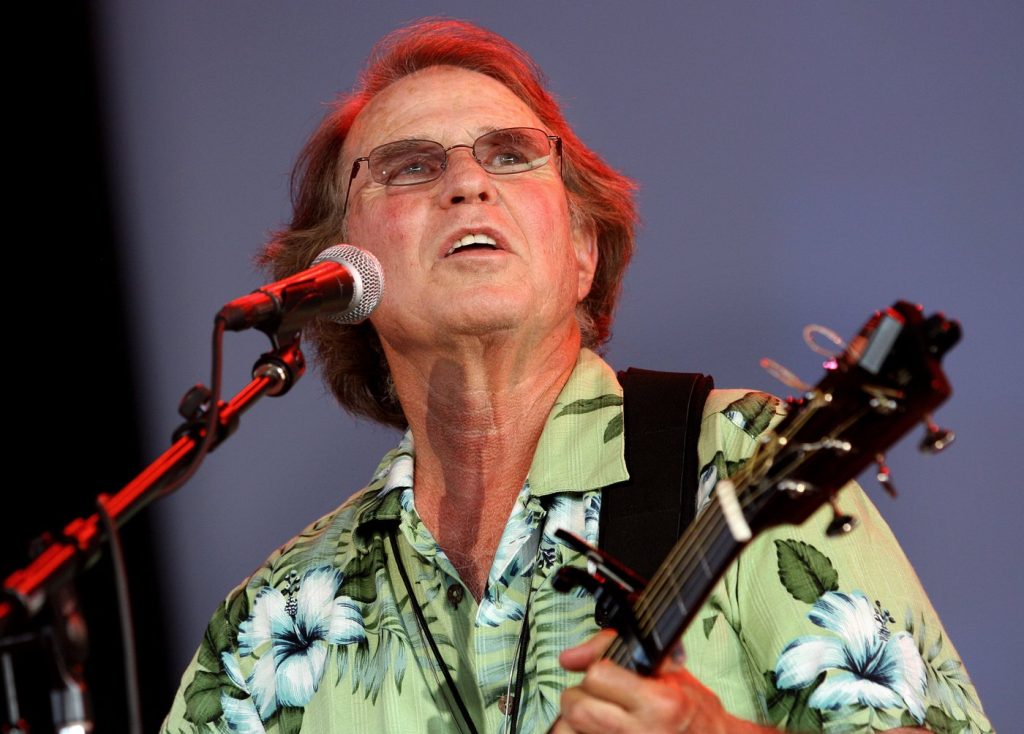
Country Joe McDonald, the celebrated figure of the 1960s counterculture and anti-war movement, passed away on January 1, 2024, at the age of 84. Known for his iconic protest song “I-Feel-Like-I’m-Fixin’-To-Die Rag,” McDonald died in Berkeley, California, due to complications from Parkinson’s disease, as confirmed by his wife, Kathy McDonald.
McDonald rose to prominence as a member of Country Joe and the Fish, a band that became synonymous with the protest movement during the Vietnam War. His song, performed at the legendary Woodstock music festival in 1969, became an anthem for those opposing the war. The track, characterized by its biting humor and poignant lyrics, resonated deeply with a generation that sought to challenge government policies and promote peace.
A Life Defined by Music and Activism
Born on January 1, 1942, in Washington, D.C., McDonald’s upbringing in a politically active family set the stage for his future endeavors in music and activism. His parents, former Communists, fostered an environment where music and social justice were vital components of life. As a youth, he developed a passion for music, playing the trombone and teaching himself guitar.
In the early 1960s, after serving in the Navy, McDonald settled in Berkeley, California, where he became immersed in the folk music scene and political activism. He co-founded an underground magazine, Rag Baby, where he wrote “I-Feel-Like-I’m-Fixin’-To-Die Rag” to promote anti-war sentiments. This song, written in less than an hour, was a poignant response to the escalating Vietnam conflict.
The song’s memorable chorus—“And it’s 1, 2, 3, what are we fighting for? Don’t ask me, I don’t give a damn, next stop is Vietnam”—captured the frustration and disillusionment of many young Americans. His performances often included a distinctive chant that became a hallmark of his live shows, although it also led to controversy and legal challenges.
Legacy of Protest and Music
McDonald’s appearance at Woodstock solidified his status as a counterculture icon. Despite the impending breakup of Country Joe and the Fish, he performed before hundreds of thousands, with many in the crowd enthusiastically joining in the chorus. In a 2019 interview, he reflected on the significance of his performance, stating, “I was talking about Vietnam,” highlighting the song’s role as a protest against the war.
Throughout his career, McDonald faced numerous challenges, including a canceled appearance on The Ed Sullivan Show due to his provocative opening cheer. He was even arrested for using the cheer during a performance in Worcester, Massachusetts. This incident exemplified the tensions surrounding his music, which was both celebrated and criticized.
In addition to his musical achievements, McDonald became involved with political radicals such as Abbie Hoffman and Jerry Rubin. His testimony in the “Chicago Eight” trial brought further attention to his activism. Throughout the years, McDonald remained committed to social causes, including the construction of a Vietnam Veterans Memorial in Berkeley, which was unveiled in 1995.
McDonald’s career was marked by a continuous evolution of his musical style, moving from folk to psychedelic rock. He released numerous albums, including “Electric Music for the Mind and Body” and “50,” and continued to write protest songs, with “Save the Whales” being one of his notable later works.
Despite his anti-war activism, McDonald grappled with his own experiences as a veteran. He served in the Navy in the late 1950s, which contributed to his complex feelings about the Vietnam War. This duality informed much of his work and public persona.
McDonald’s personal life was equally rich, with four marriages and five children. He had a notable relationship with singer Janis Joplin, which influenced his songwriting. The ballad “Janis” was inspired by their connection, reflecting the emotional depth of his music.
As a cornerstone of the 1960s music scene, McDonald’s influence extended beyond his songs. He embodied a spirit of rebellion and a quest for peace that defined an era. His legacy will continue to resonate with new generations of musicians and activists alike.













Morris Churches Unite for Annual Good Friday Walk With the Cross

Chloe Zhao’s ‘Buffy’ Reboot Cancelled: Sarah Michelle Gellar Speaks Out

Essential Ingredients for Life Found in Ryugu Asteroid Samples

Urgent Rescue: NSR Airlifts Injured Climber from Nanaimo

Riverside Heart Ball Achieves Record $815,000 for Mental Health

Cognizant Launches AI Factory to Enhance Enterprise AI Scalability

Samsung’s Galaxy Watch 9 to Feature Larger Battery Than Before

Toronto’s AIDS Memorial Faces Potential Redesign Amid Community Concerns

Bayern Munich Loses Luis Díaz Red Card Appeal Despite Referee’s Admission

Secwepemc First Nation Seeks Aboriginal Title Over Kamloops Area

Fatal Crash on Highway 11 Claims Three Lives, Major Closure Ongoing

Manitoba’s Burger Champion Shines Again Amid Dining Innovations

Canadian Curler E.J. Harnden Announces Retirement from Competition

Urgent Fire Erupts at Salvation Army on Christmas Evening

Scientists Unearth Ancient Antarctic Ice to Unlock Climate Secrets

Minister Faces Scrutiny Over Delayed Foreign Interference Watchdog Appointment

Trump and McCormick to Announce $70 Billion Energy Investments

Monika Hibbs Unveils Acres Market & Interiors in Major Rebrand
-
 Politics5 months ago
Secwepemc First Nation Seeks Aboriginal Title Over Kamloops Area
-
 Top Stories4 months ago
Fatal Crash on Highway 11 Claims Three Lives, Major Closure Ongoing
-
 Lifestyle7 months ago
Manitoba’s Burger Champion Shines Again Amid Dining Innovations
-
 Sports4 months ago
Canadian Curler E.J. Harnden Announces Retirement from Competition
-
 Top Stories4 months ago
Urgent Fire Erupts at Salvation Army on Christmas Evening
-
 World9 months ago
Scientists Unearth Ancient Antarctic Ice to Unlock Climate Secrets
-
 World5 months ago
Minister Faces Scrutiny Over Delayed Foreign Interference Watchdog Appointment
-
 Entertainment9 months ago
Trump and McCormick to Announce $70 Billion Energy Investments
-
 Lifestyle9 months ago
Monika Hibbs Unveils Acres Market & Interiors in Major Rebrand
-

 Science9 months ago
Four Astronauts Return to Earth After International Space Station Mission
-

 Lifestyle9 months ago
TransLink Launches Food Truck Program to Boost Revenue in Vancouver
-

 World2 months ago
Ranchman’s Cookhouse & Dancehall to Relocate by Early 2027