
Top Stories
First Nations Hunter Strengthens Bonds with Farmers in Saskatchewan

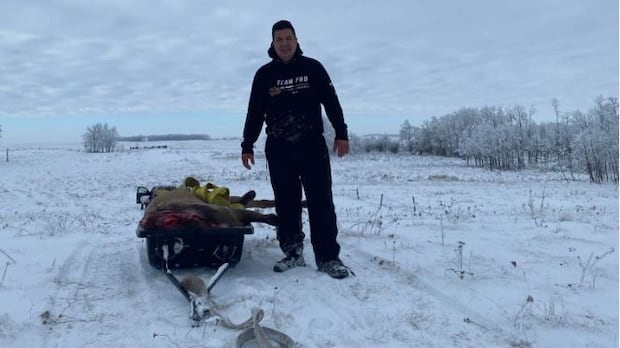
UPDATE: Riel Thomson, a dedicated hunter from the Cega’kin Nakoda Nation, is making headlines as he builds vital relationships with farmers in southeast Saskatchewan. Over the past 10 years, Thomson has successfully addressed wildlife issues that threaten local agriculture, helping nearly 30 families access healthy game meat.
Thomson’s collaboration began when a local farm family sought assistance with elk and deer damaging their haybales. “I didn’t just show up and start dropping all the elk,” Thomson stated. “It was something we built together, and it’s nice to have that trust both ways.” This reciprocal relationship blossomed as the family invited him for breakfast, sharing stories and fostering mutual respect.
As a principal for an adult high school program, Thomson learned traditional hunting skills from his father and grandfather, emphasizing the importance of using every part of the animal. He explained, “That’s healthy food and we want to make sure that we’re still consuming it.” The community not only benefits from the meat but also participates in crafting drums from hides and tools from bones.
Farmers across the region are reaching out for help. Thomson noted he carefully assesses the area before hunting, ensuring he respects local residences and offers assistance with farm chores. “We have about six or seven good guys that are down to hunt to share with the community and be there just as our warriors once were,” he added.
Recent data from the Saskatchewan Crop Insurance Corporation indicates significant agricultural challenges, with 267 waterfowl claims leading to $1.7 million in compensation, 2,976 big game claims totaling $24.2 million, and 3,548 predation claims costing $6.7 million. The Saskatchewan Wildlife Federation emphasizes the need for stronger ties between farmers and First Nations hunters to promote sustainable subsistence hunting.
Mark and Laura Hoimyr, farmers from Gladmar, Saskatchewan, are among those looking to forge these crucial connections. With over 30 years of experience raising beef cattle, they have faced challenges from deer populations damaging their crops. Mark stated, “We don’t know the people to offer the hunting to… it can be a challenge.” Their search for solutions led them to the Treaty Land Sharing Network, which aims to facilitate land access for hunting and gathering.
“This relationship building is a good way to challenge those stereotypes people may have about First Nations people,” Laura Hoimyr expressed. “We all love the land and want the best for it.”
Thomson sees his work as a pathway to enhance the treaty relationship. He is committed to continuing to support farmers and ensure local families have access to nutritious meat during the holiday season.
As these relationships grow stronger, the potential for collaboration between First Nations hunters and farmers in Saskatchewan is set to redefine community ties and promote sustainable practices. Stay tuned for more updates on this developing story that highlights the importance of trust and cooperation in preserving both cultural heritage and agricultural livelihoods.












Manitoba Legislature Holds Urgent Memorial for Montreal Massacre Victims

Urgent: Two Pedestrians Injured in Separate Hit-and-Run Crashes

Nova Scotia Premier Demands Crackdown on Illegal Cannabis Sales

Charlottetown Youth Committee Urgently Seeks Young Voices Now

Alberta’s Largest Craft Sale Invites Holiday Shoppers to Edmonton

Hunter McVey Discusses His Role in ABC’s ‘9-1-1 Nashville’

McGill University Climbs to Third in National Research Rankings

Children’s Hospitals Report Surge in Flu Cases Amid Early Season

Market Rotation Accelerates with Small Caps and Commodity Trends

Secwepemc First Nation Seeks Aboriginal Title Over Kamloops Area

Scientists Unearth Ancient Antarctic Ice to Unlock Climate Secrets

Trump and McCormick to Announce $70 Billion Energy Investments

Four Astronauts Return to Earth After International Space Station Mission

TransLink Launches Food Truck Program to Boost Revenue in Vancouver

Apple Notes Enhances Functionality with Markdown Support in macOS 26

Manitoba’s Burger Champion Shines Again Amid Dining Innovations

Urgent Update: Fatal Crash on Highway 99 Claims Life of Pitt Meadows Man

Ukrainian Tennis Star Elina Svitolina Faces Death Threats Online
-
 Politics4 weeks ago
Secwepemc First Nation Seeks Aboriginal Title Over Kamloops Area
-
 World5 months ago
Scientists Unearth Ancient Antarctic Ice to Unlock Climate Secrets
-
 Entertainment5 months ago
Trump and McCormick to Announce $70 Billion Energy Investments
-
 Science5 months ago
Four Astronauts Return to Earth After International Space Station Mission
-
 Lifestyle5 months ago
TransLink Launches Food Truck Program to Boost Revenue in Vancouver
-
 Technology3 months ago
Apple Notes Enhances Functionality with Markdown Support in macOS 26
-
 Lifestyle3 months ago
Manitoba’s Burger Champion Shines Again Amid Dining Innovations
-
 Top Stories2 months ago
Urgent Update: Fatal Crash on Highway 99 Claims Life of Pitt Meadows Man
-
 Politics4 months ago
Ukrainian Tennis Star Elina Svitolina Faces Death Threats Online
-
 Sports5 months ago
Search Underway for Missing Hunter Amid Hokkaido Bear Emergency
-
 Politics5 months ago
Carney Engages First Nations Leaders at Development Law Summit
-

 Technology5 months ago
Frosthaven Launches Early Access on July 31, 2025