
Top Stories
Man Found Not Criminally Responsible for Killing Amnesty Worker

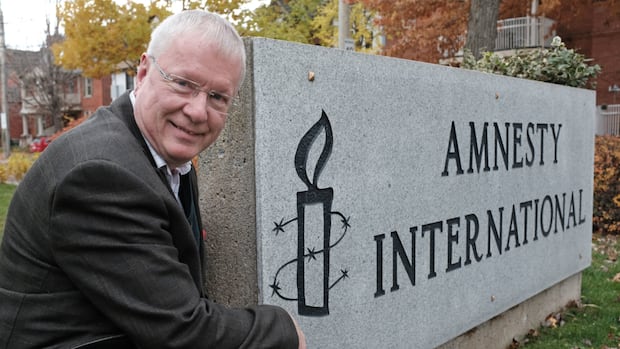
UPDATE: A man has been found not criminally responsible for the murder of an Amnesty International worker, a ruling announced by Superior Court Justice Anne London-Weinstein last week. The decision comes after Ahmed Ismail, 46, was deemed incapable of understanding his actions due to a severe mental disorder.
On May 9, 2023, William Bryant, 74, was discovered dead in the stairwell of Ismail’s apartment building in Ottawa. The court heard that Ismail suffers from schizophrenia, leading to psychosis and paranoid delusions, which significantly impaired his judgment during the incident.
Justice London-Weinstein stated that Ismail was not criminally responsible (NCR) at the time of the killing, underscoring the profound impact of his mental illness. The court revealed that Ismail and Bryant had a friendly but limited relationship, casting doubt on any potential motive behind the attack.
The ruling followed a thorough examination of mental health assessments, which alleviated concerns that a second evaluation may have been rushed. During the proceedings, the judge emphasized the importance of clarity in the court’s reasoning, particularly in a time when public understanding is essential.
Emotional victim impact statements painted a heart-wrenching picture of Bryant’s life. His twin brother, Ted Bryant, who resides in Australia, expressed profound sorrow, stating, “We had a bond only twins can truly understand.” He characterized his brother as a “gentle, kind and lovable person” and questioned how such violence could befall someone so peaceful.
Diane Bryant, Ted’s wife, echoed these sentiments, bewildered by the violence inflicted upon a “quiet, gentle man.” She raised concerns about Ismail’s future, asking, “How can we be sure that you won’t hurt anybody else?” This poignant question highlights the ongoing societal concerns regarding the safety of individuals with mental health issues.
In a further testament to Bryant’s character, Alex Neve, who worked alongside him for decades at Amnesty International, noted, “In losing Will, the world has lost one more individual whose daily actions were guided by empathy.” Neve’s remarks emphasize that Bryant’s legacy of compassion and humanitarianism will be deeply missed.
As of now, Ismail is under the supervision of the Ontario Review Board, which will evaluate his treatment and freedoms annually. The board’s decisions will be crucial in addressing the community’s concerns over public safety and mental health treatment protocols.
This ruling has sparked a broader conversation about the intersection of mental health and criminal justice, raising urgent questions about how society addresses individuals facing severe mental disorders. The implications of this case will likely resonate within legal and mental health discussions for some time to come.
Stay tuned for further updates as this developing story unfolds.












Maple Leafs Triumph Over Canes, Face Goaltending Crisis

Kishwaukee College to Celebrate Fall Graduates on December 13

Renewed Fighting in Eastern Congo Undermines Peace Agreement

Calgary Faces Domestic Violence Crisis: Urgent Action Required

Discover 3 Festive Recipes from Dan Pelosi’s New Cookbook

Radiothon Launches to Equip Victoria Hospital Expansion

Netflix Confirms $72B Acquisition of Warner Bros. Discovery

Acute Care Alberta Extends $34M Contract Amid Procurement Probes

Ambassador Bridge Fees Surge $2 by January 2026

Secwepemc First Nation Seeks Aboriginal Title Over Kamloops Area

Scientists Unearth Ancient Antarctic Ice to Unlock Climate Secrets

Trump and McCormick to Announce $70 Billion Energy Investments

Four Astronauts Return to Earth After International Space Station Mission

TransLink Launches Food Truck Program to Boost Revenue in Vancouver

Apple Notes Enhances Functionality with Markdown Support in macOS 26

Manitoba’s Burger Champion Shines Again Amid Dining Innovations

Urgent Update: Fatal Crash on Highway 99 Claims Life of Pitt Meadows Man

Ukrainian Tennis Star Elina Svitolina Faces Death Threats Online
-
 Politics4 weeks ago
Secwepemc First Nation Seeks Aboriginal Title Over Kamloops Area
-
 World5 months ago
Scientists Unearth Ancient Antarctic Ice to Unlock Climate Secrets
-
 Entertainment5 months ago
Trump and McCormick to Announce $70 Billion Energy Investments
-
 Science5 months ago
Four Astronauts Return to Earth After International Space Station Mission
-
 Lifestyle5 months ago
TransLink Launches Food Truck Program to Boost Revenue in Vancouver
-
 Technology3 months ago
Apple Notes Enhances Functionality with Markdown Support in macOS 26
-
 Lifestyle3 months ago
Manitoba’s Burger Champion Shines Again Amid Dining Innovations
-
 Top Stories2 months ago
Urgent Update: Fatal Crash on Highway 99 Claims Life of Pitt Meadows Man
-
 Politics4 months ago
Ukrainian Tennis Star Elina Svitolina Faces Death Threats Online
-

 Sports5 months ago
Search Underway for Missing Hunter Amid Hokkaido Bear Emergency
-

 Politics5 months ago
Carney Engages First Nations Leaders at Development Law Summit
-

 Technology5 months ago
Frosthaven Launches Early Access on July 31, 2025