
Top Stories
N.W.T. Diamond Mines Face Early Closures Amid Market Crisis

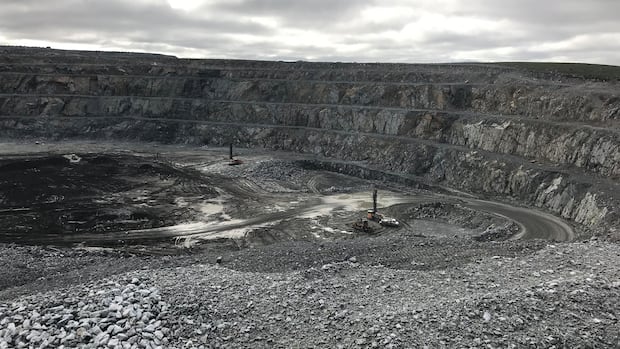
UPDATE: The future of the Northwest Territories’ diamond mining industry hangs in the balance as recent decisions by major players indicate potential early closures. Just last week, Mountain Province Diamonds and De Beers announced that plans for the Gahcho Kué mine expansion are on hold, citing dire market conditions and a staggering $49 million debt owed by Mountain Province.
This sudden shift raises alarms for the local economy, which could see significant job losses if the mines close sooner than their projected dates of 2029 for Ekati diamond mine and 2031 for Gahcho Kué. According to Jeremy King, CEO of Burgundy Diamond Mines, without a rebound in diamond prices within the next six to twelve months, Ekati may face bankruptcy, further endangering the territory’s economic stability.
Economist Graeme Clinton warns that if both Ekati and Gahcho Kué were to shut down within a single year, over 1,000 jobs could be lost simultaneously. He emphasizes that the local economy’s ability to absorb such a workforce surge is precarious. “Our economy’s ability to absorb that volume of available labor becomes more tenuous,” Clinton stated.
The potential for an exodus of workers from the territory looms large, which could have cascading effects on housing, public infrastructure, and government revenues. In an urgent statement, N.W.T. Industry Minister Caitlin Cleveland reflected on the gravity of the situation, noting that if closures occur earlier than expected, payroll taxes would suffer due to residents transitioning to lower-paying jobs.
Cleveland reiterated that the government is actively pursuing new mining projects as a countermeasure against these looming closures. “The impending closure of diamond mines shows the importance of diversifying the territory’s economy,” she said. She stressed that strategic investments in infrastructure, like roads and energy, are crucial to supporting a more varied economic landscape.
The N.W.T. and Nunavut Chamber of Mines, led by Executive Director Karen Costello, echoed these sentiments, stating that enhanced infrastructure could attract future mining endeavors. Costello noted that the high costs of operating in the N.W.T. make it challenging for prospective miners to compete, underscoring the need for a favorable tax framework and new mining legislation.
As the clock ticks down on the diamond industry, Cleveland pointed to potential federal defense investments that might provide some economic relief in the future, though cautioning against dependency on government funding to sustain economic growth.
Clinton remains optimistic about job opportunities emerging from the Giant Mine remediation and military spending, but stresses the importance of vigilance in nurturing a vibrant private sector. “There are things that will take place that are opportunities,” he stated, “It’s just how we navigate between our current very robust active economy into what we’ll see in five or ten years from now.”
With the situation developing rapidly, the fate of the N.W.T.’s diamond mines—and the livelihoods of those who depend on them—hangs in the balance. Stakeholders are urged to stay informed as this potentially transformative moment for the region unfolds.











Morris Churches Unite for Annual Good Friday Walk With the Cross

Chloe Zhao’s ‘Buffy’ Reboot Cancelled: Sarah Michelle Gellar Speaks Out

Essential Ingredients for Life Found in Ryugu Asteroid Samples

Urgent Rescue: NSR Airlifts Injured Climber from Nanaimo

Riverside Heart Ball Achieves Record $815,000 for Mental Health

Cognizant Launches AI Factory to Enhance Enterprise AI Scalability

Samsung’s Galaxy Watch 9 to Feature Larger Battery Than Before

Toronto’s AIDS Memorial Faces Potential Redesign Amid Community Concerns

Bayern Munich Loses Luis Díaz Red Card Appeal Despite Referee’s Admission

Secwepemc First Nation Seeks Aboriginal Title Over Kamloops Area

Fatal Crash on Highway 11 Claims Three Lives, Major Closure Ongoing

Manitoba’s Burger Champion Shines Again Amid Dining Innovations

Canadian Curler E.J. Harnden Announces Retirement from Competition

Urgent Fire Erupts at Salvation Army on Christmas Evening

Scientists Unearth Ancient Antarctic Ice to Unlock Climate Secrets

Minister Faces Scrutiny Over Delayed Foreign Interference Watchdog Appointment

Trump and McCormick to Announce $70 Billion Energy Investments

Monika Hibbs Unveils Acres Market & Interiors in Major Rebrand
-
 Politics5 months ago
Secwepemc First Nation Seeks Aboriginal Title Over Kamloops Area
-
 Top Stories4 months ago
Fatal Crash on Highway 11 Claims Three Lives, Major Closure Ongoing
-
 Lifestyle7 months ago
Manitoba’s Burger Champion Shines Again Amid Dining Innovations
-
 Sports3 months ago
Canadian Curler E.J. Harnden Announces Retirement from Competition
-
 Top Stories4 months ago
Urgent Fire Erupts at Salvation Army on Christmas Evening
-
 World9 months ago
Scientists Unearth Ancient Antarctic Ice to Unlock Climate Secrets
-
 World5 months ago
Minister Faces Scrutiny Over Delayed Foreign Interference Watchdog Appointment
-
 Entertainment9 months ago
Trump and McCormick to Announce $70 Billion Energy Investments
-
 Lifestyle9 months ago
Monika Hibbs Unveils Acres Market & Interiors in Major Rebrand
-

 Science9 months ago
Four Astronauts Return to Earth After International Space Station Mission
-

 Lifestyle9 months ago
TransLink Launches Food Truck Program to Boost Revenue in Vancouver
-

 World1 month ago
Ranchman’s Cookhouse & Dancehall to Relocate by Early 2027