
Top Stories
New Study Reveals Why Some Memories Stick While Others Fade


URGENT UPDATE: A groundbreaking study published today in Science Advances reveals why the human brain retains certain memories while allowing others to fade away. Researchers at Boston University, led by doctoral student Chenyang “Leo” Lin, have identified mechanisms behind memory enhancement that could revolutionize educational methods and dementia care.
The study, which analyzed data from nearly 650 participants, found that our brains selectively strengthen memories tied to significant experiences. This process, known as memory enhancement, operates on a sliding scale, determining which memories to preserve based on emotional relevance.
Lin’s personal experience during a trip to New Hampshire two years ago inspired this research. He vividly recalled a moment watching squirrels, questioning why some ordinary moments stick while others slip away. His findings could hold profound implications for educators and caregivers in maximizing memory retention.
The research team conducted three experiments and analyzed data from seven additional studies. Participants viewed various images—some neutral and others linked to cash rewards or mild electric shocks—before undergoing a surprise memory test the following day. Results indicated that people were more likely to remember “fragile” memories that occurred before an emotional event.
Robert M.G. Reinhart, co-author and professor of psychological and brain sciences at Boston University, stated,
“Memory isn’t just a passive recording device: Our brains decide what matters, and emotional events can reach back in time to stabilize fragile memories.”
The study suggests that associating mundane memories with emotionally charged experiences can help strengthen them. For instance, a history lesson tied to a rewarding activity may enhance student retention, while reminders for individuals with dementia could be anchored through meaningful connections—like a favorite song or family photo.
The findings highlight how emotional salience can be strategically harnessed to improve memory retention across various life stages. Maria Wimber, a cognitive neuroscientist at the University of Glasgow, emphasized the study’s significance, noting that memories are dynamic and their stability can shift based on subsequent experiences.
Although the study provides crucial insights into memory dynamics, it does not delve into the underlying brain mechanisms responsible for these enhancements. Lin hopes future research utilizing brain imaging can unravel these processes in real time.
Looking ahead, Lin’s team aims to explore how these memory mechanisms operate in everyday situations, potentially transforming approaches in classrooms and healthcare settings.
As memory remains a vital indicator of cognitive health, these insights could empower individuals to better manage their memory retention strategies, benefiting both young learners and those facing cognitive challenges.
Stay tuned for more updates as this story develops, and explore how these findings could impact memory practices globally. For the latest in health news, visit Healthing.ca.













Morris Churches Unite for Annual Good Friday Walk With the Cross

Chloe Zhao’s ‘Buffy’ Reboot Cancelled: Sarah Michelle Gellar Speaks Out

Essential Ingredients for Life Found in Ryugu Asteroid Samples

Urgent Rescue: NSR Airlifts Injured Climber from Nanaimo

Riverside Heart Ball Achieves Record $815,000 for Mental Health

Cognizant Launches AI Factory to Enhance Enterprise AI Scalability

Samsung’s Galaxy Watch 9 to Feature Larger Battery Than Before

Toronto’s AIDS Memorial Faces Potential Redesign Amid Community Concerns

Bayern Munich Loses Luis Díaz Red Card Appeal Despite Referee’s Admission

Secwepemc First Nation Seeks Aboriginal Title Over Kamloops Area

Fatal Crash on Highway 11 Claims Three Lives, Major Closure Ongoing

Manitoba’s Burger Champion Shines Again Amid Dining Innovations

Canadian Curler E.J. Harnden Announces Retirement from Competition

Urgent Fire Erupts at Salvation Army on Christmas Evening

Scientists Unearth Ancient Antarctic Ice to Unlock Climate Secrets

Minister Faces Scrutiny Over Delayed Foreign Interference Watchdog Appointment

Trump and McCormick to Announce $70 Billion Energy Investments

Monika Hibbs Unveils Acres Market & Interiors in Major Rebrand
-
 Politics5 months ago
Secwepemc First Nation Seeks Aboriginal Title Over Kamloops Area
-
 Top Stories4 months ago
Fatal Crash on Highway 11 Claims Three Lives, Major Closure Ongoing
-
 Lifestyle7 months ago
Manitoba’s Burger Champion Shines Again Amid Dining Innovations
-
 Sports3 months ago
Canadian Curler E.J. Harnden Announces Retirement from Competition
-
 Top Stories3 months ago
Urgent Fire Erupts at Salvation Army on Christmas Evening
-
 World9 months ago
Scientists Unearth Ancient Antarctic Ice to Unlock Climate Secrets
-
 World5 months ago
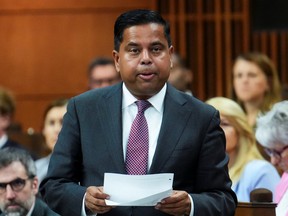
Minister Faces Scrutiny Over Delayed Foreign Interference Watchdog Appointment
-
 Entertainment9 months ago
Trump and McCormick to Announce $70 Billion Energy Investments
-
 Lifestyle9 months ago
Monika Hibbs Unveils Acres Market & Interiors in Major Rebrand
-

 Science9 months ago
Four Astronauts Return to Earth After International Space Station Mission
-

 Lifestyle9 months ago
TransLink Launches Food Truck Program to Boost Revenue in Vancouver
-

 World1 month ago
Ranchman’s Cookhouse & Dancehall to Relocate by Early 2027