
Top Stories
Supreme Court Reviews Case That Could Transform Indigenous Sentencing

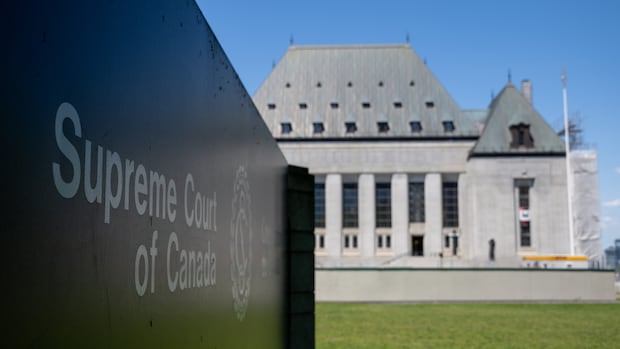
UPDATE: The Supreme Court of Canada is currently deliberating a landmark case that may redefine sentencing practices for Indigenous offenders and victims. This urgent review stems from a 2021 assault case in Halifax involving Harry Arthur Cope and Brittany Sack, both of whom are Mi’kmaw. The court’s decision could have significant repercussions, especially for communities in the Inuit-majority territory of Nunavut.
This case centers on the appeal by Cope, who was sentenced to five years in prison after pleading guilty to assaulting Sack. He contends that the original judge did not adequately apply the Gladue principles, which mandate that courts consider the unique circumstances of Indigenous offenders during sentencing. This is particularly pressing given the ongoing crisis of over-incarceration among Indigenous populations across Canada.
The Nova Scotia Court of Appeal had reduced Cope’s sentence, prompting Crown attorney Erica Koresawa to escalate the matter to the Supreme Court. Koresawa argues that the appeal court’s ruling failed to appropriately address a critical amendment to the Criminal Code, which emphasizes the need to deter violence against Indigenous women. This amendment is rooted in the recommendations from the National Inquiry into Missing and Murdered Indigenous Women and Girls.
WATCH: The Supreme Court is considering the implications of this case, which may set a precedent for how offenders should be sentenced when both parties are Indigenous. Legal experts stress that the outcome could significantly influence the judicial treatment of Indigenous offenders, particularly in Nunavut, where the majority of both offenders and victims are Indigenous.
Legal specialist Curtis Joseph Mesher from Tulugaq Law describes the case as a “Canadian-first,” highlighting its potential to clarify whether there is a hierarchy between accountability and the need to avoid incarceration in Indigenous cases. He notes that the existing system lacks adequate resources to properly implement Gladue reports in Nunavut courts, which would typically provide vital context about Indigenous offenders.
Statistics paint a grim picture: between 2009 and 2021, a staggering 86% of those accused of killing an Indigenous woman or girl were themselves Indigenous. Furthermore, Indigenous women and girls are six times more likely to be victims of homicide than their non-Indigenous counterparts. In Nunavut, 92% of the incarcerated population is Indigenous, underscoring the urgent need for reform.
The 1999 Gladue decision established that specialized pre-sentence reports—now known as Gladue reports—should provide background on Indigenous offenders. However, according to Mesher, there are currently very few trained Gladue report writers in Nunavut, limiting their effectiveness in court proceedings.
President of the Amautiit Nunavut Inuit Women’s Association, Tara Qunngaataq Tootoo Fotheringham, expresses concern that the intent of the Gladue principles is sometimes misapplied, overshadowing the need for accountability and public safety. “When Gladue factors are elevated in a way that overshadows accountability, the result is not justice; it is harm,” she warns.
This case has ignited a broader conversation about the balance between addressing the historical trauma faced by Indigenous peoples and ensuring justice for victims of violence. Fotheringham emphasizes, “We can and must have both,” advocating for comprehensive solutions that do not sacrifice the safety of Indigenous women.
As the Supreme Court justices deliberate, there is no timeline for when a decision will be announced. However, the implications of this case are clear: it could reshape the landscape of Indigenous sentencing in Canada, particularly in regions like Nunavut, where the justice system faces unique challenges.
Legal experts and community leaders alike are watching closely, recognizing that the outcome may significantly alter how Indigenous offenders are treated in the justice system, potentially paving the way for a more individualized and humane approach to sentencing.










Morris Churches Unite for Annual Good Friday Walk With the Cross

Chloe Zhao’s ‘Buffy’ Reboot Cancelled: Sarah Michelle Gellar Speaks Out

Essential Ingredients for Life Found in Ryugu Asteroid Samples

Urgent Rescue: NSR Airlifts Injured Climber from Nanaimo

Riverside Heart Ball Achieves Record $815,000 for Mental Health

Cognizant Launches AI Factory to Enhance Enterprise AI Scalability

Samsung’s Galaxy Watch 9 to Feature Larger Battery Than Before

Toronto’s AIDS Memorial Faces Potential Redesign Amid Community Concerns

Bayern Munich Loses Luis Díaz Red Card Appeal Despite Referee’s Admission

Secwepemc First Nation Seeks Aboriginal Title Over Kamloops Area

Fatal Crash on Highway 11 Claims Three Lives, Major Closure Ongoing

Manitoba’s Burger Champion Shines Again Amid Dining Innovations

Canadian Curler E.J. Harnden Announces Retirement from Competition

Urgent Fire Erupts at Salvation Army on Christmas Evening

Scientists Unearth Ancient Antarctic Ice to Unlock Climate Secrets

Minister Faces Scrutiny Over Delayed Foreign Interference Watchdog Appointment

Trump and McCormick to Announce $70 Billion Energy Investments

Four Astronauts Return to Earth After International Space Station Mission
-
 Politics5 months ago
Secwepemc First Nation Seeks Aboriginal Title Over Kamloops Area
-
 Top Stories4 months ago
Fatal Crash on Highway 11 Claims Three Lives, Major Closure Ongoing
-
 Lifestyle7 months ago
Manitoba’s Burger Champion Shines Again Amid Dining Innovations
-
 Sports3 months ago
Canadian Curler E.J. Harnden Announces Retirement from Competition
-
 Top Stories3 months ago
Urgent Fire Erupts at Salvation Army on Christmas Evening
-
 World9 months ago
Scientists Unearth Ancient Antarctic Ice to Unlock Climate Secrets
-
 World5 months ago
Minister Faces Scrutiny Over Delayed Foreign Interference Watchdog Appointment
-
 Entertainment9 months ago
Trump and McCormick to Announce $70 Billion Energy Investments
-
 Science9 months ago
Four Astronauts Return to Earth After International Space Station Mission
-

 Lifestyle9 months ago
TransLink Launches Food Truck Program to Boost Revenue in Vancouver
-

 Lifestyle9 months ago
Monika Hibbs Unveils Acres Market & Interiors in Major Rebrand
-

 World1 month ago
Ranchman’s Cookhouse & Dancehall to Relocate by Early 2027