
Top Stories
Trump Faces Challenges Ahead of State of the Union Address

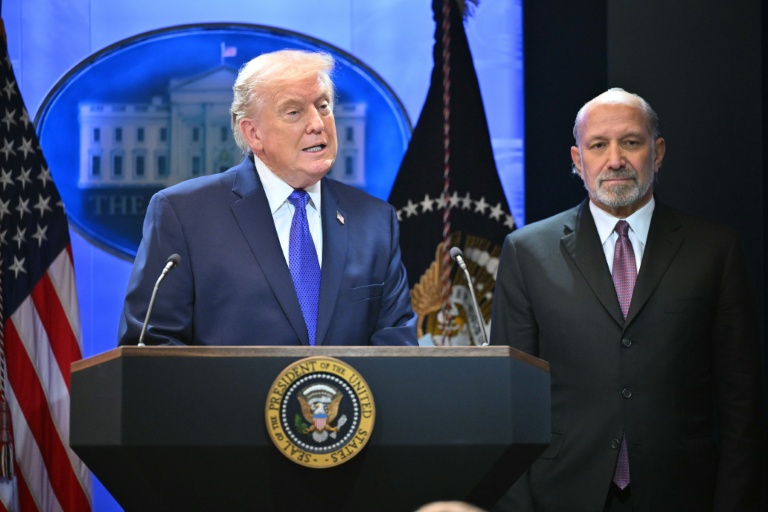
As President Donald Trump prepares for his State of the Union address on February 7, 2024, he confronts a series of setbacks that could impact his message. After a year of relatively unchallenged leadership, recent developments have raised significant concerns about his policies and public perception. The Supreme Court has recently issued rulings that undermine his tariff strategies, while public dissatisfaction with economic conditions and his immigration policies continues to grow.
During his upcoming address, Trump is expected to highlight his administration’s accomplishments and outline his future agenda. Yet, the effectiveness of his assertions may be diminished as both Democrats and international leaders are increasingly skeptical of his claims. On February 2, 2024, the Supreme Court criticized his use of tariffs, which he often imposed unilaterally through social media in an effort to exert influence over unrelated diplomatic issues.
The economic landscape has also shifted unfavorably for the President. According to government data, the US economy expanded at an annual rate of just 1.4 percent during the final quarter of 2023, falling short of the expected 2.5 percent. This growth rate reflects growing concerns among the public regarding the rising cost of living and the administration’s handling of immigration enforcement.
Trump has maintained a defiant stance regarding inflation, claiming, “I’ve won affordability,” during a speech in Georgia. However, political science experts, such as Todd Belt from George Washington University, argue that the public’s perception of economic reality often overrides political messaging. “People know what they are spending,” he stated, indicating that attempts to downplay economic challenges may backfire.
As the midterm elections approach in November, with the House of Representatives and a third of the Senate at stake, these economic issues could pose significant risks for Republican candidates. Trump has warned that if Democrats gain control, they may attempt to impeach him, further intensifying the political landscape.
In recent days, Trump has appeared less assertive, particularly in light of controversies stemming from social media posts, including a racially charged video of former President Barack Obama. The White House initially dismissed the incident but later claimed it was posted by an unnamed aide. This shift has prompted even some of Trump’s staunch allies in Congress to publicly criticize him.
The administration’s immigration policies have also faced backlash, especially following the fatal shooting of two US citizens by federal agents during operations in Minneapolis. In response to public outcry, the administration announced a scaling back of these operations in the city.
On the international front, the US has established a working group with Denmark and Greenland to address security concerns in the Arctic. However, Trump has moderated his previous threats to seize Greenland, reflecting a shift in diplomatic strategy. Following the Supreme Court’s ruling against his tariffs, he has implemented a new blanket 10 percent tariff on imports, which has resulted in some countries trading at reduced rates compared to previous agreements.
While Trump has faced numerous challenges, the Republican Party still retains control of both the House and Senate, and he will remain in the White House until 2029. As these issues unfold, the administration’s policies continue to be scrutinized, with legal challenges gradually progressing through the courts. The upcoming State of the Union address will serve as a pivotal moment for Trump as he seeks to rally support in the face of rising opposition.












Morris Churches Unite for Annual Good Friday Walk With the Cross

Chloe Zhao’s ‘Buffy’ Reboot Cancelled: Sarah Michelle Gellar Speaks Out

Essential Ingredients for Life Found in Ryugu Asteroid Samples

Urgent Rescue: NSR Airlifts Injured Climber from Nanaimo

Riverside Heart Ball Achieves Record $815,000 for Mental Health

Cognizant Launches AI Factory to Enhance Enterprise AI Scalability

Samsung’s Galaxy Watch 9 to Feature Larger Battery Than Before

Toronto’s AIDS Memorial Faces Potential Redesign Amid Community Concerns

Bayern Munich Loses Luis Díaz Red Card Appeal Despite Referee’s Admission

Secwepemc First Nation Seeks Aboriginal Title Over Kamloops Area

Fatal Crash on Highway 11 Claims Three Lives, Major Closure Ongoing

Manitoba’s Burger Champion Shines Again Amid Dining Innovations

Canadian Curler E.J. Harnden Announces Retirement from Competition

Urgent Fire Erupts at Salvation Army on Christmas Evening

Scientists Unearth Ancient Antarctic Ice to Unlock Climate Secrets

Minister Faces Scrutiny Over Delayed Foreign Interference Watchdog Appointment

Trump and McCormick to Announce $70 Billion Energy Investments

Monika Hibbs Unveils Acres Market & Interiors in Major Rebrand
-
 Politics5 months ago
Secwepemc First Nation Seeks Aboriginal Title Over Kamloops Area
-
 Top Stories4 months ago
Fatal Crash on Highway 11 Claims Three Lives, Major Closure Ongoing
-
 Lifestyle7 months ago
Manitoba’s Burger Champion Shines Again Amid Dining Innovations
-
 Sports3 months ago
Canadian Curler E.J. Harnden Announces Retirement from Competition
-
 Top Stories4 months ago
Urgent Fire Erupts at Salvation Army on Christmas Evening
-
 World9 months ago
Scientists Unearth Ancient Antarctic Ice to Unlock Climate Secrets
-
 World5 months ago
Minister Faces Scrutiny Over Delayed Foreign Interference Watchdog Appointment
-
 Entertainment9 months ago
Trump and McCormick to Announce $70 Billion Energy Investments
-
 Lifestyle9 months ago
Monika Hibbs Unveils Acres Market & Interiors in Major Rebrand
-

 Science9 months ago
Four Astronauts Return to Earth After International Space Station Mission
-

 Lifestyle9 months ago
TransLink Launches Food Truck Program to Boost Revenue in Vancouver
-

 World1 month ago
Ranchman’s Cookhouse & Dancehall to Relocate by Early 2027