
Top Stories
Trump Signals No Threat to NAFTA Deal in Key Trade Talks

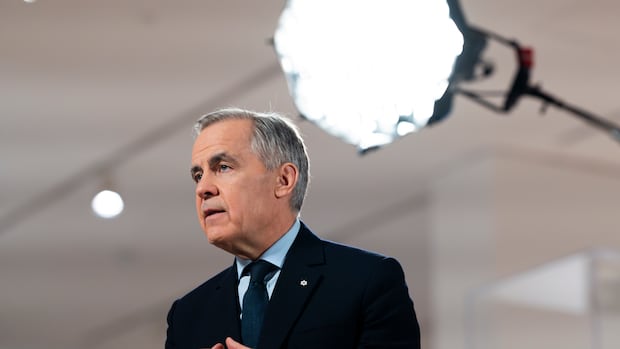
UPDATE: In a significant development, Prime Minister Mark Carney has confirmed that U.S. President Donald Trump has not indicated any intention to withdraw from the North American trade deal during private discussions held earlier this month. This revelation comes as trade tensions persist, particularly with U.S. tariffs on Canadian exports.
During a meeting in Washington on December 5, 2023, which also included Mexican President Claudia Sheinbaum, Carney outlined the future of the Canada-U.S.-Mexico Agreement (CUSMA). The talks primarily focused on the upcoming review of CUSMA, set for 2026. Carney stated, “We discussed the process for reviewing and renegotiating CUSMA, including potential timelines, although we did not settle on specifics.”
This announcement is critical as the U.S. Trade Representative, Jamieson Greer, had previously raised concerns about the possibility of separate trade deals with Canada and Mexico. Moreover, Greer hinted that the U.S. might consider withdrawing from CUSMA entirely if negotiations do not yield satisfactory results.
In a recent report to Congress, Greer emphasized that he would keep all options open, stating, “Could it be exited? Yeah, it could be exited. Could it be revised? Yes. Could it be renegotiated? Yes. All of those things are on the table.” Despite these pressures, Carney reassured that Trump did not express any intention to leave the agreement during their discussions.
The backdrop to these talks includes ongoing U.S. tariffs on Canadian steel and aluminum exports at rates of up to 50 percent, along with 10 percent tariffs on lumber and 25 percent on selected automotive products. This situation has left Canadian officials, including Carney, in a challenging position as they seek to negotiate better terms for their industries.
Carney, who secured his position in April’s federal election by positioning himself as a strong negotiator with the U.S. administration, has faced criticism from opposition leaders like Pierre Poilievre. Poilievre has accused Carney of failing to secure a deal on sectoral tariffs, highlighting that U.S. tariffs are currently “twice as high as when [Carney] was elected.”
In defense of his trade strategy, Carney argues that Canada has “the best deal” with the U.S. due to tariff exemptions under CUSMA not afforded to other nations facing American tariffs. “The challenge remains that the United States has fundamentally changed its trading relationships with everybody in the world, including Canada,” he explained during an interview with CBC’s Rosemary Barton.
Looking ahead, Carney noted that the current sectoral tariffs will “necessarily be part” of the upcoming CUSMA negotiations. He urged the U.S. to recognize that a relatively free movement of goods across borders benefits both nations. “Does it view its competitors as Canada, or does it view its competitors as China?” he questioned, emphasizing the need for collaborative trade relations.
With the next stage of negotiations anticipated to commence during the CUSMA review, all eyes are on how both nations will navigate these complex discussions. The outcome could have significant implications for North American trade dynamics and economic stability.
For continuous coverage on these developments, watch Carney’s year-end interview on Sunday, December 17, 2023, at 10 a.m. ET on CBC. The situation remains fluid, and updates are expected as negotiations progress.









UPEI’s High-Tech Simulation Centre Enhances Future Healthcare Skills

Canadian Astronaut Chris Hadfield Advocates for Eye Health

GPIQ and QYLD: Evaluating Strategies Amid Market Stagnation

Norovirus Outbreak Forces Canada’s Hockey Game Postponement

Fauna Robotics Unveils Sprout: A Humanoid Robot for Home Use

Team Canada Faces Goaltending Concerns Ahead of Olympics

Celebrating the Life of Irena Peritz: A Legacy of Love and Resilience

India, U.S. Announce Urgent Trade Deal to Slash Tariffs Now

American Airlines Pilots Challenge Management After Poor Results

Secwepemc First Nation Seeks Aboriginal Title Over Kamloops Area

Scientists Unearth Ancient Antarctic Ice to Unlock Climate Secrets

Urgent Fire Erupts at Salvation Army on Christmas Evening

Canadian Curler E.J. Harnden Announces Retirement from Competition

Manitoba’s Burger Champion Shines Again Amid Dining Innovations

Fatal Crash on Highway 11 Claims Three Lives, Major Closure Ongoing

Trump and McCormick to Announce $70 Billion Energy Investments

Four Astronauts Return to Earth After International Space Station Mission

TransLink Launches Food Truck Program to Boost Revenue in Vancouver
-
 Politics3 months ago
Secwepemc First Nation Seeks Aboriginal Title Over Kamloops Area
-
 World7 months ago
Scientists Unearth Ancient Antarctic Ice to Unlock Climate Secrets
-
 Top Stories1 month ago
Urgent Fire Erupts at Salvation Army on Christmas Evening
-
 Sports1 month ago
Canadian Curler E.J. Harnden Announces Retirement from Competition
-
 Lifestyle5 months ago
Manitoba’s Burger Champion Shines Again Amid Dining Innovations
-
 Top Stories2 months ago
Fatal Crash on Highway 11 Claims Three Lives, Major Closure Ongoing
-
 Entertainment7 months ago
Trump and McCormick to Announce $70 Billion Energy Investments
-
 Science7 months ago
Four Astronauts Return to Earth After International Space Station Mission
-
 Lifestyle7 months ago
TransLink Launches Food Truck Program to Boost Revenue in Vancouver
-

 Technology5 months ago
Apple Notes Enhances Functionality with Markdown Support in macOS 26
-

 Top Stories1 month ago
Blue Jays Sign Kazuma Okamoto: Impact on Bo Bichette’s Future
-

 Top Stories2 months ago
NHL Teams Inquire About Marc-André Fleury’s Potential Return