
Top Stories
Urgent Housing Crisis: 36% of Behchokǫ̀ Homes Unlivable Now

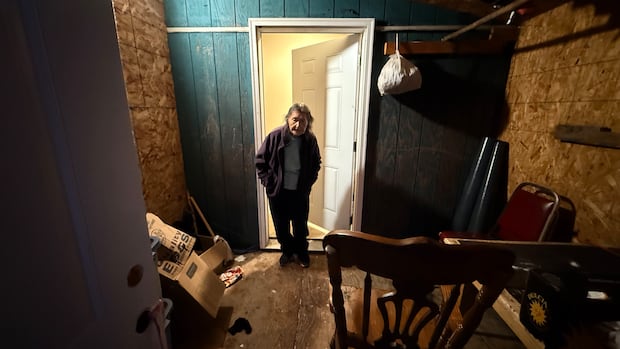
URGENT UPDATE: A shocking 36% of homes in Behchokǫ̀, N.W.T. are deemed unlivable, highlighting a severe housing crisis affecting residents like Celine Whane, who struggles in a drafty home with a broken door. This crisis has reached a critical level, with local leaders and officials calling for immediate action to address the escalating situation.
Whane, a resident in her late 70s, lives in conditions that reflect the broader housing emergency. Her home is so poorly insulated that the furnace runs non-stop, unable to combat the cold air leaking through a door propped shut with a chair and a window sealed with duct tape. “Sometimes I cry a lot by myself when it’s cold,” Whane revealed, illustrating the emotional toll on vulnerable residents.
According to a 2024 report from the N.W.T. Bureau of Statistics, Behchokǫ̀ has the highest percentage of inadequate housing in the territory, with 36% of homes needing major repairs—nearly five times the national average. Additionally, 26% of homes are considered unsuitable for living. “We are in a housing crisis,” stated Jane Weyallon Armstrong, MLA for Monfwi, which includes Behchokǫ̀. “We have more people than houses in the Tłı̨chǫ region.”
Local leaders are sounding the alarm, with Behchokǫ̀ Chief Bertha Rabesca Zoe claiming the situation may be even worse than reported. Community analyses indicate that repairing existing homes would cost over $200-$300 million, not including the need for new housing stock.
In response to the crisis, the Tłı̨chǫ Government is committed to necessary repairs and maintenance, though its spokesperson, Vivian Mak, emphasized the need for increased support from federal and territorial governments. “The cost and time required is ongoing and increasing,” she stated.
Repair programs do exist for residents like Whane, including a variety of forgivable loans aimed at addressing urgent needs. However, Whane remains skeptical. “If I had a new home, I wouldn’t be complaining,” she said, expressing her frustration over ongoing issues, such as frozen pipes and a door that traps her inside.
Micheal Dawodu, programs manager at the Housing N.W.T. North Slave District Office, confirmed several aid options, including an emergency repair program offering up to $15,000 and a seniors home repair program providing up to $50,000. Still, for Whane, these options feel inadequate compared to the pressing need for new housing.
The demand for housing solutions is urgent. Alayna Ward, executive director of Habitat for Humanity Northwest Territories, argues for a more ambitious approach, similar to Nunavut’s initiative to build 3,000 homes by 2030. “Building 20 or 30 homes a year will not significantly improve living conditions,” she asserted.
As Behchokǫ̀ prepares to welcome new public housing units expected to be completed by 2026-27, the community faces an uphill battle. Dawodu noted that while investments are being made, the demand far exceeds what is currently available. “We rely on sustainable funding from the federal government to create lasting improvements,” he stated.
The situation in Behchokǫ̀ underscores a pressing need for immediate action to address the housing crisis affecting many in the N.W.T. As residents like Celine Whane continue to endure substandard living conditions, the call for comprehensive solutions grows louder. Residents and officials alike are urging for a coordinated effort to ensure safe, adequate housing for all.










Toronto Schools Share Principal Amid $48.5M Deficit – Parents Concerned

Urgent Housing Crisis: 36% of Behchokǫ̀ Homes Unlivable Now

Nova Scotia Minister Rejects Golf Course Proposal, Open to Other Projects

Brandon University and Assiniboine College Host Exciting Events

Hong Kong Student Leaves Police Station After Fire Probe Arrest

Public Service Cuts: Should Executives Take More Responsibility?

Fairmont Château Laurier Unveils 1912 Bar with Historic Flair

Montreal Exhibit Celebrates 30 Years of Sex Worker Activism

Pope Leo XIV Prays for Peace in Lebanon, Urges Unity Amid Crisis

Secwepemc First Nation Seeks Aboriginal Title Over Kamloops Area

Scientists Unearth Ancient Antarctic Ice to Unlock Climate Secrets

Trump and McCormick to Announce $70 Billion Energy Investments

TransLink Launches Food Truck Program to Boost Revenue in Vancouver

Four Astronauts Return to Earth After International Space Station Mission

Apple Notes Enhances Functionality with Markdown Support in macOS 26

Manitoba’s Burger Champion Shines Again Amid Dining Innovations

Urgent Update: Fatal Crash on Highway 99 Claims Life of Pitt Meadows Man

Ukrainian Tennis Star Elina Svitolina Faces Death Threats Online
-
 Politics4 weeks ago
Secwepemc First Nation Seeks Aboriginal Title Over Kamloops Area
-
 World5 months ago
Scientists Unearth Ancient Antarctic Ice to Unlock Climate Secrets
-
 Entertainment5 months ago
Trump and McCormick to Announce $70 Billion Energy Investments
-
 Lifestyle5 months ago
TransLink Launches Food Truck Program to Boost Revenue in Vancouver
-
 Science5 months ago
Four Astronauts Return to Earth After International Space Station Mission
-
 Technology3 months ago
Apple Notes Enhances Functionality with Markdown Support in macOS 26
-
 Lifestyle3 months ago
Manitoba’s Burger Champion Shines Again Amid Dining Innovations
-
 Top Stories2 months ago
Urgent Update: Fatal Crash on Highway 99 Claims Life of Pitt Meadows Man
-
 Politics4 months ago
Ukrainian Tennis Star Elina Svitolina Faces Death Threats Online
-

 Sports5 months ago
Search Underway for Missing Hunter Amid Hokkaido Bear Emergency
-

 Politics5 months ago
Carney Engages First Nations Leaders at Development Law Summit
-

 Technology5 months ago
Frosthaven Launches Early Access on July 31, 2025