
Top Stories
US Unveils $2B Humanitarian Aid Amid Trump’s Funding Cuts

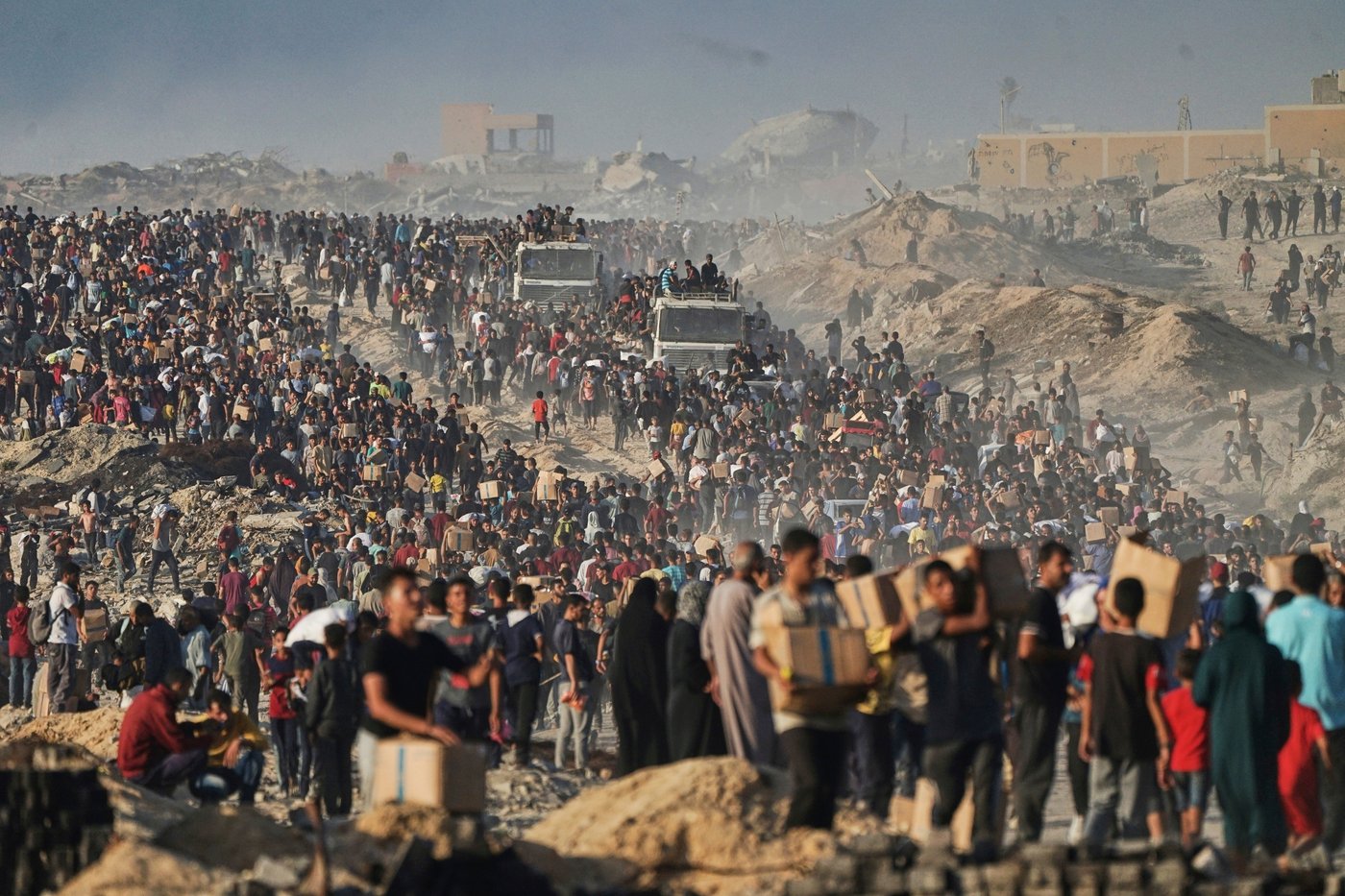
UPDATE: The United States has just announced a staggering $2 billion commitment for U.N. humanitarian aid, a bold move amidst ongoing funding cuts by the Trump administration. This pledge underscores a stark financial reality: U.S. foreign assistance is being slashed, with the administration urging U.N. agencies to “adapt, shrink, or die.”
This funding, while significant, is a mere fraction of the U.S. contributions in previous years, when annual humanitarian support reached as high as $17 billion. Despite this setback, U.S. officials maintain that the new pledge will help sustain America’s position as the world’s largest humanitarian donor.
The announcement was made at the U.S. diplomatic mission in Geneva on October 30, 2023, in a preliminary agreement with the U.N. Office for the Coordination of Humanitarian Affairs (OCHA), led by former British diplomat Tom Fletcher. This new umbrella fund will allocate resources to various U.N. agencies, a crucial change aimed at addressing the dire humanitarian needs globally.
As humanitarian crises escalate—evident in regions like Sudan and Gaza—the need for effective aid delivery has never been more urgent. The U.N. reports that millions face hunger, displacement, and disease, largely exacerbated by reduced funding. The U.S. cuts, combined with reductions from other traditional Western donors, have critically impacted U.N. agencies such as the International Organization for Migration, the World Food Program, and the UNHCR, all of which have received significantly less support compared to previous years.
The U.S. aims to streamline humanitarian efforts through this funding adjustment. Under the new plan, Fletcher’s office will take charge of aid distribution, ensuring a more efficient allocation process. U.S. Ambassador to the U.N. Michael Waltz emphasized that the goal is to provide “more focused, results-driven assistance” while aligning with U.S. foreign policy priorities.
The $2 billion pledge is intended to support OCHA’s annual appeal for humanitarian funding, aimed at addressing crises in 17 countries, including Bangladesh, Congo, Haiti, Syria, and Ukraine. Notably, high-need regions such as Afghanistan and the Palestinian territories are not included in this funding plan, leading to concerns about the ongoing humanitarian challenges in these areas.
As the U.S. shifts its approach, critics argue that these funding cuts jeopardize humanitarian efforts worldwide. They warn that diminished support may push millions further into desperation. The State Department acknowledges the need for reform within the U.N. system, stating the agreement aims to reduce bureaucratic overhead and enhance efficiency.
In a statement reflecting the urgency of the situation, Fletcher declared, “At a moment of immense global strain, the United States is demonstrating that it is a humanitarian superpower, offering hope to people who have lost everything.”
The global community is now watching closely as this new funding model unfolds. The implications for countless lives hang in the balance, highlighting an urgent call for effective humanitarian action in a time of crisis.
As developments continue, readers are encouraged to stay informed about how these changes will impact humanitarian aid and the lives of those in desperate need.












Morris Churches Unite for Annual Good Friday Walk With the Cross

Chloe Zhao’s ‘Buffy’ Reboot Cancelled: Sarah Michelle Gellar Speaks Out

Essential Ingredients for Life Found in Ryugu Asteroid Samples

Urgent Rescue: NSR Airlifts Injured Climber from Nanaimo

Riverside Heart Ball Achieves Record $815,000 for Mental Health

Cognizant Launches AI Factory to Enhance Enterprise AI Scalability

Samsung’s Galaxy Watch 9 to Feature Larger Battery Than Before

Toronto’s AIDS Memorial Faces Potential Redesign Amid Community Concerns

Bayern Munich Loses Luis Díaz Red Card Appeal Despite Referee’s Admission

Secwepemc First Nation Seeks Aboriginal Title Over Kamloops Area

Fatal Crash on Highway 11 Claims Three Lives, Major Closure Ongoing

Manitoba’s Burger Champion Shines Again Amid Dining Innovations

Canadian Curler E.J. Harnden Announces Retirement from Competition

Urgent Fire Erupts at Salvation Army on Christmas Evening

Scientists Unearth Ancient Antarctic Ice to Unlock Climate Secrets

Minister Faces Scrutiny Over Delayed Foreign Interference Watchdog Appointment

Trump and McCormick to Announce $70 Billion Energy Investments

Monika Hibbs Unveils Acres Market & Interiors in Major Rebrand
-
 Politics5 months ago
Secwepemc First Nation Seeks Aboriginal Title Over Kamloops Area
-
 Top Stories4 months ago
Fatal Crash on Highway 11 Claims Three Lives, Major Closure Ongoing
-
 Lifestyle7 months ago
Manitoba’s Burger Champion Shines Again Amid Dining Innovations
-
 Sports3 months ago
Canadian Curler E.J. Harnden Announces Retirement from Competition
-
 Top Stories3 months ago
Urgent Fire Erupts at Salvation Army on Christmas Evening
-
 World9 months ago
Scientists Unearth Ancient Antarctic Ice to Unlock Climate Secrets
-
 World5 months ago
Minister Faces Scrutiny Over Delayed Foreign Interference Watchdog Appointment
-
 Entertainment9 months ago
Trump and McCormick to Announce $70 Billion Energy Investments
-
 Lifestyle9 months ago
Monika Hibbs Unveils Acres Market & Interiors in Major Rebrand
-

 Science9 months ago
Four Astronauts Return to Earth After International Space Station Mission
-

 Lifestyle9 months ago
TransLink Launches Food Truck Program to Boost Revenue in Vancouver
-

 World1 month ago
Ranchman’s Cookhouse & Dancehall to Relocate by Early 2027