
Top Stories
Western Secures $3.8 Million Contract for Lunar Rover Imaging Technology

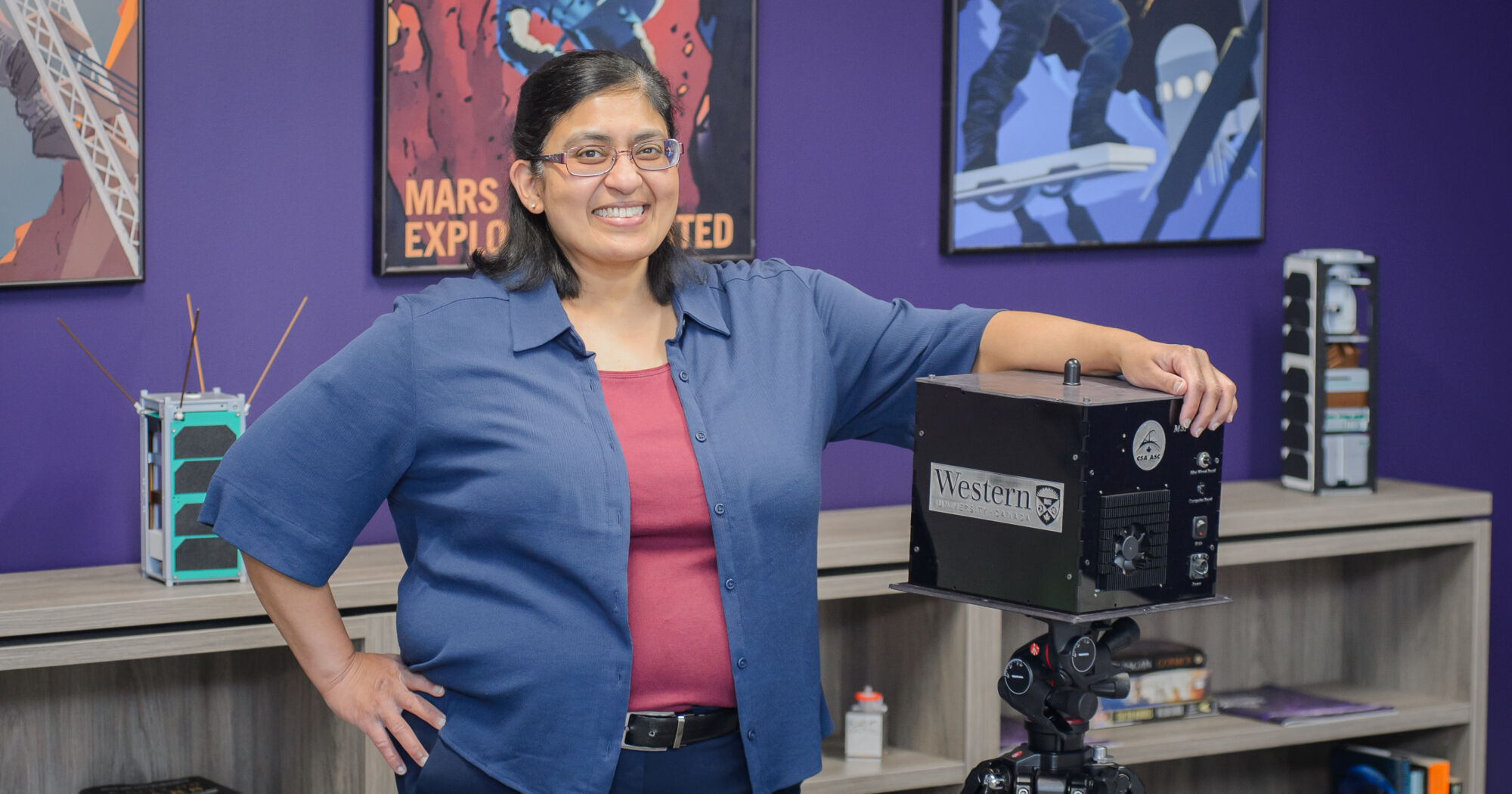
Western University has been awarded a significant contract by the Canadian Space Agency (CSA) to develop an advanced imaging instrument for a lunar rover. The CSA has allocated $3.8 million to support the advancement of instrument concepts aimed at enhancing lunar exploration capabilities. This initiative is part of broader efforts to design a rover that will assist astronauts during lunar missions and conduct scientific investigations on the Moon’s surface.
The awarded contract focuses on the development of the Dual Sensor Multispectral Imager (DS-MSI), a compact dual-camera system intended for the Canadian lunar utility rover. This project is spearheaded by lead investigator Jayshri Sabarinathan, alongside a multidisciplinary team from Western University, including experts from various fields and industry partners such as Mission Control Space Services, INO, LightSail, and Spectral Devices.
Innovative Imaging Technology for Lunar Exploration
The DS-MSI is designed to meet essential lunar science objectives. It will provide high-resolution stereo images, which are crucial for rover navigation, and will utilize a unique compact filter wheel currently under patent application. This innovative design incorporates two camera sensors—one for visible to near-infrared (VIS-NIR) and another for short-wavelength infrared (SWIR)—allowing the instrument to capture detailed multispectral data with reduced size and complexity.
Sabarinathan, a professor in electrical and computer engineering, emphasized the importance of understanding lunar composition. “There are many compelling reasons to study and understand lunar composition. From a scientific perspective, geologists and planetary scientists need detailed information to understand the Moon’s formation and evolution,” she stated. The imager will aid in characterizing lunar regolith, identifying water ice, and analyzing the Moon’s mineral composition, all vital for future exploration and resource utilization.
Broader Applications Beyond Lunar Missions
The development of the DS-MSI is not confined to lunar exploration alone. Sabarinathan noted that similar camera systems have been adapted for various applications, including agricultural monitoring and environmental assessments. A smaller version of the system is currently deployed on the Skylark CubeSat, which tracks migratory bird patterns.
Looking ahead, the technology could also play a role in defense applications, such as monitoring Arctic conditions and identifying potential threats. “We’ve been developing our dual camera system for the past few years across a wide range of applications,” Sabarinathan explained. The adaptability of this technology highlights its potential far beyond lunar missions, showcasing Western’s commitment to innovation and exploration.
The collaboration between Western University and the CSA marks a significant step in Canada’s space exploration initiatives, aligning with global efforts to expand our understanding of the Moon and beyond. As the project progresses, it promises to pave the way for future missions and scientific discoveries that could reshape our understanding of lunar resources and their potential uses.











B.C. Paramedics Prepare for Strike Vote Amid Contract Stalemate

B.C. Real Estate Agent Wilson Su Fined $10,000 for Misconduct

Digital Music Player DAP-1 Revives High-Quality Audio Experience

Peace Walk in Windsor Draws 88 Participants for Kindness

Trayce Jackson-Davis Excited to Join Toronto Raptors

Engage with February Programs at Plano Public Library

Japan’s Takaichi Aims for Electoral Victory Amid Rising Tensions

Ohio Man Charged with Threatening Vice President Vance, Faces 20 Years

Concerns Rise Over America’s Political Landscape and Democracy

Secwepemc First Nation Seeks Aboriginal Title Over Kamloops Area

Scientists Unearth Ancient Antarctic Ice to Unlock Climate Secrets

Urgent Fire Erupts at Salvation Army on Christmas Evening

Canadian Curler E.J. Harnden Announces Retirement from Competition

Manitoba’s Burger Champion Shines Again Amid Dining Innovations

Fatal Crash on Highway 11 Claims Three Lives, Major Closure Ongoing

Trump and McCormick to Announce $70 Billion Energy Investments

Four Astronauts Return to Earth After International Space Station Mission

TransLink Launches Food Truck Program to Boost Revenue in Vancouver
-
 Politics3 months ago
Secwepemc First Nation Seeks Aboriginal Title Over Kamloops Area
-
 World7 months ago
Scientists Unearth Ancient Antarctic Ice to Unlock Climate Secrets
-
 Top Stories1 month ago
Urgent Fire Erupts at Salvation Army on Christmas Evening
-
 Sports1 month ago
Canadian Curler E.J. Harnden Announces Retirement from Competition
-
 Lifestyle5 months ago
Manitoba’s Burger Champion Shines Again Amid Dining Innovations
-
 Top Stories2 months ago
Fatal Crash on Highway 11 Claims Three Lives, Major Closure Ongoing
-
 Entertainment7 months ago
Trump and McCormick to Announce $70 Billion Energy Investments
-
 Science7 months ago
Four Astronauts Return to Earth After International Space Station Mission
-
 Lifestyle7 months ago
TransLink Launches Food Truck Program to Boost Revenue in Vancouver
-

 Technology5 months ago
Apple Notes Enhances Functionality with Markdown Support in macOS 26
-

 Top Stories1 month ago
Blue Jays Sign Kazuma Okamoto: Impact on Bo Bichette’s Future
-

 Top Stories2 months ago
NHL Teams Inquire About Marc-André Fleury’s Potential Return