
World
2025 Transforms Canadian Politics: Trudeau’s Departure, Carney’s Rise

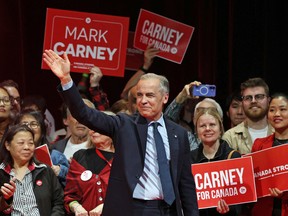
In a remarkable shift, Canadian politics underwent a significant transformation in 2025, marked by the resignation of Justin Trudeau as Prime Minister and the unexpected rise of Mark Carney, a former banker, to the highest office. This change disrupted long-standing political expectations, leaving both the Liberal and Conservative parties to reassess their strategies.
The upheaval began in late 2024 with a series of pivotal events, including Donald Trump‘s election victory and Trudeau’s controversial remarks during a visit to Mar-A-Lago, where he suggested that Canada would face crippling tariffs. The political landscape shifted further when Chrystia Freeland announced her resignation in December 2024, creating a power vacuum that would soon impact the Liberal Party’s leadership.
The Rise of Mark Carney
By January 6, 2025, Trudeau shocked the political world by announcing his resignation, setting off a leadership race within the Liberal Party. Carney, who had previously been considered an outsider, quickly emerged as a frontrunner. In a surprising turn of events, he secured enough support to form a minority government following the general election.
This shift was underscored by a dramatic drop in Conservative poll numbers. The Conservatives, who had enjoyed a lead of 15 to 20 points in various polls leading up to Trudeau’s resignation, saw their advantage evaporate as public sentiment shifted towards Carney’s leadership.
The turbulent events of 2025 serve as a reminder of the unpredictable nature of politics. As Liberals bask in their newfound power, they must remain vigilant against overconfidence, which has historically led to political downfalls. The landscape is fluid, and both parties are acutely aware of the fickleness of voter sentiment.
Lessons from History
Reflecting on past political dynamics, it is crucial to remember that the fortunes of politicians can change rapidly. When Stephen Harper was first elected in January 2006, many pundits believed his tenure would be short-lived; he ultimately governed for nearly a decade. Similarly, Trudeau’s initial rise to power in 2015 came as a surprise, as his party was polling third before the election campaign began.
As 2026 approaches, the potential for Carney’s governance remains uncertain. He could either establish a long-lasting legacy or find himself facing significant challenges, similar to former Prime Minister Paul Martin, whose term ended amid unmet expectations. The prospect of a potential resurgence by Pierre Poilievre, the current Conservative leader, cannot be dismissed either.
In the ever-evolving sphere of Canadian politics, the events of 2025 underscore the importance of adaptability and awareness of shifting public opinion. As the landscape continues to unfold, both the Liberal and Conservative parties must navigate the complexities of governance and voter expectations effectively.
This year has taught Canadian politicians a valuable lesson: events can dramatically reshape political trajectories. As the nation looks forward, it will be crucial for leaders to remain grounded and responsive to the electorate’s needs, ensuring that their confidence does not cloud their judgment.










Morris Churches Unite for Annual Good Friday Walk With the Cross

Chloe Zhao’s ‘Buffy’ Reboot Cancelled: Sarah Michelle Gellar Speaks Out

Essential Ingredients for Life Found in Ryugu Asteroid Samples

Urgent Rescue: NSR Airlifts Injured Climber from Nanaimo

Riverside Heart Ball Achieves Record $815,000 for Mental Health

Cognizant Launches AI Factory to Enhance Enterprise AI Scalability

Samsung’s Galaxy Watch 9 to Feature Larger Battery Than Before

Toronto’s AIDS Memorial Faces Potential Redesign Amid Community Concerns

Bayern Munich Loses Luis Díaz Red Card Appeal Despite Referee’s Admission

Secwepemc First Nation Seeks Aboriginal Title Over Kamloops Area

Fatal Crash on Highway 11 Claims Three Lives, Major Closure Ongoing

Manitoba’s Burger Champion Shines Again Amid Dining Innovations

Canadian Curler E.J. Harnden Announces Retirement from Competition

Urgent Fire Erupts at Salvation Army on Christmas Evening

Scientists Unearth Ancient Antarctic Ice to Unlock Climate Secrets

Trump and McCormick to Announce $70 Billion Energy Investments

Minister Faces Scrutiny Over Delayed Foreign Interference Watchdog Appointment

Monika Hibbs Unveils Acres Market & Interiors in Major Rebrand
-
 Politics5 months ago
Secwepemc First Nation Seeks Aboriginal Title Over Kamloops Area
-
 Top Stories4 months ago
Fatal Crash on Highway 11 Claims Three Lives, Major Closure Ongoing
-
 Lifestyle7 months ago
Manitoba’s Burger Champion Shines Again Amid Dining Innovations
-
 Sports3 months ago
Canadian Curler E.J. Harnden Announces Retirement from Competition
-
 Top Stories3 months ago
Urgent Fire Erupts at Salvation Army on Christmas Evening
-
 World9 months ago
Scientists Unearth Ancient Antarctic Ice to Unlock Climate Secrets
-
 Entertainment9 months ago
Trump and McCormick to Announce $70 Billion Energy Investments
-
 World5 months ago
Minister Faces Scrutiny Over Delayed Foreign Interference Watchdog Appointment
-
 Lifestyle9 months ago
Monika Hibbs Unveils Acres Market & Interiors in Major Rebrand
-

 Science9 months ago
Four Astronauts Return to Earth After International Space Station Mission
-

 Lifestyle9 months ago
TransLink Launches Food Truck Program to Boost Revenue in Vancouver
-

 World1 month ago
Ranchman’s Cookhouse & Dancehall to Relocate by Early 2027