
World
American Airlines Aims for Flight Dominance in 2026

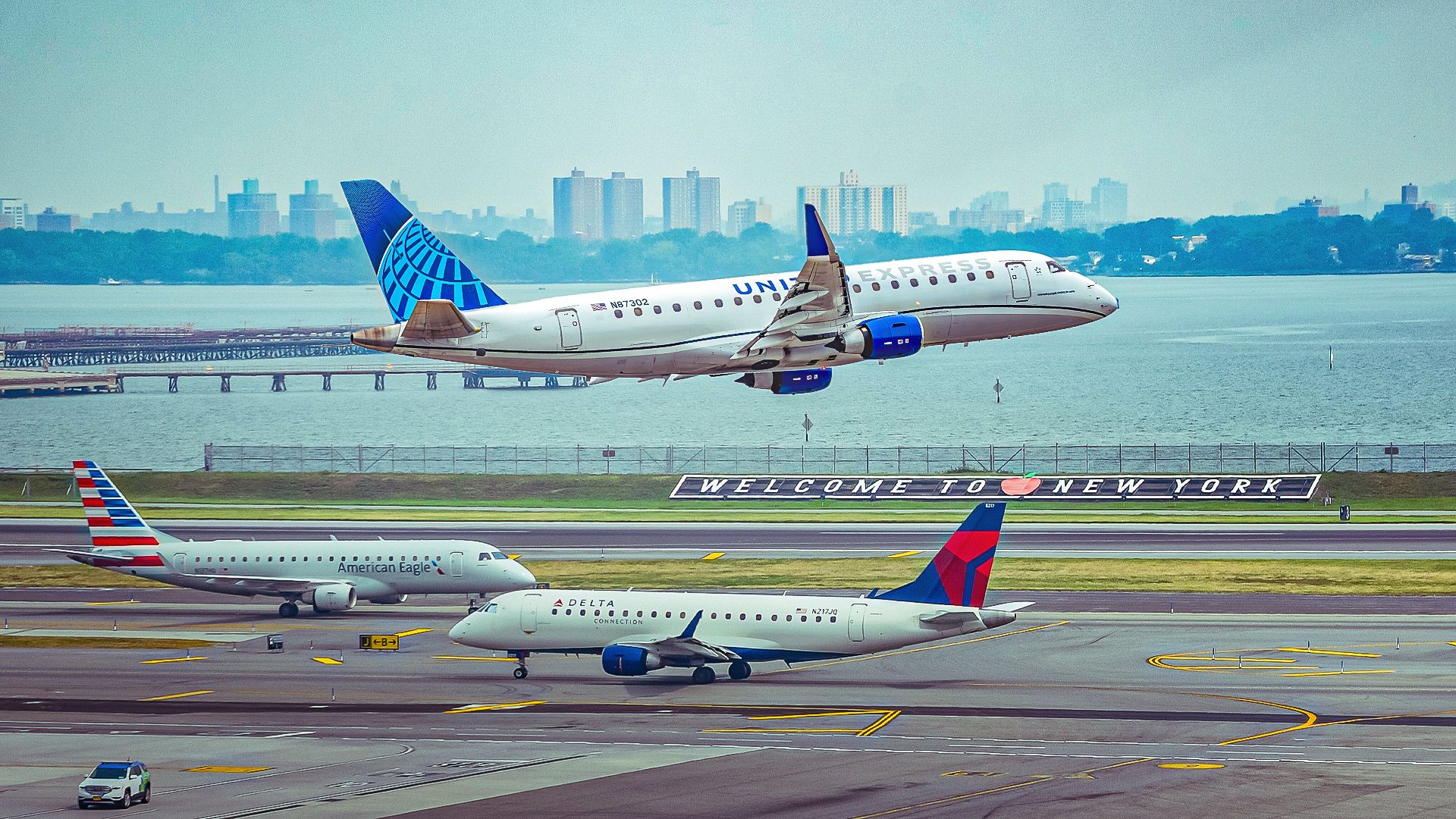
With the arrival of 2026, the competition among the three largest U.S. airlines is heating up. American Airlines, United Airlines, and Delta Air Lines are preparing to reshape their flight schedules, aiming to capture the most market share. American Airlines is projected to lead the pack, planning over 2.2 million departures, which accounts for approximately 40% of the total flights among these carriers.
The dynamics of airline scheduling are complex, influenced by factors such as network strategy, fleet availability, labor conditions, and fluctuating demand trends. Each of these airlines employs a unique approach to growth, targeting different segments of the market while maintaining operational reliability and profitability.
American Airlines has built its strategy around frequency and connectivity, primarily through its extensive hub system. Its Dallas/Fort Worth International Airport (DFW) hub stands out, with high-frequency routes like Dallas to Austin and Dallas to San Antonio, each expected to exceed 4,000 flights in both directions. These routes are designed to attract both business travelers and leisure passengers.
In contrast, Delta Air Lines emphasizes operational reliability and premium service. Its hub at Hartsfield-Jackson Atlanta International Airport (ATL) serves as the cornerstone of its operations, connecting numerous destinations with high-frequency flights. Notably, Delta plans extensive services to cities in the Northeast, including over 4,500 flights to LaGuardia Airport (LGA). This approach reflects a commitment to maintaining high-capacity routes that cater to premium travelers.
Meanwhile, United Airlines adopts a different model, focusing on linking major hubs rather than relying on a single dominant facility. It is planning around 1.7 million flights in 2026, primarily facilitating travel between key cities such as Chicago-O’Hare International Airport (ORD) and Denver International Airport (DEN). United’s strategy looks to enhance its international network by providing extensive domestic connectivity, which is vital for capturing high-value travelers.
Comparing Operational Metrics
When evaluating the operational metrics for 2026, American Airlines leads in flight count, with plans for over 2.2 million departures and approximately 270 million seats available. However, in terms of available seat miles (ASMs), it ranks third among the three airlines, with 296 billion ASMs. This suggests that American Airlines focuses on shorter routes, as indicated by its smaller gauge of aircraft.
Delta Air Lines, with its planned 1.7 million flights and 237 million seats, ranks in the middle. It generates about 289 billion ASMs, indicating a balanced approach to both domestic and international travel, with a high number of seats per flight that reduces reliance on smaller aircraft.
United Airlines, operating the fewest flights among the three, has a unique strength in ASMs, generating the highest figure among the group. With just around 1.7 million planned flights and 219 million seats, United’s focus on long-haul services allows it to maintain a profitable yield mix, even with fewer departures.
Market Positioning and Future Outlook
The competition among these carriers is not merely about who operates the most flights; it reflects broader market dynamics and strategic positioning. American Airlines aims to dominate the domestic market, focusing on high-frequency services that cater to a large volume of travelers. This aligns with its strategy of maximizing traffic flow through its hubs.
Conversely, Delta Air Lines and United Airlines are focused on enhancing their international offerings, aiming to capture higher-yield markets. Delta’s extensive network facilitates connections to various destinations, while United is expanding its reach by targeting international hubs that currently lack direct service from the U.S.
As the aviation landscape continues to evolve, these three airlines remain essential players in the industry, each carving out its niche. The strategies they employ will be crucial in determining their success and adaptability in an increasingly competitive environment.
Ultimately, the battle for flight dominance in 2026 will not only reflect the airlines’ operational capabilities but also their ability to respond to changing market conditions and customer demands.









Morris Churches Unite for Annual Good Friday Walk With the Cross

Chloe Zhao’s ‘Buffy’ Reboot Cancelled: Sarah Michelle Gellar Speaks Out

Essential Ingredients for Life Found in Ryugu Asteroid Samples

Urgent Rescue: NSR Airlifts Injured Climber from Nanaimo

Riverside Heart Ball Achieves Record $815,000 for Mental Health

Cognizant Launches AI Factory to Enhance Enterprise AI Scalability

Samsung’s Galaxy Watch 9 to Feature Larger Battery Than Before

Toronto’s AIDS Memorial Faces Potential Redesign Amid Community Concerns

Bayern Munich Loses Luis Díaz Red Card Appeal Despite Referee’s Admission

Secwepemc First Nation Seeks Aboriginal Title Over Kamloops Area

Fatal Crash on Highway 11 Claims Three Lives, Major Closure Ongoing

Manitoba’s Burger Champion Shines Again Amid Dining Innovations

Canadian Curler E.J. Harnden Announces Retirement from Competition

Urgent Fire Erupts at Salvation Army on Christmas Evening

Scientists Unearth Ancient Antarctic Ice to Unlock Climate Secrets

Minister Faces Scrutiny Over Delayed Foreign Interference Watchdog Appointment

Trump and McCormick to Announce $70 Billion Energy Investments

Monika Hibbs Unveils Acres Market & Interiors in Major Rebrand
-
 Politics5 months ago
Secwepemc First Nation Seeks Aboriginal Title Over Kamloops Area
-
 Top Stories4 months ago
Fatal Crash on Highway 11 Claims Three Lives, Major Closure Ongoing
-
 Lifestyle7 months ago
Manitoba’s Burger Champion Shines Again Amid Dining Innovations
-
 Sports3 months ago
Canadian Curler E.J. Harnden Announces Retirement from Competition
-
 Top Stories4 months ago
Urgent Fire Erupts at Salvation Army on Christmas Evening
-
 World9 months ago
Scientists Unearth Ancient Antarctic Ice to Unlock Climate Secrets
-
 World5 months ago
Minister Faces Scrutiny Over Delayed Foreign Interference Watchdog Appointment
-
 Entertainment9 months ago
Trump and McCormick to Announce $70 Billion Energy Investments
-
 Lifestyle9 months ago
Monika Hibbs Unveils Acres Market & Interiors in Major Rebrand
-

 Science9 months ago
Four Astronauts Return to Earth After International Space Station Mission
-

 Lifestyle9 months ago
TransLink Launches Food Truck Program to Boost Revenue in Vancouver
-

 World1 month ago
Ranchman’s Cookhouse & Dancehall to Relocate by Early 2027