
World
Bangladesh Votes: Islamist Leader Shafiqur Rahman Seeks Power

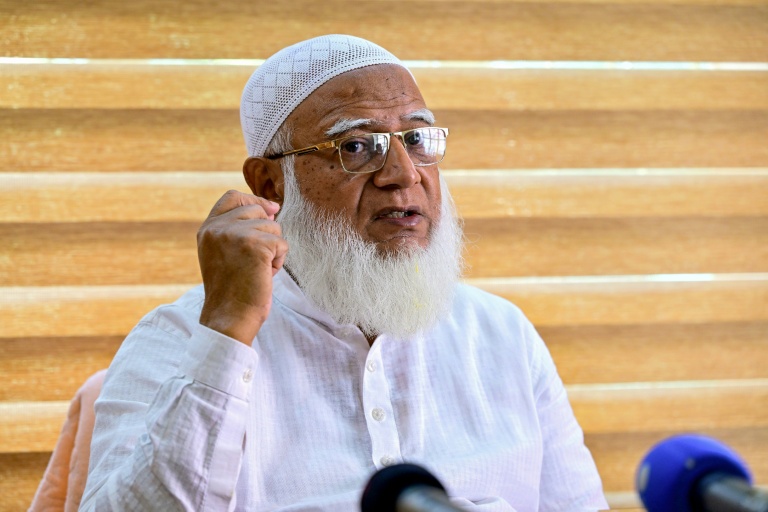
Voters in Bangladesh are preparing to head to the polls on March 7, 2024, in a significant election that follows the recent overthrow of former Prime Minister Sheikh Hasina. The leader of the country’s largest Islamist party, Shafiqur Rahman, is positioning himself as a prime ministerial candidate, hoping to secure victory after three previous electoral defeats. This election represents a crucial moment for Rahman and his 11-party alliance, which could potentially usher in the first Islamist-led government in a nation that is constitutionally secular.
With a background as a doctor and preacher, the 67-year-old Rahman has campaigned on a platform emphasizing “moral renewal” in society. He stated, “Good governance is the foundation of stability, peace and prosperity,” highlighting his commitment to a rule-based and corruption-free leadership. His unique appearance, characterized by his all-white attire and flowing white beard, has made him a recognizable figure on the campaign trail, where his party has exclusively nominated male candidates.
The political landscape has dramatically shifted since Hasina’s administration, which had actively suppressed Islamist movements and led a crackdown on extremists, resulting in the deaths and arrests of many. Following her ousting, significant Islamist leaders have been released from prison, signaling a potential resurgence of these groups.
Born in 1958 in Moulvibazar, Rahman has been a long-time activist within Jamaat-e-Islami, first running for parliament in 1996 and again in subsequent elections. His wife, Ameena Shafiq, also a doctor, secured a parliamentary seat reserved for women in 2018. The couple’s family includes three children, all pursuing careers in medicine.
Rahman’s political aspirations have raised concerns among various sectors of society. His comments regarding women’s roles sparked considerable backlash, particularly when he expressed a desire to encourage stay-at-home mothers. At a rally, he controversially claimed, “We don’t want to lock women at home — we don’t have enough money to buy the locks.” In January, a protest in Dhaka featured women waving brooms, symbolically calling for his removal after he suggested that modernity was pushing women out of their homes under the guise of freedom.
Despite the controversies, Rahman has attempted to reassess his position on women’s rights, though skepticism remains. Political activist Tajnuba Jabin, who resigned from the National Citizen Party due to its alliance with Rahman’s group, noted, “Talk of women’s rights sounds hollow unless you have a clear position.”
Coalition and Concerns for Minorities
Rahman leads a coalition of Islamist groups, many of which align ideologically with the Muslim Brotherhood. This coalition views the upcoming election as a pivotal opportunity, particularly since Rahman’s party and others have been historically accused of supporting Pakistan during Bangladesh’s 1971 independence war, a sensitive topic that continues to evoke strong reactions.
Despite these challenges, Rahman’s party has recently experienced success in university elections, notably at Dhaka University, often seen as a bellwether for national trends. Salahuddin Muhammad Babar, editor of the right-wing newspaper Naya Diganta, praised Rahman’s inclusive approach, citing it as one of his strengths amid rising concerns over his coalition’s hardline elements.
Approximately 10 percent of Bangladesh’s population identifies as non-Muslim, primarily Hindu, and the prospect of an Islamist-led government has alarmed these communities. In response, Rahman has publicly committed to protecting minority rights “regardless of caste or creed,” and included a Hindu candidate on his party’s electoral slate.
Furthermore, Rahman has adopted a more conciliatory tone regarding foreign relations, advocating for a “balanced” relationship with neighboring India, a country where Hasina had solidified ties. Despite these assurances, Rahman’s coalition includes factions that have advocated for restrictions on cultural practices deemed “anti-Islamic,” such as music and theatre festivals and women’s sports.
As Bangladesh approaches this critical election, the implications of a potential Rahman-led government remain a topic of intense debate, with observers closely monitoring how these developments will shape the country’s future.












GSK Shares Rise for Seven Consecutive Sessions, Up 22% This Year

Invest in CT Real Estate Trust for Monthly Income at 5.8%

AT&T Unveils Affordable Smartphone and Smartwatch for Kids

Former Officer Gets Conditional Sentence for Data Abuse of 33 Women

Boldy, Horvat, and Vejmelka Shine as NHL Stars of the Week

Ski Jumping Officials Deny Rumours of Performance-Enhancing Practices

Man Arrested After 24-Hour Search for Alleged Abductor in Manitoba

Supreme Court Ruling Establishes Exception to Lawyer-Client Confidentiality

Discover the Best Carpet Cleaners for Tough Messes

Secwepemc First Nation Seeks Aboriginal Title Over Kamloops Area

Scientists Unearth Ancient Antarctic Ice to Unlock Climate Secrets

Urgent Fire Erupts at Salvation Army on Christmas Evening

Canadian Curler E.J. Harnden Announces Retirement from Competition

Manitoba’s Burger Champion Shines Again Amid Dining Innovations

Fatal Crash on Highway 11 Claims Three Lives, Major Closure Ongoing

Trump and McCormick to Announce $70 Billion Energy Investments

Four Astronauts Return to Earth After International Space Station Mission

TransLink Launches Food Truck Program to Boost Revenue in Vancouver
-
 Politics3 months ago
Secwepemc First Nation Seeks Aboriginal Title Over Kamloops Area
-
 World7 months ago
Scientists Unearth Ancient Antarctic Ice to Unlock Climate Secrets
-
 Top Stories1 month ago
Urgent Fire Erupts at Salvation Army on Christmas Evening
-
 Sports1 month ago
Canadian Curler E.J. Harnden Announces Retirement from Competition
-
 Lifestyle5 months ago
Manitoba’s Burger Champion Shines Again Amid Dining Innovations
-
 Top Stories2 months ago
Fatal Crash on Highway 11 Claims Three Lives, Major Closure Ongoing
-
 Entertainment7 months ago
Trump and McCormick to Announce $70 Billion Energy Investments
-
 Science7 months ago
Four Astronauts Return to Earth After International Space Station Mission
-
 Lifestyle7 months ago
TransLink Launches Food Truck Program to Boost Revenue in Vancouver
-

 Technology5 months ago
Apple Notes Enhances Functionality with Markdown Support in macOS 26
-

 Top Stories1 month ago
Blue Jays Sign Kazuma Okamoto: Impact on Bo Bichette’s Future
-

 Top Stories2 months ago
NHL Teams Inquire About Marc-André Fleury’s Potential Return