
World
Boeing Delivers T-7A Red Hawk to USAF, Launching New Era in Training

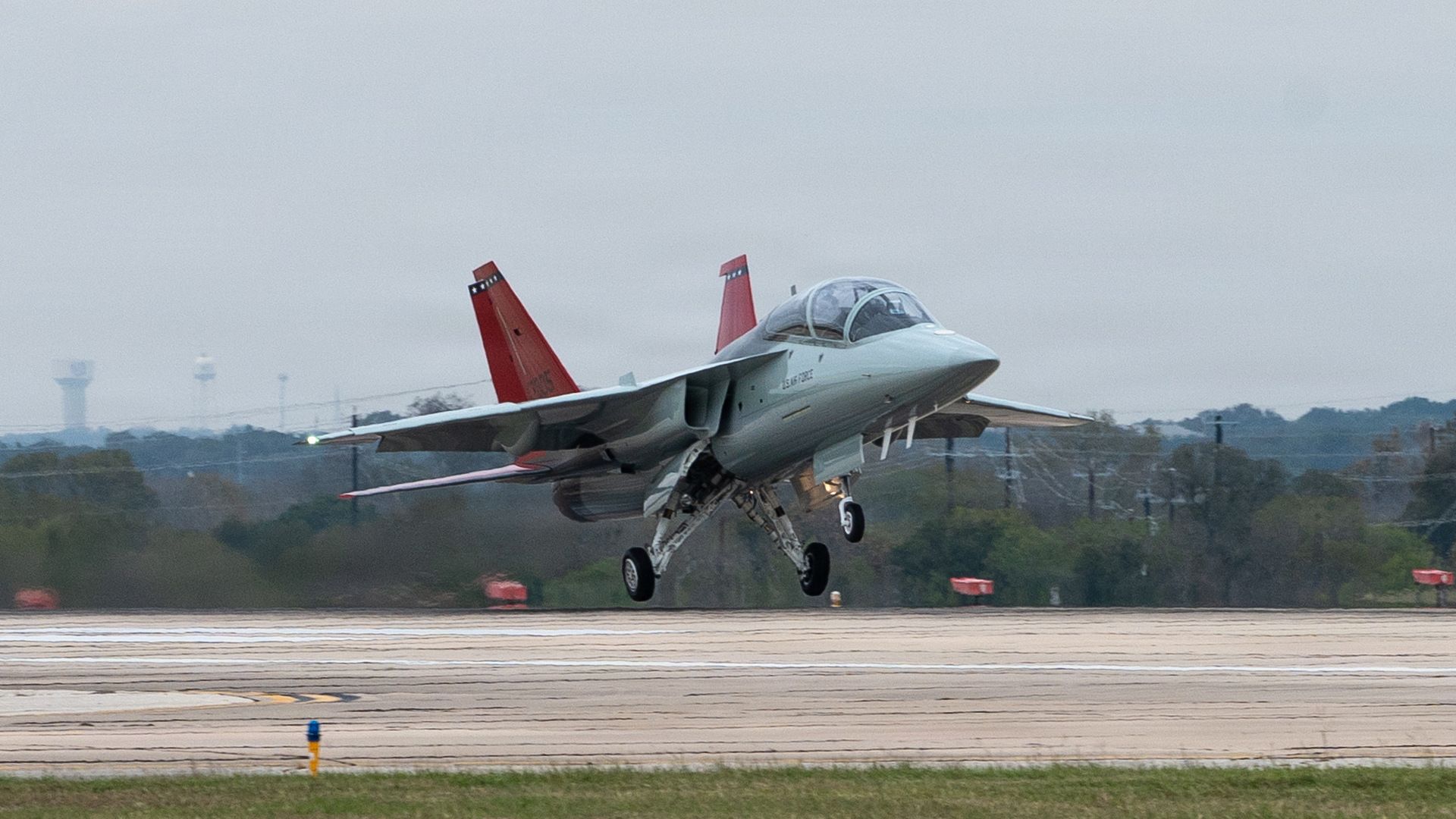
On December 5, 2025, the United States Air Force (USAF) marked a significant milestone with the delivery of its first T-7A Red Hawk aircraft. This event took place at Joint Base San Antonio-Randolph, where the jet will be integrated into the 99th Flying Training Squadron of the 12th Flying Training Wing. The T-7A Red Hawk is set to play a crucial role in enhancing the Air Force’s combat training systems, ultimately preparing pilots for the demands of fifth- and sixth-generation aircraft.
Transition to Advanced Training Systems
The arrival of the T-7A Red Hawk represents the first step in a broader operational plan aimed at advancing the capabilities of the Advanced Pilot Training System. Designed to replace the aging T-38C Talon, which has been in service since the early 1960s, the new aircraft is expected to alleviate rising sustainment costs associated with the older model. According to analyses from the USAF, the T-7A will pair advanced digital connectivity with ground-based training facilities, offering a comprehensive training environment that includes live-virtual constructive scenarios.
The first flight of the Red Hawk at Randolph was piloted by Boeing test pilot Steve Schmidt, accompanied by leaders from the 99th FTS. The Air Force plans to hold a formal arrival ceremony to celebrate this important addition to its fleet.
Enhanced Training Ecosystem
The T-7A is not just a new aircraft; it embodies a complete training ecosystem. It integrates high-fidelity simulators and advanced course materials, allowing students to practice complex missions without expending fuel. This innovative approach blends live flights with virtual threats and constructive forces, which is essential for training pilots in the intricacies of fifth-generation aircraft operations.
The 99th FTS is currently developing a cadre of instructors and maintainers while the Air Education and Training Command (AETC) revises its training syllabi from the ground up. This overhaul avoids simply updating older systems with new software, ensuring that the training remains relevant and effective. The T-7A’s fly-by-wire controls will enable instructors to tailor each student’s flight experience, promoting individualized learning paths and potentially reducing the overall number of flights needed to achieve proficiency.
Addressing Long-Standing Challenges
The T-7A program has faced several challenges since its inception, including technical issues and delays in production. Independent reports have highlighted concerns such as instability during high angles of attack and complications with ejection-seat performance, which have hindered the program’s progress. These difficulties led to extensive delays in the decision to commence low-rate production, initially scheduled for 2025.
Despite these setbacks, the Air Force’s planning indicates an expected initial operational capability for the T-7A by August 2027. The broader program aims to eventually replace the T-38 fleet with hundreds of T-7A aircraft and numerous simulators. The stakes are high, as modern combat aircraft demand advanced pilot skills developed through effective training programs. Each year of delay in operational readiness keeps trainees using an outdated system ill-suited for contemporary aviation challenges.
If the integration of the T-7A Red Hawk proceeds as planned, it could significantly enhance pilot training and overall readiness across Air Force bases. The successful implementation of this advanced aircraft may well redefine the future of pilot education, preparing a new generation of aviators equipped to handle the complexities of modern aerial warfare.









UPEI’s High-Tech Simulation Centre Enhances Future Healthcare Skills

Canadian Astronaut Chris Hadfield Advocates for Eye Health

GPIQ and QYLD: Evaluating Strategies Amid Market Stagnation

Norovirus Outbreak Forces Canada’s Hockey Game Postponement

Fauna Robotics Unveils Sprout: A Humanoid Robot for Home Use

Team Canada Faces Goaltending Concerns Ahead of Olympics

Celebrating the Life of Irena Peritz: A Legacy of Love and Resilience

India, U.S. Announce Urgent Trade Deal to Slash Tariffs Now

American Airlines Pilots Challenge Management After Poor Results

Secwepemc First Nation Seeks Aboriginal Title Over Kamloops Area

Scientists Unearth Ancient Antarctic Ice to Unlock Climate Secrets

Urgent Fire Erupts at Salvation Army on Christmas Evening

Canadian Curler E.J. Harnden Announces Retirement from Competition

Manitoba’s Burger Champion Shines Again Amid Dining Innovations

Fatal Crash on Highway 11 Claims Three Lives, Major Closure Ongoing

Trump and McCormick to Announce $70 Billion Energy Investments

Four Astronauts Return to Earth After International Space Station Mission

TransLink Launches Food Truck Program to Boost Revenue in Vancouver
-
 Politics3 months ago
Secwepemc First Nation Seeks Aboriginal Title Over Kamloops Area
-
 World7 months ago
Scientists Unearth Ancient Antarctic Ice to Unlock Climate Secrets
-
 Top Stories1 month ago
Urgent Fire Erupts at Salvation Army on Christmas Evening
-
 Sports1 month ago
Canadian Curler E.J. Harnden Announces Retirement from Competition
-
 Lifestyle5 months ago
Manitoba’s Burger Champion Shines Again Amid Dining Innovations
-
 Top Stories2 months ago
Fatal Crash on Highway 11 Claims Three Lives, Major Closure Ongoing
-
 Entertainment7 months ago
Trump and McCormick to Announce $70 Billion Energy Investments
-
 Science7 months ago
Four Astronauts Return to Earth After International Space Station Mission
-
 Lifestyle7 months ago
TransLink Launches Food Truck Program to Boost Revenue in Vancouver
-

 Technology5 months ago
Apple Notes Enhances Functionality with Markdown Support in macOS 26
-

 Top Stories1 month ago
Blue Jays Sign Kazuma Okamoto: Impact on Bo Bichette’s Future
-

 Top Stories2 months ago
NHL Teams Inquire About Marc-André Fleury’s Potential Return